 AGreenNest
Plant Styling & Display
Fireplace Mantel Plant Styling That Lasts
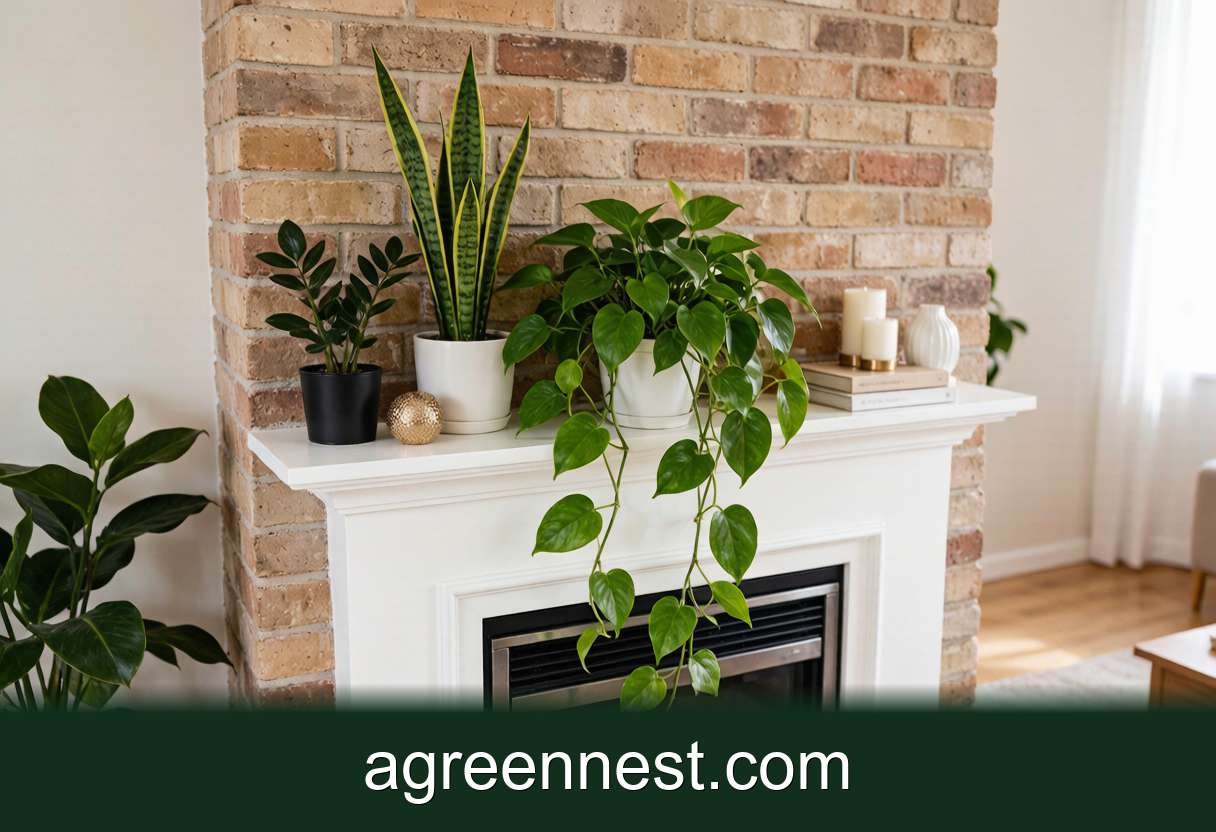
A fireplace mantel can host real plants if you match them to the spot. Most mantels are dim and warm, so pick tough low-light survivors like *Zamioculcas zamiifolia* or trailing *Epipremnum aureum* that spill over the edge. Keep pots 20 to 30cm from an active flue, and use faux plants directly above a burning fire.
I cooked my first mantel plant in a single winter. A pretty little maidenhair fern, set proudly above a wood-burning stove I lit most evenings. By February it was a brown skeleton, and I could not work out why. The answer, once I stopped sulking and started measuring, was heat and dryness I had never considered. A mantel is one of the trickiest shelves in the house, and also one of the most rewarding to get right.
So before you set anything green up there, let me save you the fern.
Can Real Plants Even Survive on a Mantel?
Usually, yes, but you have to respect the microclimate. Two things make a mantel harder than a normal shelf. First, light: most mantels sit on an interior wall, far from a window, so the light is often low to medium. Second, heat and dry air, which matters enormously if the fireplace is ever lit. I have measured mantel-top temperatures of 30 to 38°C an hour into an evening fire, with humidity dropping into the 20s. That combination crisps thin leaves fast.
The fix is not to give up. It is to choose plants built for gloom and neglect, and to be honest about whether your fire actually gets used. A purely decorative fireplace is a lovely, stable home for greenery. A working one needs a different plan, which I will come to.
Which Plants Actually Thrive Above a Fireplace?
For the mantel itself, I reach for the toughest low-light plants I know. These shrug off dim corners and the odd dry spell.
- Zamioculcas zamiifolia, the ZZ plant, with its glossy upright stems. It tolerates low light and irregular watering better than almost anything. Care notes in ZZ plant low-light care.
- Sansevieria trifasciata, the snake plant, for a strong vertical line at one end. See snake plant low-light care.
- Aspidistra elatior, the cast iron plant, if you want something broad-leaved and genuinely unbothered.
- Zamioculcas and Sansevieria also cope with the warm, dry air near a used fireplace better than any fern will.
For the trailing edge, and this is where a mantel earns its keep, I love Epipremnum aureum (pothos), Ceropegia woodii (string of hearts), and Rhipsalis. A vine tumbling 40 to 70cm down the side of the chimney breast softens all that hard stone or brick beautifully. There are more ideas in trailing plants for shelves.
If your mantel is truly dark, a small clip-on grow light tucked behind a candlestick keeps these plants full instead of leggy.
Styling the Mantel: Height, Number, and the Trailing Edge
Here is the arrangement I come back to again and again. Work in odd numbers, usually three groupings, and vary the height so your eye travels along the shelf instead of sitting flat.
Anchor one end with something tall and structural, a snake plant or a ZZ, roughly two-thirds the height of whatever art or mirror hangs above. Set a trailing plant at the opposite end so it spills over the edge and breaks the hard horizontal line. Fill the middle loosely with a low object or two, a small plant, a stack of books, a candle, leaving breathing space. A crammed mantel reads as clutter; a mantel with gaps reads as styled.
Pots matter more here than on a hidden shelf, because a mantel is at eye level. I keep to two or three materials, often terracotta and one matte ceramic, so the display feels collected rather than random. The same grouping logic runs through my plant grouping rules and my broader corner styling guide.
What About an Active, Working Fireplace?
This is the honest part. Directly above a fire that you light regularly, I do not put a living plant I care about. The rising heat and the bone-dry air will punish it, and no styling trick beats physics.
Two things work instead. Either use a high-quality faux plant or dried arrangement above a working fire, which fools everyone from more than a step away, or place your real plants off to the sides and on the hearth flanks rather than dead centre over the flue. Keep any real pot at least 20 to 30cm clear of the hottest zone, and never on the day you plan a long fire. When the fire is cold for the season, you can move real plants back to centre stage. I treat it as a seasonal rotation, the same way I shuffle plants around the living room for styling through the year.
Keeping Them Alive Once They Look Good
A styled mantel dies quietly if you forget it is a plant, not a prop. Two habits keep mine going. I water at the sink, never on the mantel, because runoff stains stone and warps wood, and I let pots drain fully before they go back up. And I rotate each plant a quarter turn every week or two, since light comes from one side and stems lean toward it fast in low light.
Watch for the classic low-light warning sign: long, pale, stretched stems with big gaps between leaves. That is your plant begging for more light, covered in low-light plant mistakes. Move it brighter or add that clip light before it goes bald.
Frequently Asked Questions
Q: Will the heat from my fireplace kill plants even if they sit at the far ends of the mantel?
A: The ends are much safer than the centre over the flue, but they still get warm and dry on fire nights. Keep pots 20 to 30cm from the hottest zone, choose heat-tolerant plants like ZZ or snake plant, and check soil moisture more often in winter.
Q: My mantel gets almost no daylight. Can anything really live there?
A: Yes, but only the toughest low-light plants, and they will slowly stretch without help. A small clip-on grow light on a timer for 8 to 10 hours a day keeps a ZZ or pothos compact and green even on a dark interior wall.
Q: How do I stop my trailing pothos from looking thin and stringy over the edge?
A: Thin trailing growth means too little light. Give it brighter conditions or a grow light, pinch the tips to force branching, and tuck a couple of cuttings back into the pot so the top stays full while the vines hang.
Q: Real plants or faux above a wood-burning stove I use every night?
A: Faux, honestly. Nightly heat and very dry air will exhaust even hardy plants directly above a used stove. Style the mantel top with quality faux or dried stems, and keep your real, living plants on side tables and shelves a metre or two away.
A fireplace mantel can be one of the most striking plant displays in your home, as long as you style it for the conditions you actually have, not the ones you wish you had. Pick tough low-light plants, let one trail over the edge, respect the heat of a working fire, and rotate for light. Get those right and the mantel looks effortless while quietly staying alive. If you are unsure how much light your spot really offers, start with our free light calculator before you commit a plant to the shelf.
Sources & further reading
GreenNest authors research and write every guide independently. The external links below are reputable references we recommend for deeper reading — they are not the sources we copied from.
- Royal Horticultural Society — Houseplants — RHS
- Missouri Botanical Garden — Missouri Botanical Garden
- NC State Extension Plant Toolbox — NC State Extension
Recommended Tools for Plant Styling & Display Care
Free, no-signup helpers matched to this guide.
Free Ebooks to Explore
Downloadable handbooks — no email required.
Free Ebook
The AGreenNest Succulent Care Handbook
The complete, beginner-to-confident guide to growing fat, happy succulents — 10 chapters and a 20-plant directory.
Free Ebook
Haworthia & Haworthiopsis Care Handbook
A focused guide to the striped, forgiving Haworthia clan.
Share Your Plant Story
Grown something tricky, or found a trick that finally worked? Tell us in the comments, or see what other readers are sharing on our Community page. The best reader tips get folded back into our guides.
Join the Conversation
Have a tip or a question about Fireplace Mantel Plant Styling That Lasts? Share it below — comments are saved on our server.