 AGreenNest
Succulent Care
Summer Succulent Dormancy: Why Growth Stops in July
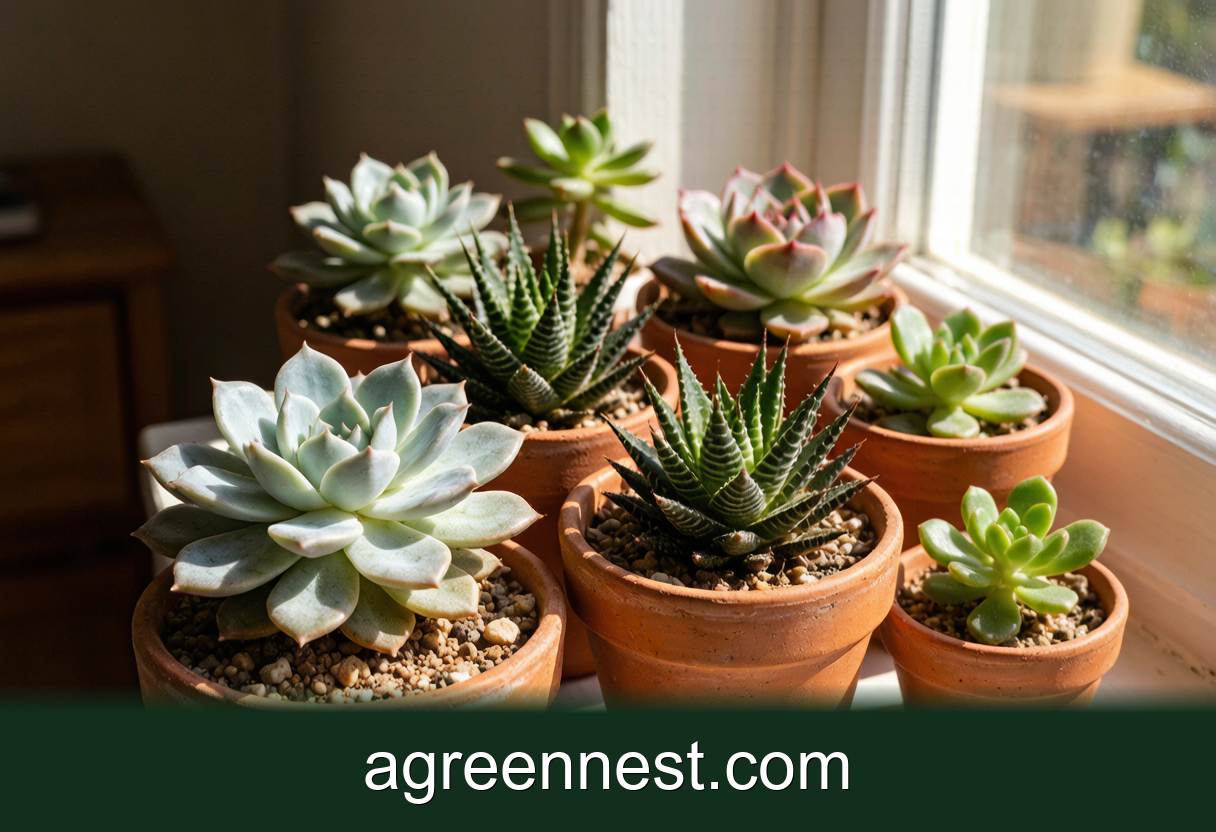
Several popular succulents, including aeoniums, string of pearls, and some senecios, go dormant in summer heat above roughly 27°C. Closed rosettes, dropped lower leaves, and stalled growth are normal, not dying. Water lightly every 3 to 4 weeks, hold the fertiliser, and normal growth resumes in autumn.
Every July my inbox fills with the same worried message: "My aeonium is dying. The rosette closed into a tight ball and half the leaves fell off." The first summer it happened to my own Aeonium arboreum, I nearly tossed it. I am glad I didn't. Come September it unfurled like nothing had happened, and I learned a lesson that most beginner guides skip entirely: a good chunk of the succulent world sleeps through summer, not winter.
Which Succulents Go Dormant in Summer?
Succulents split roughly into two camps based on where their ancestors evolved. Species from Mediterranean-style climates with mild, wet winters and brutal dry summers do their growing in the cool months and shut down when heat arrives. The main summer sleepers you are likely to own:
- Aeoniums, including Aeonium arboreum and the dark 'Zwartkop' cultivar
- String of pearls (Curio rowleyanus, still sold as Senecio rowleyanus)
- Many sempervivums, the hens and chicks group
- Aloe species to a milder degree, along with Haworthia and Gasteria
- Living stones (Lithops), which run their own strange calendar
On the other side, echeverias, agaves, most sedums, and jade plants (Crassula ovata) grow happily through warm weather and rest in winter instead. If you keep a mixed shelf, you will have both camps side by side in July, one growing and one napping, and they need opposite treatment.
Why Is My Aeonium Closing Up in July?
Once daytime temperatures sit above roughly 27°C for a week or two, an aeonium starts conserving. The outer leaves yellow and drop, sometimes by the dozen, and the remaining leaves curl inward until the rosette looks like a closed artichoke. Stems can look alarmingly bare below a small fist of leaves.
This is a water-saving posture, not a disease. Less exposed leaf surface means less moisture lost to hot air. I have watched a 40cm 'Zwartkop' shed two-thirds of its foliage between June and August and regrow it all by November. The test that settles nerves: gently press the closed rosette. A dormant aeonium feels firm and springy. A rotting one feels mushy at the stem, and that is a different problem covered in rescuing a rotting succulent.
How Often Should You Water a Dormant Succulent in Summer?
Far less than feels right. A dormant root system barely drinks, so the usual soak-and-dry rhythm from how often to water succulents gets stretched way out. My summer schedule for the sleepers:
- Water every 3 to 4 weeks, and lightly. I give my aeoniums maybe a third of their normal amount, just enough to moisten the top few centimetres.
- Water in the evening, once the pot has cooled. Wet roots in a 35°C pot are an invitation to rot.
- Skip fertiliser entirely from June through September. Feeding a sleeping plant pushes weak, stretched growth and salts up the soil. The safe routine in fertilising succulents resumes in autumn.
- Check with your fingers, not the calendar. If the soil 3cm down still holds any coolness or moisture, wait another week.
A fast-draining mix matters more than ever now, because a dormant plant sitting in damp compost for a fortnight will rot before it wakes. If your soil holds water longer than 4 or 5 days in summer, repot into something grittier.
Is It Dormancy or Is the Plant Actually Dying?
The googled question behind most panicked July emails, and the distinction comes down to three checks:
Where are the leaves dropping? Dormancy sheds old, lower, outer leaves while the growing tip stays intact. Trouble sheds from the top or all over at once.
How do the stems feel? Firm stems mean sleep. Soft, translucent, or blackening stems near the soil line mean rot, and you should act on root rot first aid the same day.
What do wrinkles look like? A dormant string of pearls will flatten its pearls slightly, which is fine. Deep puckering across the whole plant plus bone-dry soil for two months means it needs one modest drink. The full diagnostic is in why succulent leaves wrinkle.
One more impostor to rule out: pale, bleached, or crispy patches on the sun-facing side are heat and light damage rather than dormancy, especially behind glass where a windowsill can run 8 to 10°C hotter than the room.
Should You Move Summer-Dormant Succulents Out of the Sun?
Yes, and this is the step that saves the most plants. In habitat, a dormant aeonium sits in cooler coastal air; on your south windowsill it bakes. I move my sleepers to bright shade for the hottest 8 to 10 weeks: an east window, or a spot a metre back from the hot glass where they still get strong indirect light. Growth has stopped, so they will not stretch the way an active plant would in the same spot.
Keep air moving too. A small fan on low, or a window cracked overnight, drops the leaf-surface temperature more than people expect. What you are avoiding is the combination that kills: 35°C pot, damp soil, still air.
Frequently Asked Questions
Q: My string of pearls looks flat and stopped growing in August. Should I repot it?
A: No, leave the roots alone. Curio rowleyanus is a classic summer sleeper, and repotting a dormant plant tears roots it cannot regrow until autumn. Slightly deflated pearls in August are normal. Give it a light drink every 3 weeks, keep it out of hot afternoon sun, and repot in October if it still needs it.
Q: Do haworthias need the same summer treatment as aeoniums?
A: A gentler version. Haworthia slows down in heat rather than shutting off completely, so I stretch watering to every 2 to 3 weeks instead of monthly and keep them in their usual bright-shade spot. They rarely drop leaves the way aeoniums do.
Q: Can I propagate from the leaves my aeonium dropped in summer?
A: Sadly not. Aeonium leaves almost never root the way echeveria leaves do, dormant or otherwise. If you want more plants, take 10cm stem cuttings in autumn once growth restarts, and follow the timing in succulent propagation three ways.
Q: My echeveria is growing fine right next to my dormant aeonium. Is that normal?
A: Completely. Echeverias are winter resters that grow through warm months, so a July shelf often holds one plant in full growth beside another in full shutdown. Water each by its own soil dryness, never as a group.
Q: At what temperature does summer dormancy actually start?
A: There is no single trigger, but sustained daytime heat above about 27 to 30°C plus warm nights is when aeoniums and senecios visibly slow. Indoors with air conditioning holding rooms near 24°C, many never go fully dormant at all and just tick along slowly.
Summer dormancy fools almost everyone once. The closed rosettes, the leaf drop, the months of nothing: it all reads as failure when it is actually the plant doing exactly what a dry Mediterranean summer taught it to do. Learn which of your succulents are sleepers, cut the water back to a monthly sip, hold the feed, shade them from the worst heat, and then do the hardest part, which is nothing. If you are unsure whether your windowsill light is helping or cooking them, run your spot through our free light calculator before autumn growth kicks off.
Sources & further reading
GreenNest authors research and write every guide independently. The external links below are reputable references we recommend for deeper reading — they are not the sources we copied from.
- Royal Horticultural Society — Houseplant care — RHS
- Missouri Botanical Garden — Missouri Botanical Garden
- NC State Extension Plant Toolbox — NC State Extension
Recommended Tools for Succulent Care
Free, no-signup helpers matched to this guide.
Free Ebooks to Explore
Downloadable handbooks — no email required.
Free Ebook
The AGreenNest Succulent Care Handbook
The complete, beginner-to-confident guide to growing fat, happy succulents — 10 chapters and a 20-plant directory.
Share Your Plant Story
Grown something tricky, or found a trick that finally worked? Tell us in the comments, or see what other readers are sharing on our Community page. The best reader tips get folded back into our guides.
Join the Conversation
Have a tip or a question about Summer Succulent Dormancy: Why Growth Stops in July? Share it below — comments are saved on our server.