 AGreenNest
Low-Light Indoor Plants
Satin Pothos Care: Keep the Silver Shimmer Indoors
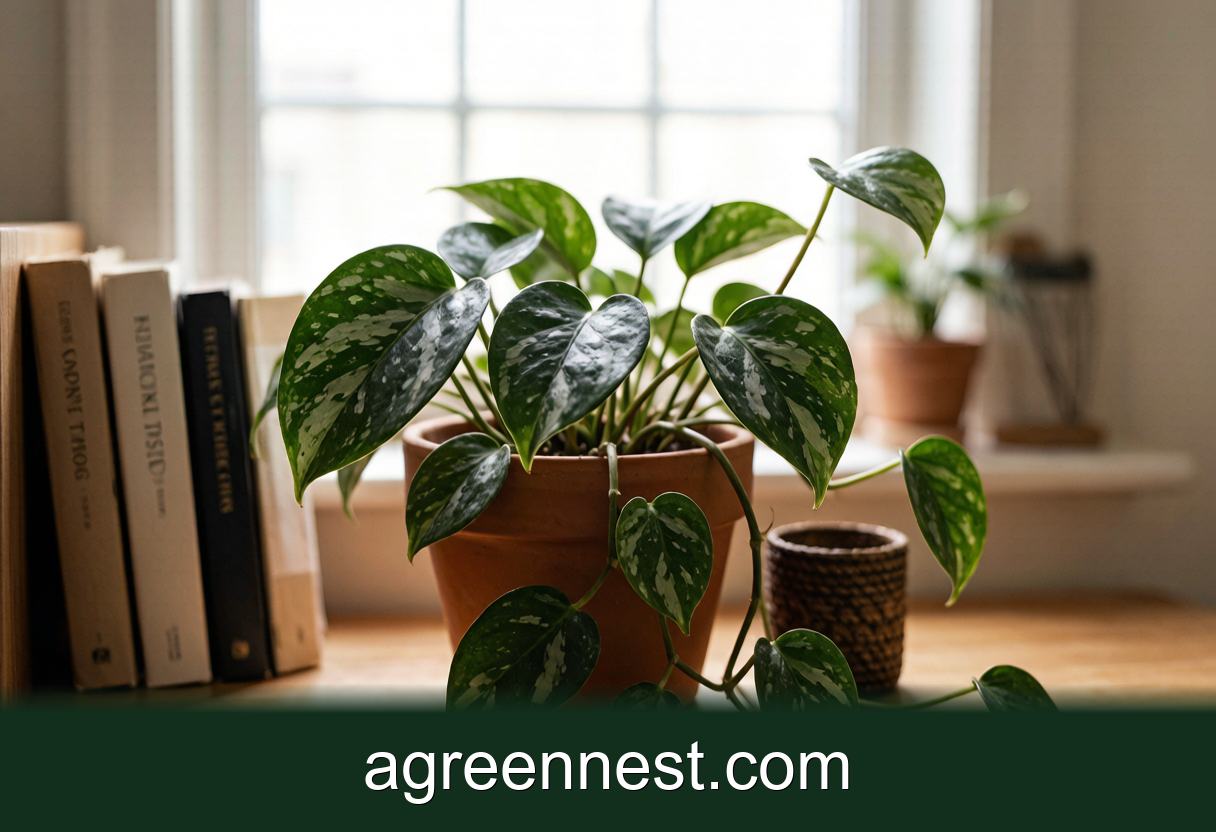
Satin pothos (*Scindapsus pictus*) keeps its silver shimmer with bright indirect light, a drink when the top 5 cm of soil is dry, and temperatures of 18 to 27°C. Curling leaves mean thirst, not disease. In dim corners it survives but the silver dulls and new leaves shrink, so park it within 2 m of a window.
The first satin pothos I ever owned lived a lie for two years. The tag said pothos, I treated it like my golden pothos on the next shelf, and it repaid me with leaves that curled into little green cigars every ten days. Same shelf, same watering can, completely different plant underneath.
That mix-up is built into the common name, so let us untangle it first, because half of satin pothos care clicks into place once you know what you are actually growing.
Is Satin Pothos Actually a Pothos?
No. Golden pothos is Epipremnum aureum; satin pothos is Scindapsus pictus, a cousin from the same aroid family that split off long before either reached a garden centre. You will usually meet one of three cultivars: 'Argyraeus', with small dark leaves and restrained silver flecks; 'Exotica', with larger 10 to 15 cm leaves and bold silver splashes; and 'Silvery Ann', so heavily marked that some leaves look dipped in aluminium.
The practical differences matter more than the botany. Satin pothos leaves are thicker and slightly velvety, the vines grow more slowly, and the plant telegraphs thirst by curling its leaves inward along the midrib. A golden pothos wilts; a satin pothos rolls up. I compare the two in more detail in pothos in low light, and its darker cousin gets its own profile in Scindapsus treubii care.
One shared trait to respect: like most aroids, the sap contains calcium oxalate crystals, so keep vines out of reach of cats and toddlers who chew.
How Much Light Keeps the Silver Bold?
The silver patches are actually pockets of air between leaf tissue layers, and they reflect light instead of making food. That means every silvery leaf photosynthesises with less working surface than it appears to have, which is why satin pothos wants more light than its "low light plant" label suggests.
My rule of thumb after years of moving these around the house: it survives at 800 lux, it looks good at 1,500 to 3,000 lux, and it gets leggy and dull below that. In room terms, that is within 2 m of an east or north window, or 2 to 3 m back from a bright south window with the harsh midday beam filtered by a sheer curtain. Direct afternoon sun bleaches the silver to a sad grey-beige in a week or two.
Watch the new growth rather than the old. In good light, each new leaf on 'Exotica' arrives at 10 cm or more with crisp markings. In gloom, new leaves shrink, the gaps between them stretch past 8 cm, and the silver fades to a faint dusting. If you are not sure what your room actually delivers, the phone-based method in how dark is your home, really takes five minutes.
Why Are the Leaves Curling Inward?
Nine times out of ten: thirst. Satin pothos rolls its leaves lengthwise to cut water loss, and it does this a day or two before any drooping starts. It is the most polite watering reminder in my whole collection.
Here is the rhythm that works for me. Water thoroughly when the top 5 cm of soil is dry, which lands around every 7 to 10 days in summer and stretches to 14 or more in winter. Pour until water runs from the drainage holes, let the pot drain, and never leave it sitting in a saucer of runoff. A moisture meter reading of 2 to 3 in the root zone is my go-ahead signal.
The trap sits on the other side. Thick, semi-succulent leaves mean this plant tolerates missed waterings far better than soggy soil, and yellow lower leaves plus a musty pot smell point to overwatering rather than drought. If the leaves curl while the soil is still damp, stop and check the roots, because that combination usually means rot is already interfering with uptake. The early warning signs are the same ones I walk through in overwatering signs in low light.
Temperature and humidity round out the comfort zone: 18 to 27°C, never below 15°C, and humidity anywhere above 40 percent. Brown crispy leaf edges in winter usually track back to heater air, not disease.
Soil, Feeding, and When to Repot
Roots need air as much as water. I pot satin pothos in two parts standard houseplant mix, one part perlite, and one part orchid bark, which drains in seconds but still holds moisture for a week. Straight potting soil out of the bag stays wet too long for this species.
Feeding is light work. A balanced liquid fertiliser at half strength once a month from March to September is plenty; skip winter entirely. Overfed plants push soft, fast growth with weaker markings, and the salts eventually scorch root tips.
Repot every 2 to 3 years in spring, going up just one pot size, from a 12 cm to a 15 cm, for instance. These vines flower best-looking foliage when slightly snug, and a huge pot of wet soil is an invitation to rot. Trailing from a shelf it will reach 1 to 1.5 m indoors; give it a moss pole and leaves grow noticeably larger. For placement ideas that flatter a silvery trailer, the arrangements in hanging and trailing plant styling all work for this species.
Frequently Asked Questions
Q: My satin pothos leaves curl every week even though I water on schedule. Do I need to water more?
A: Probably, but change the trigger rather than the calendar. A schedule ignores heat waves and growth spurts. Water when the top 5 cm is dry, and check twice a week in summer. If the pot feels feather-light within five days of watering, the plant has outgrown its pot and a spring repot will stretch the interval again.
Q: The silver spots on new leaves are smaller than on the old ones. Can they come back?
A: Existing leaves keep the pattern they were born with, so the old ones will not change. New leaves, though, respond to light within one or two growth cycles. Move the plant to within 2 m of a window and the next leaves should arrive bigger and brighter marked.
Q: Can I grow satin pothos in a windowless bathroom with a daylight bulb?
A: Yes, if the bulb genuinely runs 10 to 12 hours a day and sits within about 60 cm of the foliage. The humidity of a bathroom suits it well. Under a bulb used only during showers, the plant will slowly starve, dropping to one small leaf a month.
Q: My cat chewed a leaf. How worried should I be?
A: Calcium oxalate causes mouth pain, drooling, and sometimes vomiting, unpleasant but rarely dangerous in small nibbles. Offer water, watch for swelling, and call a vet if symptoms last more than a few hours. Then move the vine up out of patrol range.
Q: Why are the stems growing long with hardly any leaves?
A: Gaps longer than 8 cm between leaves mean the vine is stretching for light. Cut the bare runners back to a node, brighten the location, and the plant will resprout more densely. The cuttings root in water in 3 to 4 weeks, so nothing is wasted.
Satin pothos asks two things of you: enough light to fund those silver air pockets, and restraint with the watering can until the leaves whisper their curl. Get those right and one nursery pot becomes a metre of shimmer down a bookshelf within two seasons. If you want to check whether your chosen spot makes the cut before moving the plant, run it through our free light calculator.
Sources & further reading
GreenNest authors research and write every guide independently. The external links below are reputable references we recommend for deeper reading — they are not the sources we copied from.
- Royal Horticultural Society — Houseplant care — RHS
- Missouri Botanical Garden — Missouri Botanical Garden
- NC State Extension Plant Toolbox — NC State Extension
Recommended Tools for Low-Light Indoor Plants Care
Free, no-signup helpers matched to this guide.
Free Ebooks to Explore
Downloadable handbooks — no email required.
Share Your Plant Story
Grown something tricky, or found a trick that finally worked? Tell us in the comments, or see what other readers are sharing on our Community page. The best reader tips get folded back into our guides.
Join the Conversation
Have a tip or a question about Satin Pothos Care: Keep the Silver Shimmer Indoors? Share it below — comments are saved on our server.