 AGreenNest
Low-Light Indoor Plants
Parlor Palm Care: A True Palm for Dim Rooms
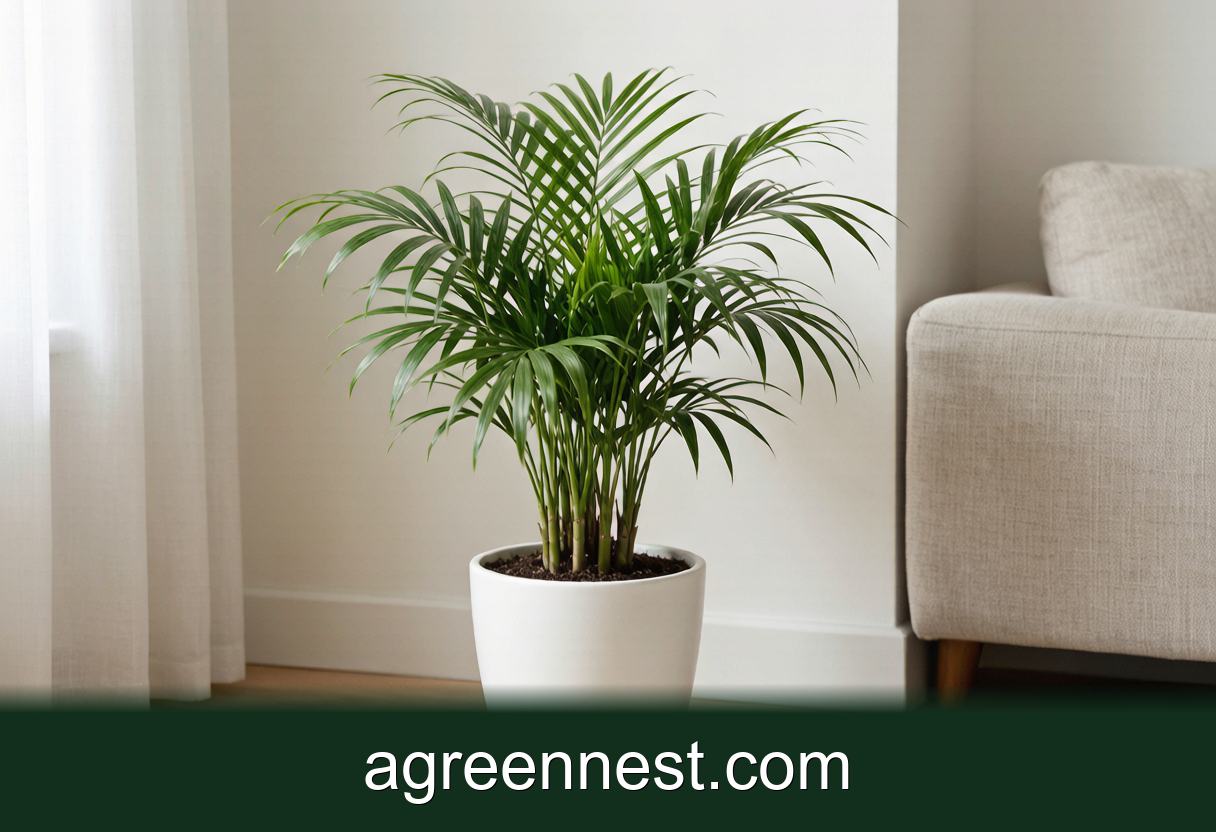
The Parlor Palm (*Chamaedorea elegans*) is one of the few true palms that thrives in low light. Give it bright, indirect light or as little as 100 lux, water when the top 3 to 4 cm of soil dries, and keep it between 18 and 24°C. Brown tips almost always mean dry air or salty tap water.
My first Parlor Palm lived on a bookshelf in a windowless hallway, and for two years I was sure I was slowly killing it. It never grew, but it never died either. Then I moved it four feet, to where a little morning light spilled around a doorway, and within a season it pushed out three fresh fronds. That is the Parlor Palm in a sentence: patient in the gloom, grateful for even a small upgrade.
Chamaedorea elegans has been a parlor favourite since Victorian times. It is one of the rare palms that tolerates the dim, dry interiors most palms sulk in. If you have killed a fern or scorched a fiddle-leaf, this is the plant that rebuilds your confidence.
Why Is the Parlor Palm So Good in Low Light?
Most palms you meet at the garden centre come from sunny, open habitats, so they resent a dim living room. The Parlor Palm is different. In the wild it grows as an understorey plant on the rainforest floors of southern Mexico and Guatemala, under a thick canopy that filters out most of the sun before it ever reaches the leaves.
That heritage means it is built for shade. It will hold steady at light levels around 100 to 250 lux, roughly what you get several feet back from a north window, though it grows faster and fuller at 500 to 1,000 lux. What it cannot take is harsh, direct afternoon sun through glass, which bleaches the fronds to a dull yellow-green and crisps the edges.
Not sure how bright your corner is? Our light calculator gives a quick estimate, and this roundup of the best low-light houseplants for 2026 shows where the Parlor Palm sits among its shade-loving neighbours.
Getting Light and Placement Right
Aim for bright, indirect light: an east-facing window, a spot a metre or two back from a south or west window, or beside a north-facing window. The fronds should cast a soft, fuzzy shadow rather than a sharp one.
In a truly dark room the palm will survive but grow slowly, and the lower fronds may yellow and drop over time. If that is your only option, a small LED grow light run for 10 to 12 hours a day keeps it lush. I use one on a cheap timer above the plant in my north-facing office, about 40 cm from the crown.
One quiet warning: this palm hates being moved once it has settled. Sudden changes in light or a cold draft near a door in winter can trigger a flush of brown-tipped fronds. Pick a spot and leave it there.
How Often Should You Water a Parlor Palm?
Water when the top 3 to 4 cm of soil feels dry, then soak the pot thoroughly until water runs from the drainage hole. In a warm, bright room that usually means every 7 to 10 days in summer and every 2 to 3 weeks in winter.
The Parlor Palm dislikes two extremes equally. Let it dry out completely and the fronds fold shut and brown from the tips inward. Leave the roots sitting in soggy soil and they rot, which shows up as sudden yellowing across whole fronds and a sour smell at the base. When in doubt, err slightly dry. A cheap moisture meter pushed to the bottom of the pot takes the guesswork out until your fingers learn the weight of a thirsty pot.
Tip out any water that collects in the saucer within ten minutes. Roots left standing in runoff are the single most common way people lose this plant.
Soil, Pots, and Feeding
Use a peat-free houseplant mix loosened with a couple of handfuls of perlite so it drains freely but still holds some moisture. Straight garden soil packs down and suffocates the fine roots.
Parlor Palms like being a little snug, so do not rush to repot. A plant that fills its pot with roots grows happily for 2 to 3 years before it needs a container just one size larger, ideally in spring. When you do repot, be gentle, because the root ball is often a cluster of several seedlings grown together and bruises under rough handling.
Feed lightly. A balanced liquid fertiliser diluted to half strength, once a month from April to September, is plenty. This palm is a slow, modest grower, and too much fertiliser leaves salt in the soil that scorches the very leaf tips you are trying to protect.
Keep it between 18 and 24°C. It tolerates a brief dip to about 10°C but resents anything colder, so keep it away from single-glazed windows on frosty nights.
Why Are the Leaf Tips Turning Brown?
This is the question I get more than any other about Parlor Palms, and it has three usual suspects.
Dry air. These are rainforest plants, and central heating drops indoor humidity to 20 or 30 percent, well below the 40 to 50 percent they prefer. Grouping plants together, setting the pot on a pebble humidity tray, or running a small humidifier all help. Misting looks caring but the effect fades within the hour.
Salty or fluoride-heavy tap water. Palms are sensitive to minerals and fluoride in some municipal water, which accumulate and burn the tips. If your tap water is hard, switch to rainwater or filtered water and flush the pot thoroughly every couple of months.
Underwatering or a cold draft. A pot that dried out too far, or a plant in a chilly winter breeze, browns at the edges too.
Trim only the dead brown tissue with clean scissors, following the natural point of the frond. Never cut a whole healthy frond off a palm; unlike many houseplants, it will not sprout a replacement from that stub.
Pests and Grooming
The main pest to watch is the spider mite, which loves the same dry air that browns the tips. Look for fine webbing in the frond joints and a faint stippling on the leaves. Rinse the whole plant in a lukewarm shower, raise the humidity, and treat with insecticidal soap every 7 days for three cycles if they persist. Mealybugs or scale show up occasionally too, dealt with the same way.
To groom, snip off any fully brown or yellow fronds at the base and wipe the remaining fronds with a damp cloth every few weeks so they catch what light there is.
Frequently Asked Questions
Q: Can a Parlor Palm survive in a room with no windows?
A: It will survive for a while on ambient light but slowly decline, dropping lower fronds and refusing to grow. If the room has no natural light, run an LED grow light for 10 to 12 hours a day and the palm will hold up well.
Q: Is the Parlor Palm safe around cats and dogs?
A: Yes. Chamaedorea elegans is listed as non-toxic to cats and dogs, which is part of why it is such a popular pick for homes with curious pets.
Q: My Parlor Palm hasn't grown in months. Is something wrong?
A: Probably not. This is a naturally slow grower, and in low light and winter it may pause entirely. If it is not yellowing or dropping fronds, it is only resting. Expect the most growth from spring through early autumn.
Q: Should I mist my Parlor Palm every day?
A: Misting raises humidity only briefly, so it does little on its own. A pebble tray or a humidifier holds humidity in the 40 to 50 percent range far more reliably and does more to stop brown tips.
The Parlor Palm rewards restraint. Give it gentle light, water it when the top few centimetres dry, keep the air off the desert-dry end of the scale, and it will hold its soft green fronds for years in the exact corner where fussier plants give up. Once you have the watering rhythm down, check your other dim spots with our free light calculator and see what else might thrive there.
Sources & further reading
GreenNest authors research and write every guide independently. The external links below are reputable references we recommend for deeper reading — they are not the sources we copied from.
- Royal Horticultural Society — Houseplant care — RHS
- Missouri Botanical Garden — Missouri Botanical Garden
- NC State Extension Plant Toolbox — NC State Extension
Recommended Tools for Low-Light Indoor Plants Care
Free, no-signup helpers matched to this guide.
Free Ebooks to Explore
Downloadable handbooks — no email required.
Share Your Plant Story
Grown something tricky, or found a trick that finally worked? Tell us in the comments, or see what other readers are sharing on our Community page. The best reader tips get folded back into our guides.
Join the Conversation
Have a tip or a question about Parlor Palm Care: A True Palm for Dim Rooms? Share it below — comments are saved on our server.