 AGreenNest
Plant Pests & Diseases
Why Are My Plant's Leaves Sticky? A Pest Fix
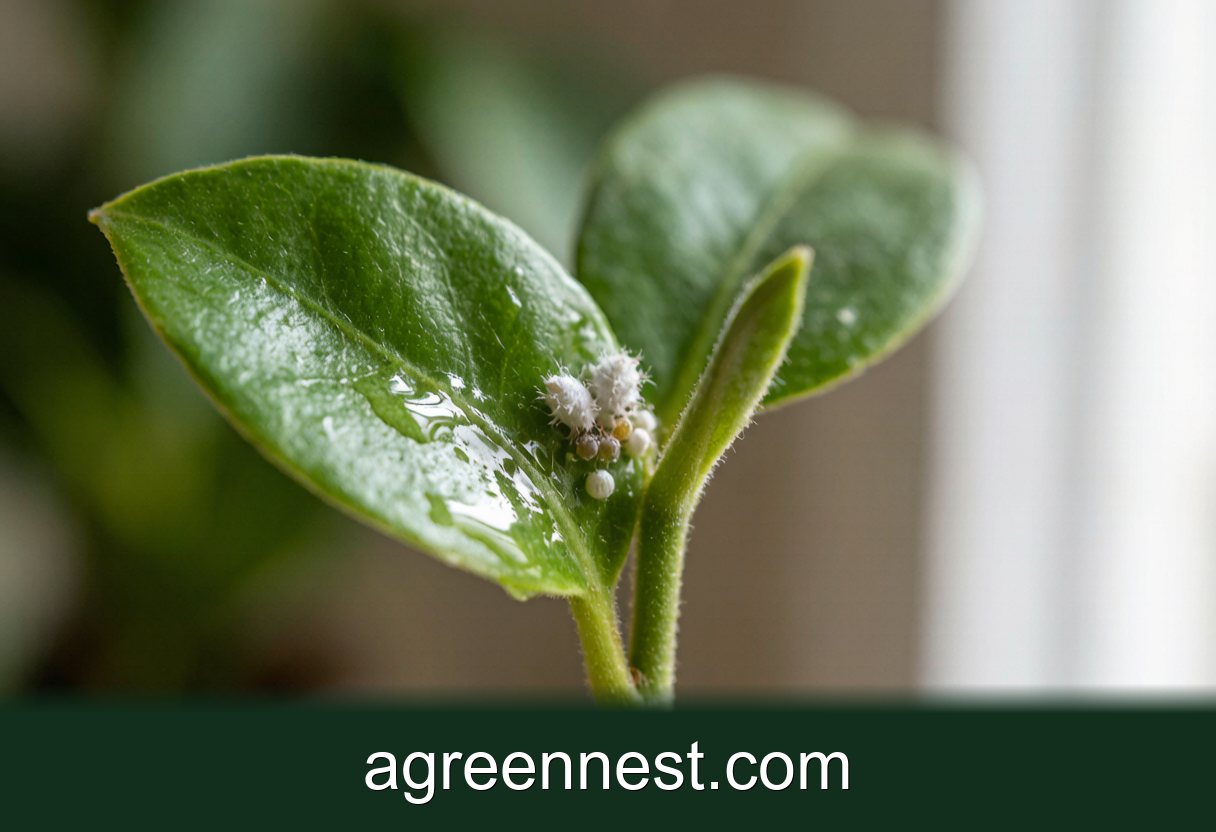
Sticky leaves almost always mean sap-sucking pests, not your plant sweating. Aphids, mealybugs, soft scale, and whiteflies excrete sugary honeydew that coats leaves and nearby surfaces. Check leaf undersides with a loupe, wipe the residue off, then treat with insecticidal soap or neem every 7 days for three rounds.
The first time a reader emailed me about "shiny, tacky spots" on her Hoya carnosa, she was convinced the plant was leaking sugar because it was happy. I hated to break the news. That sticky film is not sap, and it is not sweat. It is bug poop, and something is quietly feeding on the plant right now.
I have tested this on dozens of infested plants over the years, and the pattern almost never varies. So let me walk you through what the stickiness actually is, how to spot the culprit, and how to clear it for good.
Why Are My Plant's Leaves Suddenly Sticky?
The residue has a name: honeydew. It is the sugary waste excreted by insects that pierce plant tissue and drink the sap. Sap is rich in sugar and low in protein, so these pests process huge volumes and eject the excess sugar as a clear, tacky liquid. It lands on the leaves below, on your windowsill, and sometimes on the floor.
Here is the tell that surprises people: the stickiest leaves are often the lower ones, because honeydew rains down from feeders sitting higher up. If you only inspect the shiny leaf and find nothing, look at the leaf above it and, above all, look underneath.
Is My Plant Sweating, or Is Something Eating It?
Plants do release water, and this trips up a lot of worried owners. The process is called guttation: at night or in high humidity, some plants push out droplets of watery sap at leaf tips and margins. I get asked about this constantly, so here is the clean distinction.
Guttation droplets are watery, sit at the very edge or tip of a leaf, and dry to a faint white mineral speck. Honeydew is genuinely sticky between your fingers, spreads across the flat of the leaf, and often shows up on surfaces the plant is not even touching. Rub a drop between finger and thumb. If it feels like light syrup, you have pests. If it feels like water, it is guttation and harmless.
Which Pest Is Leaving the Sticky Residue?
Four sap-suckers cause almost every sticky-leaf case I see. Grab a 10x jeweller's loupe or your phone's macro mode and check the undersides and stem joints.
- Aphids cluster on new growth and flower buds, soft-bodied and pear-shaped, often green but also black or peach. They breed fast at 20 to 26°C. See how to deal with aphids for the full protocol.
- Mealybugs (Planococcus citri) look like tiny tufts of white cotton wedged in leaf axils and along veins. Slow movers, heavy honeydew producers. My step-by-step is in dealing with mealybugs.
- Soft scale (Coccus hesperidum) appear as flat brown or tan bumps stuck to stems and midribs. Scrape one with a nail; if it lifts off, it is scale, not bark. Details in treating scale insects.
- Whiteflies (Trialeurodes vaporariorum) flutter up in a little cloud when you jostle the plant. Their nymphs live flat on leaf undersides. See managing whiteflies.
Catching them at this stage matters, and honestly, early detection is half the battle, which is why I keep pushing the habit in spotting plant pests early.
What Is the Black Soot on Top of the Stickiness?
If the sticky patches have gone dark and dusty, you are looking at sooty mould, a group of fungi (often Cladosporium species) that grow on the sugar. The fungus does not eat the plant. It coats the leaf, blocks light, and slows photosynthesis, so a badly filmed plant sulks and yellows.
Sooty mould is a symptom, not the disease. Kill the pests, remove the honeydew, and the black film has nothing left to feed on. See clearing sooty mould for the wipe-down method.
How Do I Clean the Leaves and Stop It Coming Back?
Cleaning and treating are two separate jobs. Do both.
- Wipe first. Take the plant to the sink. Wipe every leaf, top and bottom, with a soft cloth in lukewarm water. This lifts honeydew and physically removes a big share of the pests in one pass.
- Treat the survivors. Spray thoroughly with insecticidal soap, or mix horticultural neem oil at about 5ml per litre of water with a drop of mild soap as an emulsifier. Coat the undersides, where they hide.
- Repeat on a 7-day cycle, three times. One spray never finishes the job, because eggs hatch after you treat. Three rounds at 7-day intervals breaks the life cycle.
- Isolate and check neighbours. Move the plant away from the shelf for two weeks and inspect anything that stood within a metre of it. These pests walk.
Skip the home remedies that do not work: a plain water misting will not kill a colony, and dish soap at kitchen strength can scorch leaves. Stick to a proper 1 to 2% insecticidal soap or diluted neem, and always test one leaf first if the plant is thin-leaved.
Frequently Asked Questions
Q: There is sticky stuff on my floor and windowsill but I cannot find any bugs. Where are they?
A: Look directly above the sticky surface. Honeydew drips down, so the feeders are usually on the plant hanging or sitting overhead. Check leaf undersides, stem joints, and new growth with magnification before you decide it is bug-free.
Q: Is the sticky honeydew dangerous to my cat or my kids?
A: The honeydew itself is just plant sugar and not toxic, but do not treat it as harmless, because the pests spread and the sooty mould looks grim. Wipe surfaces and keep any neem or soap spray off skin and out of reach while wet.
Q: I wiped the leaves and they were shiny again two days later. Why?
A: Wiping removes the residue but not the insects, so they refill it within hours. You have to kill the colony with repeated soap or neem treatments over three weeks, not just clean the symptom off.
Q: Can sticky leaves show up without any pest at all?
A: Rarely. A few plants exude a little natural nectar from special glands, for example some Hoya flowers, and guttation leaves watery drops at leaf edges. If the film is genuinely tacky and spreading across leaf surfaces, assume pests until a close inspection proves otherwise.
Sticky leaves are your plant flagging a problem early, while it is still fixable. Treat the stickiness as a clue, not a nuisance: find the feeder, wipe the leaves, and run three rounds of soap or neem a week apart. Most plants bounce back within a month. If you want help spotting the warning signs before honeydew ever appears, run through our plant care schedule tool and build inspection into your routine.
Sources & further reading
GreenNest authors research and write every guide independently. The external links below are reputable references we recommend for deeper reading — they are not the sources we copied from.
- US EPA — Safer Pest Control — US EPA
- NC State Extension Plant Toolbox — NC State Extension
Recommended Tools for Plant Pests & Diseases Care
Free, no-signup helpers matched to this guide.
🔍 Free Tool
Pest & Problem Identifier
Pick the symptoms you see and get the likely culprit plus a fix.
Free Ebooks to Explore
Downloadable handbooks — no email required.
Free Ebook
The AGreenNest Succulent Care Handbook
The complete, beginner-to-confident guide to growing fat, happy succulents — 10 chapters and a 20-plant directory.
Free Ebook
Haworthia & Haworthiopsis Care Handbook
A focused guide to the striped, forgiving Haworthia clan.
Share Your Plant Story
Grown something tricky, or found a trick that finally worked? Tell us in the comments, or see what other readers are sharing on our Community page. The best reader tips get folded back into our guides.
Join the Conversation
Have a tip or a question about Why Are My Plant's Leaves Sticky? A Pest Fix? Share it below — comments are saved on our server.