 AGreenNest
Plant Pests & Diseases
Ants in Houseplant Soil: What They Really Mean
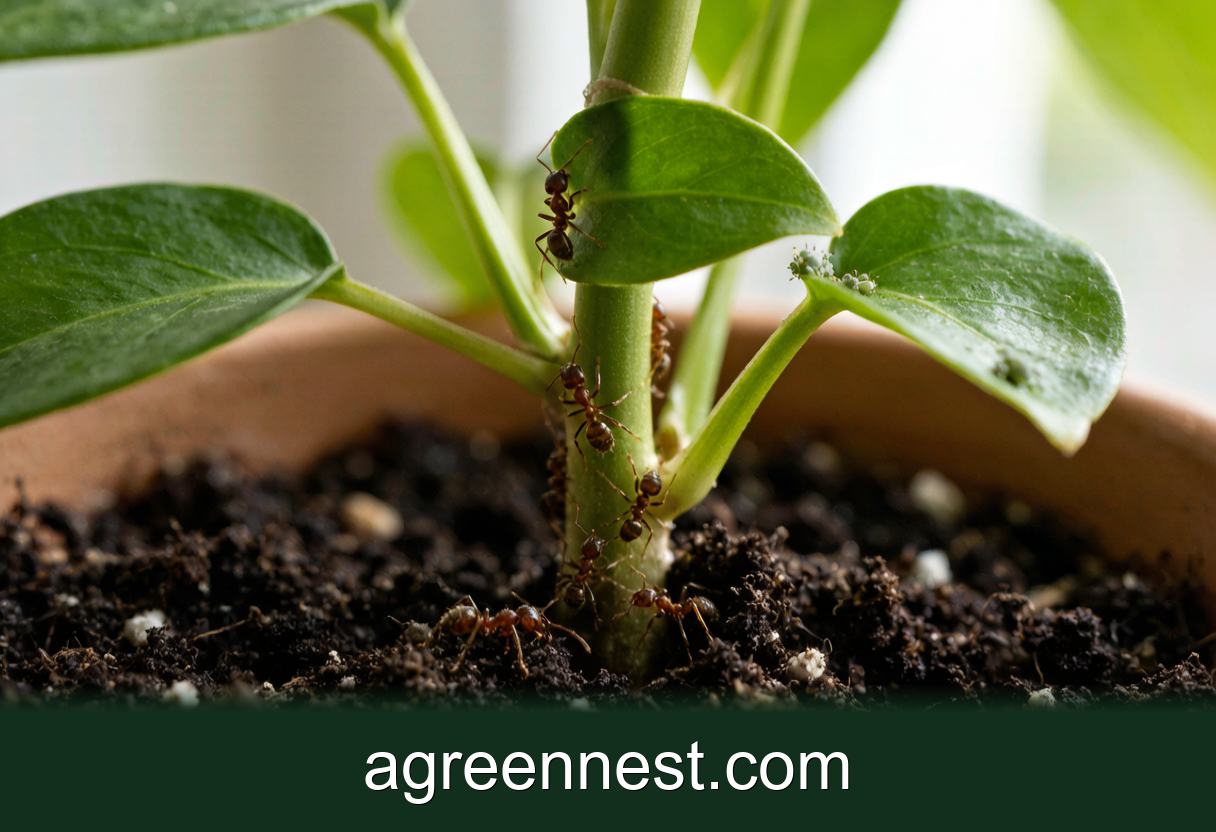
Ants in houseplant soil are usually not eating your plant. They are farming aphids, mealybugs, or scale for the sugary honeydew those pests excrete. Clear the sap-sucking insects and empty any nest, and the ants leave on their own. The ants are a clue, not the disease.
A reader sent me a photo last spring: a neat line of small brown ants marching up her pothos stem into the soil. Her question was the one everyone asks. "Are they eating my plant?" I get some version of this weekly, and the honest answer trips people up: the ants are almost never what you should worry about. They are a receipt for a different transaction happening on the leaves above.
Why Are There Ants in My Houseplant Soil?
Ants go where the food is, and inside a pot there are two possible menus. The first and by far the most common is honeydew: a sticky, sugar-rich waste that aphids, mealybugs, soft scale, and whiteflies squirt out as they drain sap from your plant. Ants are addicted to it. They will actively protect the insects producing it, moving them to fresh growth and fighting off ladybirds that try to eat them.
The second draw is the nest itself. If a pot stays warm, undisturbed, and lightly moist, a colony may decide the root zone is prime real estate and move their brood in. Common indoor culprits are the odorous house ant (Tapinoma sessile), which smells faintly of coconut when crushed, and the tiny pharaoh ant (Monomorium pharaonis) at barely 2mm long.
So before you panic, watch what the ants are doing. Are they commuting up to the leaves, or pouring in and out of a hole in the soil? That single observation tells you which problem you have.
Are Ants Actually Eating My Plant?
Almost never. This is the myth I most want to bury. Ant mouthparts are built for carrying, biting rivals, and lapping up liquids, not for chewing healthy leaf tissue or piercing roots. In a pot they behave as scavengers and herders, not grazers.
I have opened dozens of pots where ants were nesting and found roots intact, just threaded with tunnels of loose soil. The plants that looked sick were sick from something else: the sap-suckers stealing their sugars, or the overwatering that tempted a colony in.
That said, ants are not harmless bystanders. By defending aphids and mealybugs, they let a small pest problem balloon into a serious one. They are an accomplice, not the burglar.
What Are the Ants Really Farming?
Follow the trail up. Where the line of ants ends, you will find the actual pest, and it will be one of a short list I cover in the complete houseplant pest guide.
- Aphids cluster on soft new tips and flower buds, pear-shaped and green, black, or peach. Full plan in dealing with aphids.
- Mealybugs look like white cottony fluff in leaf joints and under the pot rim. See getting rid of mealybugs.
- Soft scale shows up as brown, waxy bumps along stems and leaf veins that wipe off sticky. Details in dealing with scale insects.
The tell they share is honeydew and the black sooty mould on it. If leaves feel tacky or a film coats the pot below, you have your answer. Sticky means a sap-sucker is upstream, and the ants are following the sugar.
How Do I Know If Ants Are Nesting in the Pot?
Do the flotation test; it takes ten minutes. Fill a bucket with room-temperature water and lower the pot in until water sits 2cm above the soil line. Wait 15 to 20 minutes. If a colony lives inside, ants and pale grain-like brood float up and stream over the rim. No exodus means they were only visiting for honeydew.
While the pot is out, check drainage. Ants prefer soil that dries slowly, so a nest often signals you are watering too much, the same conditions I flag in watering indoor plants correctly.
How Do I Get Rid of Ants in Potted Plants?
Treat the cause and the colony together, in this order.
- Deal with the sap-suckers first. As long as honeydew flows, new ants will keep coming. Wipe visible pests off with a cotton bud dipped in 70% isopropyl, then spray the plant with an insecticidal soap and repeat every 5 to 7 days for three cycles.
- Flush a nesting colony. The flotation soak above drives most of them out. For a stubborn nest, submerge for 20 minutes, let the pot drain fully, then repeat in two days.
- Repot if brood keeps reappearing. Bare-root the plant, rinse the roots, discard the old mix, and replant in fresh, fast-draining soil. This also lets you check for root mealybugs, which ants sometimes tend below the surface.
- Use sugar-based ant bait near the trail, not spray. A gel bait lets workers carry poison back to the queen. Follow the targeted approach in safer pest control rather than drenching soil with insecticide.
Skip the drench-everything reflex. Soaking potting mix with strong pesticide harms roots and soil life far more than the ants ever would.
Do Cinnamon and Coffee Grounds Repel Ants?
This is the advice I see most, and it is mostly wishful thinking. In my kitchen trials, a cinnamon ring slowed ants for a few hours, then they rerouted 3cm to the side. Coffee grounds did even less. Neither touches the honeydew drawing them, so the ants keep coming. More of these in the common pest myths roundup.
If any home remedy helps it is a physical barrier, like petroleum jelly around the pot rim, and even that fails once the pest is established. Fix the sap-suckers and you will not need a spice-rack defence.
How Do I Keep Ants Out for Good?
Prevention is really pest prevention. Keep foliage clean and inspect new growth weekly so aphids and mealybugs never build up enough honeydew to attract a colony. Let the top 3 to 4cm dry between waterings, empty saucers, and give pots real drainage so the root zone never becomes cosy nesting ground.
New plants are the usual way both ants and their farmed pests arrive, riding in on nursery stock. A two-week quarantine for new arrivals on a separate shelf lets you catch a stowaway colony before it spreads to the rest of your collection.
Frequently Asked Questions
Q: There are ants in my pot but I cannot find any aphids or mealybugs. Why?
A: Check hidden spots: leaf undersides, the crown, stem joints, and the underside of the pot rim where mealybugs hide. If the plant is genuinely clean and ants pour from a soil hole, you have a nesting colony, not a farming one, so run the flotation soak.
Q: Will ants move from my houseplant into the rest of my home?
A: They can, since the pot is often a satellite of a larger colony nearby. That is why a carry-back sugar bait along their trail beats killing the workers you see: it reaches the queen and collapses the whole network.
Q: Is it safe to leave a small number of ants in an outdoor-summering plant?
A: Outdoors, a few ants are normal. The problem is bringing that pot back inside in autumn with the colony aboard. Do the flotation soak and a pest check before any plant crosses the threshold for overwintering.
Q: Do ants cause the black film on my leaves?
A: Not directly. That black film is sooty mould growing on the honeydew from aphids, scale, or mealybugs. The ants farm those insects, so they are one step removed. Clear the sap-suckers, wash off the residue, and the sooty mould stops returning.
Ants in your soil are frustrating, but useful: think of them as a flag your plant is raising. Nine times out of ten they lead you straight to an aphid or mealybug problem you would have missed for weeks. Handle the sap-suckers, flush any nest, set a targeted bait, and skip the cinnamon. To confirm which pest the ants are tending before you treat, walk through the symptoms in spotting pests early first.
Sources & further reading
GreenNest authors research and write every guide independently. The external links below are reputable references we recommend for deeper reading — they are not the sources we copied from.
- US EPA — Safer Pest Control — US EPA
- NC State Extension Plant Toolbox — NC State Extension
Recommended Tools for Plant Pests & Diseases Care
Free, no-signup helpers matched to this guide.
🔍 Free Tool
Pest & Problem Identifier
Pick the symptoms you see and get the likely culprit plus a fix.
Free Ebooks to Explore
Downloadable handbooks — no email required.
Free Ebook
The AGreenNest Succulent Care Handbook
The complete, beginner-to-confident guide to growing fat, happy succulents — 10 chapters and a 20-plant directory.
Free Ebook
Haworthia & Haworthiopsis Care Handbook
A focused guide to the striped, forgiving Haworthia clan.
Share Your Plant Story
Grown something tricky, or found a trick that finally worked? Tell us in the comments, or see what other readers are sharing on our Community page. The best reader tips get folded back into our guides.
Join the Conversation
Have a tip or a question about Ants in Houseplant Soil: What They Really Mean? Share it below — comments are saved on our server.