 AGreenNest
Plant Pests & Diseases
Springtails in Houseplant Soil: Should You Worry?
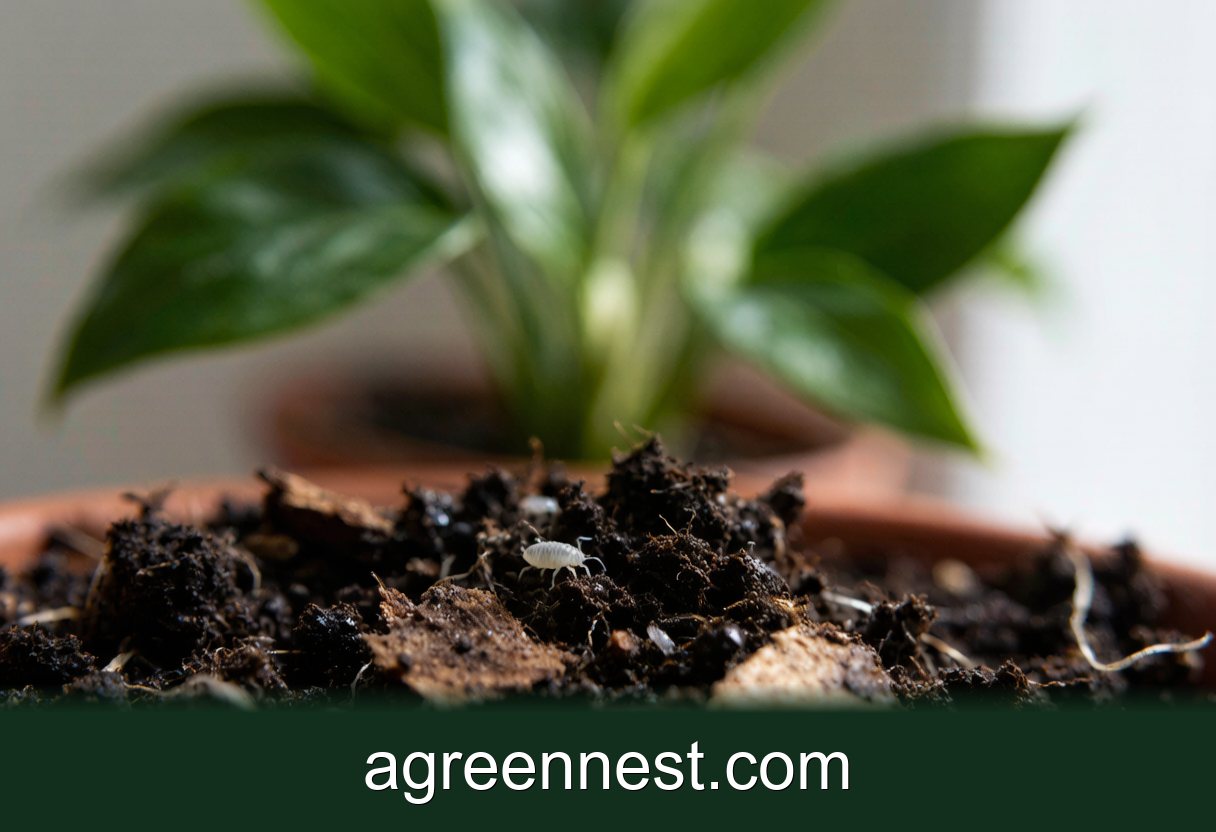
Springtails are tiny white or grey jumping bugs in damp houseplant soil, and they are harmless. They eat fungus and rotting matter, not living roots. They signal soil that stays too wet. Let the top 3 to 4cm dry between waterings and the population crashes on its own within two weeks.
I watered a peace lily, tipped the pot to drain it, and the soil surface seemed to shimmer. A hundred tiny specks jumped at once, like the dirt had static. My first thought was the same as yours: something is eating my plant. So I scooped a teaspoon of the topsoil under a loupe and spent an evening finding out what they were. The verdict surprised me, and it flips most of the panic advice online on its head.
What Are These Tiny Jumping Bugs?
They are springtails, an ancient group of soil animals in the order Collembola. The common indoor one is Folsomia candida, a pearly white speck about 1 to 2mm long, though outdoor species run grey, brown, or slate blue and reach 6mm.
The name comes from the furcula, a forked tail folded under the body like a spring. When threatened, they snap it against the ground and launch several centimetres in a blink. That jump is the giveaway. Fungus gnat larvae wriggle, mites crawl, but only springtails ping off the surface all at once when you disturb the pot.
Look closely and you will see they gather where the soil is wettest: the drainage tray, the rim, the spot under a leaf that never dries. They are not clustered on the stem or the new growth, which is your first clue about what they actually want.
Are Springtails Actually Harmful?
No, and this is the part people refuse to believe. Springtails do not pierce roots, chew leaves, or spread disease. Their mouthparts are built to graze fungus, algae, decaying leaf litter, and the biofilm on damp soil. In a healthy pot they are decomposers, the same job they do across every forest floor on the planet.
I kept a colony of Folsomia candida in a jar of moist mix for six weeks next to a rooted pothos cutting. The roots grew normally; the springtails multiplied, ate the mould, and never touched living tissue. Terrarium and dart-frog keepers actually breed them on purpose to clean up waste and fungus.
So if you are staring at a jumping carpet and reaching for pesticide, stop. The bugs are a symptom, not the disease. They are telling you the soil is staying wetter than your plant wants.
Why Do Springtails Show Up in the First Place?
Because there is a steady food supply, and that food is dampness plus decay. Springtails explode in numbers only when soil stays soggy long enough to grow the fungus and biofilm they eat. A pot that dries out on top between waterings cannot feed a big colony.
Three habits set the table for them: watering on a fixed schedule instead of by feel, poor drainage or a saucer you never empty, and a thick mulch of bark or dead leaves on the surface. Fix the moisture and you starve the population out. The same overwatering that breeds springtails also invites the white fuzzy soil mould and, if it goes on, the far more serious root rot that genuinely kills plants.
Springtails, Fungus Gnats, or Something Worse?
Correct identification decides whether you can relax or need to act, so read the behaviour before you spray anything.
- Springtails jump, cluster on wet soil and trays, and never fly. Harmless.
- Fungus gnats are small black flies that drift up when you water; their larvae are clear maggots in the top 3cm that can nibble tender roots. The full plan is in the fungus gnat guide, and the two are easy to mix up, which I cover in spotting pests early.
- Root mealybugs or thrips are the ones that actually threaten the plant, and they look nothing alike once you know the signs from the complete pest overview.
If your bugs jump and stay on the surface, breathe out. You have springtails, and the old wives' tales about them have probably scared you more than the animals ever could.
How Do I Get Rid of Springtails?
You do not kill them, you dry them out. Every step below removes the moisture and fungus they live on.
- Stop watering until the top 3 to 4cm is bone dry. Push a finger in to the second knuckle. If it feels cool or damp, wait. For most foliage plants that means skipping 7 to 10 days.
- Empty the saucer every time. Never let the pot sit in runoff. A wet tray is a springtail nursery.
- Scrape off any surface mulch or dead leaves and the top 1cm of crusted soil where the biofilm lives.
- Bottom water for the next month. Set the pot in 2 to 3cm of water for 20 minutes so the surface stays dry while the roots drink from below. Details in watering indoor plants correctly.
- If the colony is huge, drench the soil once with a 1 part 3% hydrogen peroxide to 4 parts water mix. It fizzes, kills the surface layer, and breaks down to water and oxygen within the hour.
Do this and the numbers fall off a cliff inside two weeks. I have never once needed an insecticide for springtails, and reaching for a neem or soap spray on a harmless decomposer is exactly the kind of overreaction the safer pest control approach is meant to prevent.
How Do I Keep Them From Coming Back?
Keep the top layer of soil dry and there is nothing for them to eat. Water by feel, not by calendar. Use a mix with 20 to 30 percent perlite so the surface dries fast, and choose pots with real drainage holes. When you repot, fresh well draining soil resets the whole system, which is one more reason to repot on time rather than let old mix stay waterlogged.
New plants are the most common way springtails arrive, riding in on nursery soil that has been kept damp for weeks. A two week quarantine for new arrivals lets you spot and dry out any hitchhikers before they reach the rest of your shelf.
Frequently Asked Questions
Q: Will springtails spread from my plant to the rest of the house?
A: They can wander to other damp pots, but they cannot live on dry carpet, furniture, or food. They need constant moisture, so a house with normally watered plants gives them nowhere to establish. Dry out the source pot and they have no route to spread.
Q: Are springtails dangerous to pets or people?
A: No. They do not bite, sting, or carry disease, and they cannot infest skin or hair despite scary internet claims. They are purely a nuisance based on numbers, not a health risk to anyone in the home.
Q: My soil dried out but a few springtails are still there. Is that a problem?
A: A small resident population in the lower, moister soil is completely fine and even helpful, since they recycle organic matter. You are only aiming to end the visible surface swarm, not sterilise the pot. A handful is normal and harmless.
Q: Can I just repot to fix it instantly?
A: Repotting into fresh, fast draining mix does clear most of them at once, and it is worth doing if the current soil is old and soggy. Just bare root gently, rinse the roots, and check for real problems like rot while you are in there.
Springtails are the rare houseplant "pest" that asks you to do less, not more. They jump, they look alarming in a swarm, and they are eating fungus you would rather not have anyway. Skip the pesticide, dry the top few centimetres of soil, empty the saucer, and the colony fades within a fortnight. If you want to be sure the jumpers on your soil are truly harmless and not something that needs real action, cross-check them against the complete houseplant pest guide before you spend a cent on sprays.
Sources & further reading
GreenNest authors research and write every guide independently. The external links below are reputable references we recommend for deeper reading — they are not the sources we copied from.
- US EPA — Safer Pest Control — US EPA
- NC State Extension Plant Toolbox — NC State Extension
Recommended Tools for Plant Pests & Diseases Care
Free, no-signup helpers matched to this guide.
🔍 Free Tool
Pest & Problem Identifier
Pick the symptoms you see and get the likely culprit plus a fix.
Free Ebooks to Explore
Downloadable handbooks — no email required.
Free Ebook
The AGreenNest Succulent Care Handbook
The complete, beginner-to-confident guide to growing fat, happy succulents — 10 chapters and a 20-plant directory.
Free Ebook
Haworthia & Haworthiopsis Care Handbook
A focused guide to the striped, forgiving Haworthia clan.
Share Your Plant Story
Grown something tricky, or found a trick that finally worked? Tell us in the comments, or see what other readers are sharing on our Community page. The best reader tips get folded back into our guides.
Join the Conversation
Have a tip or a question about Springtails in Houseplant Soil: Should You Worry?? Share it below — comments are saved on our server.