 AGreenNest
Hydroponic Growing
Hydroponic Water Temperature: The 18-22°C Rule
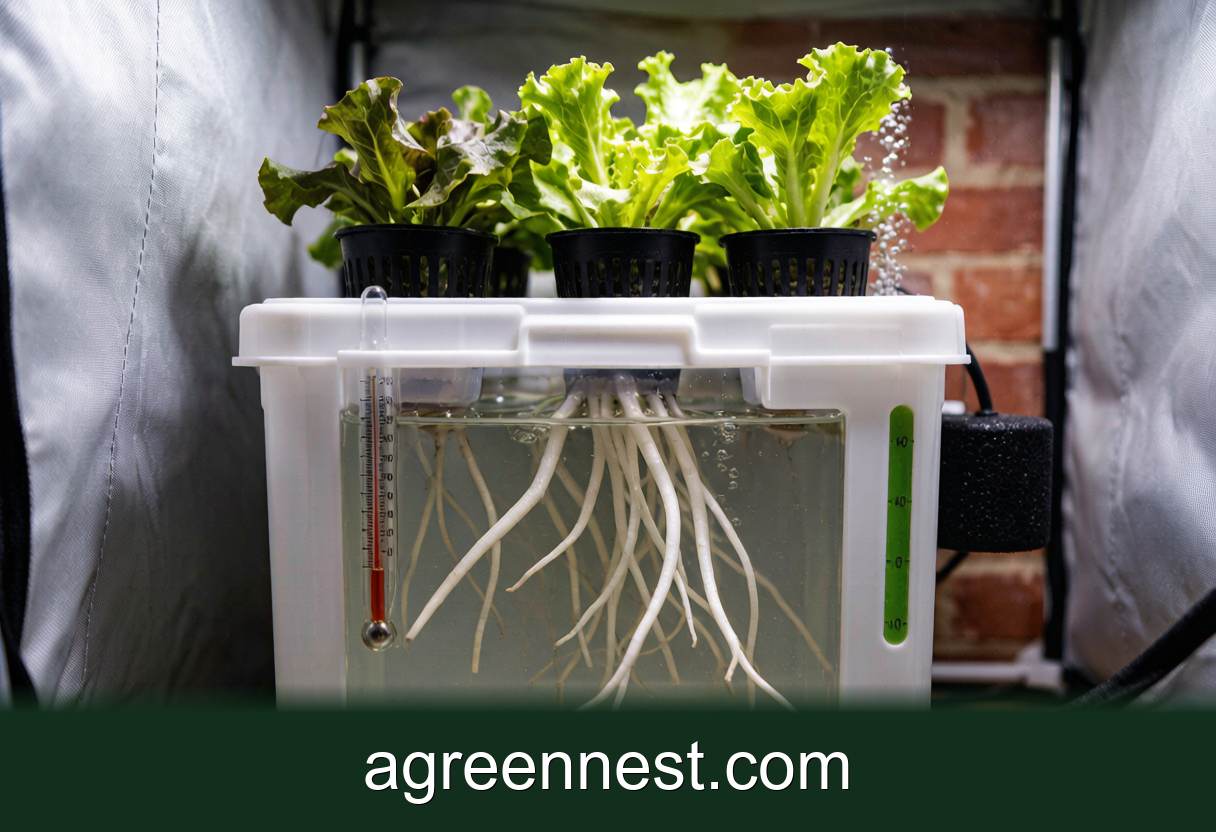
Keep hydroponic reservoir water at 18 to 22°C. Warm water holds less dissolved oxygen, so above 24°C roots suffocate and Pythium root rot takes hold within days. Below 15°C nutrient uptake stalls. Measure daily with a cheap probe and cool the reservoir, not the room.
Most people obsess over pH and EC and never put a thermometer in the tank. Then their lettuce roots turn to brown slime in a week and they blame the nutrients. Nine times out of ten it was the water temperature. It is the single most ignored number in home hydroponics, and it quietly decides whether your roots breathe or drown.
Here is the target, up front: hold the reservoir at 18 to 22°C (64 to 72°F). Treat 24°C as a hard ceiling. Everything below explains why that window is so narrow and how to stay inside it.
Why Does Water Temperature Matter So Much?
It comes down to oxygen. Roots do not just drink water, they breathe dissolved oxygen (DO) out of it, and warm water cannot hold much of it.
Cold water at 15°C carries roughly 10 mg/L of DO when saturated. Push that same water to 25°C and the ceiling drops to about 8.2 mg/L. At 30°C you are down near 7.5 mg/L. So exactly when your plants are hottest and demanding the most oxygen, the water is holding the least. Roots that cannot get 5 to 6 mg/L start to shut down.
Starved roots stop taking up water and nutrients, the tips brown, and the plant wilts at midday even though the reservoir is full. That wilt fools people into adding more water. The real fix is colder, more oxygenated water.
What Happens When the Reservoir Gets Too Warm?
Root rot, and fast. The main culprit is Pythium, a water mould that is present almost everywhere and turns aggressive above 24°C. In warm, low-oxygen water it colonises roots in 2 to 4 days, and once healthy white roots go tan, then brown, then mushy and smelling of drains, that plant is usually finished.
Warm water causes three problems at once:
- Low dissolved oxygen suffocates the root zone.
- Pathogen bloom. Pythium and Phytophthora thrive in the 25 to 30°C band.
- Algae explosion. Warmth plus any light leak feeds green slime that competes for the little oxygen left. I break the algae side down in preventing algae in hydroponics.
If you already see browning roots, act today. The rescue steps carry over from soil growing in dealing with root rot: cut the slimy roots, cool the water, and oxygenate hard.
What Is the Ideal Hydroponic Water Temperature?
For most leafy crops and fruiting plants, aim for 18 to 22°C. Cool-season crops like lettuce (Lactuca sativa) and spinach (Spinacia oleracea) are happiest at the lower end, 16 to 20°C. Warm-season fruiters such as peppers and tomatoes (Solanum lycopersicum) tolerate the upper end, up to 22 to 24°C, but no higher.
Do not swing to the other extreme either. Below 15°C, nutrient uptake slows because the roots and the microbes around them go sluggish, and phosphorus in particular gets locked out. Water sitting at 10°C will stall growth even with a perfect nutrient mix in the tank.
One clarification that trips people up: it is the water temperature that matters, not the air. Your grow tent can sit at 26°C air and still grow beautifully if the root zone stays at 20°C. Roots set the pace, so cool the water, not the room.
How Do I Actually Cool the Reservoir?
You have a ladder of options, from free to serious. Work down it until the tank holds under 22°C.
- Insulate and shade first. A reflective wrap or even a light-coloured towel around the tank blocks radiant heat and stops light-driven algae. Costs nothing and often buys you 2 to 3°C.
- Get the reservoir off the floor and away from equipment. Pumps, ballasts, and a hot slab all bleed heat into the water. A bigger tank also helps, because more volume swings temperature more slowly.
- Frozen bottle swaps. Freeze two or three sealed 500ml bottles of water and rotate one into the reservoir. Cheap, effective for small setups, but labour intensive; expect each bottle to hold for 4 to 6 hours in summer.
- A dedicated water chiller. For anything above 40 litres or a hot room, this is the only reliable answer. Set it to 20°C and forget it. A 1/10 HP unit handles most home tents.
Whatever you do, keep the air pump running. More dissolved oxygen partly offsets warmth, so a strong air stone is cheap insurance. A solid starter system usually bundles decent aeration, and if you are dialling in a deep water culture tank, the step-by-step DWC guide covers airflow sizing.
How Should I Measure and Track It?
Buy a cheap aquarium thermometer or a probe you can leave submerged, and read it at the same time every day. The worst moment is late afternoon, when the room has soaked up heat all day, so check then. That is your true peak.
Log it. A three-line note of morning and afternoon temperatures for a week tells you your real swing, and most home tanks swing 3 to 5°C between night and mid-afternoon. If your peak crosses 24°C even once a day, you have a problem to fix, not a number to average away.
Frequently Asked Questions
Q: My air temperature is fine at 23°C. Why is my water hitting 27°C?
A: Water lags and stores heat. Pumps, the grow light, and a warm floor dump energy straight into the reservoir, and a small tank has no thermal buffer. Measure the water directly, insulate the tank, and add frozen bottles or a chiller. Never assume the water matches the air.
Q: Can I just add ice cubes to cool it down?
A: In an emergency, yes, but use sealed frozen bottles instead. Loose ice made from tap water dilutes your nutrient concentration and can crash the temperature 8 to 10°C in minutes, which shocks the roots. Bottles cool gently and leave your EC untouched.
Q: Does cold water at night hurt my plants?
A: A mild dip to 16 to 18°C overnight is fine and even helps hold dissolved oxygen. The danger is a sustained drop below 15°C, which locks out phosphorus and slows growth. If your basement runs cold, a chiller with a heater function keeps the floor steady.
Q: How fast can Pythium ruin a crop once the water goes warm?
A: In water above 25°C with low oxygen, root rot can visibly take hold in 2 to 4 days. That is why one hot afternoon spike matters more than a good weekly average. Fix the ceiling, not the mean.
Water temperature is the number that decides whether every other number you carefully set actually reaches the plant. Keep the reservoir between 18 and 22°C, never let it top 24°C, and keep the air pump pushing oxygen. Insulate, shade, and if your room runs hot, buy the chiller and stop fighting it. Once the water is right, chase the rest of your setup with the hydroponic pH management guide.
Sources & further reading
GreenNest authors research and write every guide independently. The external links below are reputable references we recommend for deeper reading — they are not the sources we copied from.
- Michigan State University Extension — Michigan State University
- University of Minnesota Extension — U Minnesota Extension
- NC State Extension Plant Toolbox — NC State Extension
Recommended Tools for Hydroponic Growing Care
Free, no-signup helpers matched to this guide.
Free Ebooks to Explore
Downloadable handbooks — no email required.
Free Ebook
The AGreenNest Succulent Care Handbook
The complete, beginner-to-confident guide to growing fat, happy succulents — 10 chapters and a 20-plant directory.
Free Ebook
Haworthia & Haworthiopsis Care Handbook
A focused guide to the striped, forgiving Haworthia clan.
Share Your Plant Story
Grown something tricky, or found a trick that finally worked? Tell us in the comments, or see what other readers are sharing on our Community page. The best reader tips get folded back into our guides.
Join the Conversation
Have a tip or a question about Hydroponic Water Temperature: The 18-22°C Rule? Share it below — comments are saved on our server.