 AGreenNest
Plant Styling & Display
Dining Room Plant Styling That Survives Dinner
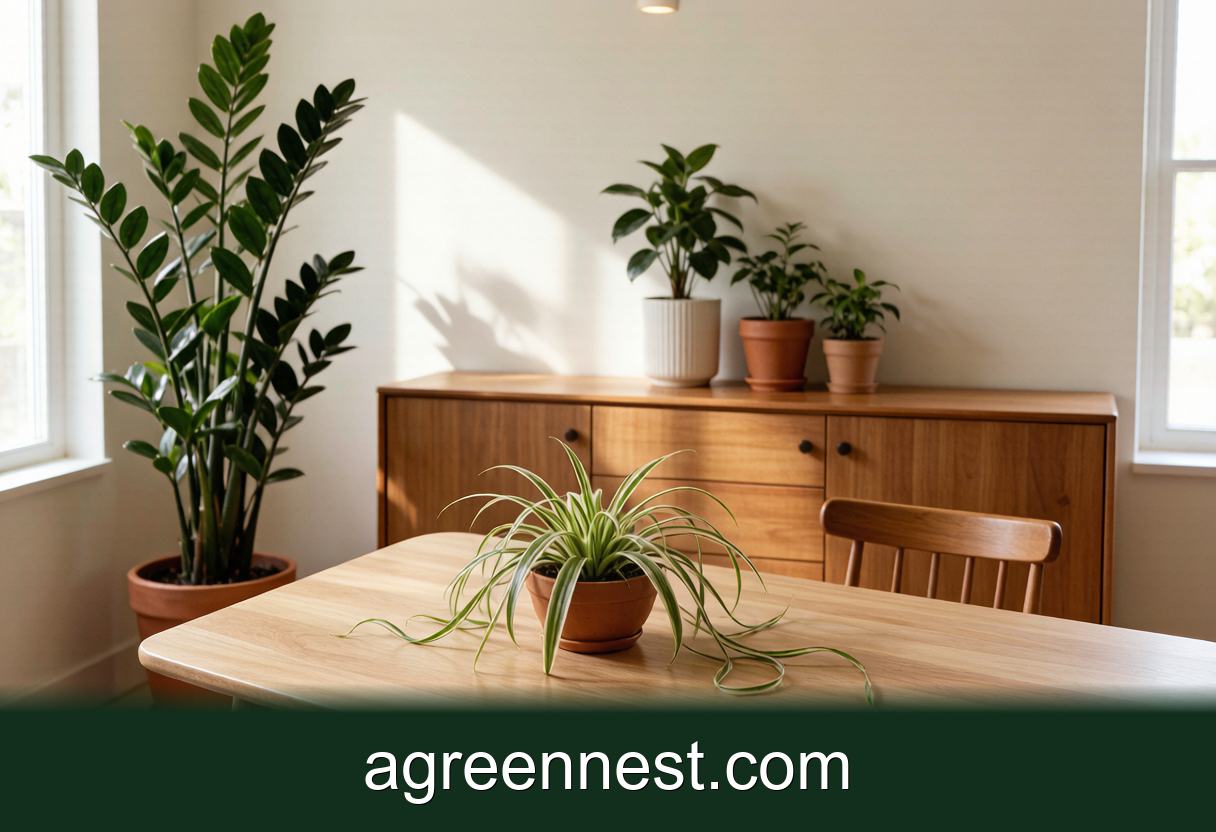
Style a dining room by treating the table as a stage, not a shelf. Keep the centrepiece under 30cm so people can see each other, put the big plants on the sideboard and floor, and choose species that shrug off low light and the odd wine splash, like *Zamioculcas zamiifolia* and *Chlorophytum comosum*.
The first dining room I ever styled looked gorgeous for exactly one dinner party. I had crowded a tall trailing pothos down the middle of the table, and by the main course two guests were peering at each other through the leaves like hedgerow neighbours. I have learned since. A dining room is a room you sit still in, at eye level, for an hour or more, and that changes every plant decision you make.
So let me walk you through how I style one now, after a good few mistakes and a lot of moved pots.
Why Is the Dining Room So Tricky to Style?
Because it fights you on light and on use. Dining rooms often sit in the middle of a home, away from the big windows, so the light is gentler than a plant-filled living room usually gets. And the table is not a display surface, it is a working one. People eat there, spill there, do homework there.
That means two rules from the start. First, anything on the table has to earn its spot without getting in the way. Second, the plants doing the heavy lifting, the ones that give the room its green, live off the table entirely. Get that split right and the room reads lush without ever feeling cluttered.
What Goes on the Table Without Ruining Dinner?
Keep it low and keep it movable. My hard limit for a centrepiece is 30cm tall, because that is roughly where sightlines break across a seated table. Below that, people talk over the top of it without leaning.
I like a shallow bowl of trailing Chlorophytum comosum, the humble spider plant, or a cluster of three small terracotta pots of Peperomia in different leaf shapes. A single low, wide dish of assorted succulents works beautifully on a sunny table too. The trick most people miss: put it on a small tray. When dinner needs the space, you lift the whole arrangement off in one move instead of shuffling five pots.
For a table that gets weak light, lean on the toughest small plants you can find. My go-to shortlist lives in the best low-light houseplants of 2026, and almost all of them are happy at 1 to 2 metres back from a window.
Where Do the Bigger Plants Actually Go?
Everywhere but the table. This is where a dining room comes alive.
- The sideboard or buffet. This is prime real estate. Group an odd number of plants at staggered heights, using the rule of grouping in odd clusters so it feels collected rather than lined up like soldiers. A trailing plant at one end softens the hard edge of the furniture.
- A floor corner. One tall, sculptural plant in an empty corner anchors the whole room. A Zamioculcas zamiifolia or a cast-iron plant (Aspidistra elatior) both handle dim corners and the occasional forgotten watering, which matters in a room you do not pass through daily.
- A shelf or the wall. Trailing species from above draw the eye up and free the floor. I go deeper on this in hanging and trailing plant styling, and it works especially well over a sideboard.
Because dining rooms are dim, I rotate a couple of these pots to a brighter room every few weeks so they recover. It is the same logic I use across corner plant styling: no plant should live permanently in the darkest spot.
Which Plants Actually Survive a Dining Room?
The honest shortlist is the low-light survivors, because that is the real constraint. My reliable picks:
- ZZ plant (Zamioculcas zamiifolia) for the floor. It waves off low light and needs water only every 2 to 3 weeks.
- Cast-iron plant (Aspidistra elatior) for a shady corner, Victorian dining rooms grew these for a reason.
- Spider plant (Chlorophytum comosum) for the table or a shelf, non-toxic and cheerful.
- Pothos (Epipremnum aureum) trailing from the sideboard, though keep it out of reach if pets graze.
A word on safety, because dining rooms and children and pets mix. Several classic houseplants irritate mouths if chewed, so if you have curious toddlers or a cat that treats greenery as a salad bar, build the room around the genuinely pet-safe options in pet-friendly room styling rather than hoping for the best.
How Do I Keep It Looking Good Long Term?
Style for the room you have, not the room in the magazine. A dining room used three times a day needs plants that forgive neglect and the odd knock, so resist the urge to fill it with fussy calatheas that will sulk.
Wipe leaves before guests come, the dust shows under pendant lights. Empty any saucer near the table so a curious elbow does not tip stagnant water onto the cloth. And keep the palette of pots tight, two or three materials at most, so the eye rests on the plants and the food, not a jumble of mismatched containers.
Frequently Asked Questions
Q: My dining room has no window at all. Can I still keep plants alive there?
A: Not permanently on natural light alone. Rotate two hardy plants like ZZ or cast-iron in from a brighter room every 2 to 3 weeks, or add a small clip-on grow light on a timer for 8 to 10 hours a day. Treat the dark room as a display stage, not a growing spot.
Q: What is a safe centrepiece height for a table where people talk across it?
A: Under 30cm. That keeps the arrangement below the sightline of seated adults so nobody is dodging leaves to make eye contact. If you want a taller moment for a special dinner, use it only while serving and lift it away once everyone sits.
Q: Will candle heat or the smell of food bother my table plants?
A: Food odours are harmless, but keep foliage at least 20cm from an open flame, since direct heat scorches leaf edges. Also avoid setting plants right beside a radiator or heating vent that runs during meals, as the dry blast browns tips fast.
Q: How do I stop the trailing plant on my sideboard from getting leggy in low light?
A: Give it a brighter break. Move it to a well-lit windowsill for a week each month, pinch back the longest bare vines to force bushier growth, and turn the pot a quarter every few days so it does not lean toward the nearest light.
A dining room rewards restraint. Keep the table clear enough to actually use, let the sideboard and the corners carry the greenery, and pick plants tough enough to handle a dim, busy room. Do that and the space feels alive without ever getting in the way of the reason you are all there. If you want to nail the staggered-height groupings that make a sideboard sing, start with our guide to arranging plants in clusters.
Sources & further reading
GreenNest authors research and write every guide independently. The external links below are reputable references we recommend for deeper reading — they are not the sources we copied from.
- Royal Horticultural Society — Houseplant care — RHS
- Missouri Botanical Garden — Missouri Botanical Garden
Recommended Tools for Plant Styling & Display Care
Free, no-signup helpers matched to this guide.
Free Ebooks to Explore
Downloadable handbooks — no email required.
Free Ebook
The AGreenNest Succulent Care Handbook
The complete, beginner-to-confident guide to growing fat, happy succulents — 10 chapters and a 20-plant directory.
Free Ebook
Haworthia & Haworthiopsis Care Handbook
A focused guide to the striped, forgiving Haworthia clan.
Share Your Plant Story
Grown something tricky, or found a trick that finally worked? Tell us in the comments, or see what other readers are sharing on our Community page. The best reader tips get folded back into our guides.
Join the Conversation
Have a tip or a question about Dining Room Plant Styling That Survives Dinner? Share it below — comments are saved on our server.