 AGreenNest
Hydroponic Growing
Tap Water vs RO Water for Hydroponics
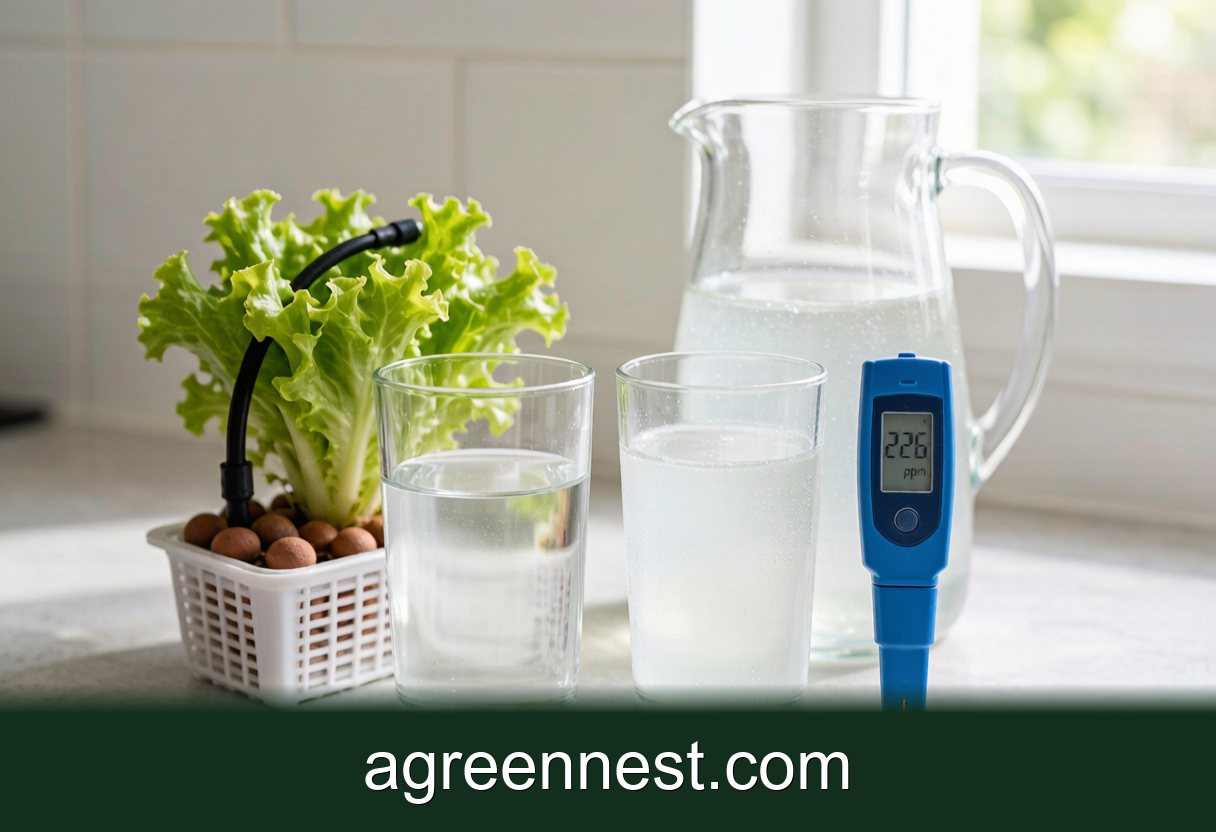
For most hydroponic growers, tap water works fine if it starts below 200 ppm and you let chlorine gas off for 24 hours. Reverse-osmosis water earns its cost only above 300 ppm starting hardness or for salt-sensitive crops like strawberries, where a clean baseline gives you full control of the nutrient mix.
I spent my first two years of hydroponics buying jugs of reverse-osmosis water because a forum told me to, and my lettuce grew exactly as well the day I switched back to the kitchen tap. That expensive habit taught me the real question is not which water is purer. It is what your specific tap water measures, and whether your crop cares.
Let me save you the jugs. Here is how tap and RO water actually compare on the numbers that decide a hydroponic crop.
What is actually in your tap water?
Grab a TDS meter, the cheap $12 kind, and read your tap in parts per million (ppm) before you argue with anyone about water. That number is your starting point, the dissolved minerals already in the water before you add a single drop of nutrient.
Most municipal tap sits between 50 and 400 ppm. Below 150 ppm you have soft, forgiving water. Between 150 and 300 ppm is average and workable. Above 300 ppm you are starting with a lot of calcium, magnesium, and sometimes sodium already in solution, which eats into the room you have for a balanced feed. Reverse-osmosis water, by contrast, comes out at 0 to 10 ppm, a blank slate. If you have never checked yours, do that first; everything below depends on it.
When tap water is perfectly fine
For leafy greens and herbs, tap water under about 200 ppm is not a compromise, it is the sensible default. Lettuce (Lactuca sativa), basil (Ocimum basilicum), and most kitchen herbs run happily at a total EC of 1.0 to 1.6. If your tap is 120 ppm, roughly 0.2 EC, you add nutrient until you hit target and the plant never knows the difference.
The minerals in moderate tap water are not contaminants here. Calcium and magnesium are nutrients plants need, and starting with some means you may lean on a lighter feed. I have grown crates of hydroponic lettuce on 140 ppm tap for years. If your water is in that range, spend your money on light and nutrients, not on purifying water your plants are happy to drink.
Should you worry about chlorine and chloramine?
This is where the myths pile up, so here are the facts. Chlorine, used to disinfect most tap supplies, gasses off on its own. Leave an open bucket for 24 hours, or run an air stone in it for an hour, and the free chlorine largely disappears. At the low levels in drinking water it does little harm to an established root zone anyway.
Chloramine is the stubborn one. Many cities now use it instead of chlorine because it is more stable, which is exactly the problem: it does not gas off in a day. If your utility uses chloramine, sitting the water out does nothing. A carbon filter removes it, or a tiny dose of a dechlorinator does the job. Call your water utility or read their annual report to find out which they use, because the fix depends entirely on the answer. For the beneficial microbes in an organic or living system, this matters more than for a straight mineral feed, as I cover in hydroponics for beginners.
Does RO water actually grow better plants?
Not by itself. RO water grows better plants only when your tap water was working against you. Its real advantage is control: starting from near-zero ppm, every mineral in your reservoir is one you added on purpose. You dial the exact EC and ratio the crop wants with nothing fighting your recipe.
That control earns its keep in three cases. First, hard tap above 300 ppm, where the existing minerals crowd out a balanced feed and can lock out nutrients. Second, salt-sensitive crops such as strawberries (Fragaria × ananassa) and many peppers (Capsicum annuum), which sulk when background sodium climbs. Third, precision growing, where you are chasing a specific recipe and cannot afford an unknown baseline. Outside those cases, RO is a solution to a problem you may not have. Get your feed right first with the nutrient mixing guide before you blame the water.
How each affects pH stability
Here is a trade-off nobody mentions at the checkout. Tap water usually contains carbonates that act as a buffer, holding pH steady against the daily drift a reservoir sees. That buffering is genuinely helpful, especially for beginners still learning to read a pH pen.
RO water has almost no buffering. Strip out the minerals and you strip out the cushion, so RO reservoirs swing faster and need checking more often. Many growers who switch to RO are surprised when their pH lurches from 6.0 to 5.2 overnight. If you go RO, plan to add a calcium-magnesium supplement and monitor pH daily rather than every few days. My full routine lives in the pH management guide.
The real cost of RO water
RO is not free water. A home RO unit wastes roughly 3 to 4 litres of drain water for every 1 litre it purifies, and the membrane and filters need replacing every 6 to 24 months. Buying jugs is worse: at $1 to $2 per gallon it quietly outspends a modest grow light over a season.
Against that, a decent under-sink RO system runs $150 to $250 up front. For a grower with hard water and a serious setup, that pays back in control and crop quality. For someone running one Kratky jar of basil on 140 ppm tap, it never pays back at all. Match the spend to the scale, and remember cleaner water also means fewer mineral deposits and, often, less trouble with algae in the reservoir.
The verdict: which should you use?
Test your tap first. If it reads under 200 ppm and your city uses chlorine, use tap water, let it sit a day, and put your money elsewhere. If it reads 200 to 300 ppm, tap still works but watch your EC headroom. Above 300 ppm, or if you grow strawberries and peppers or chase precise recipes, RO is worth the cost. Chloramine changes the routine but not the water source: filter it out and carry on. The purest water is not automatically the best water; the right water is the one that matches your crop and your meter.
Frequently Asked Questions
Q: My tap water is 350 ppm. Can I still grow lettuce without RO?
A: You can, but you have little EC headroom before the total climbs too high, and the mineral balance is out of your hands. At 350 ppm I would cut tap 50/50 with RO or rainwater to bring the baseline down to around 175 ppm, which restores room for a proper feed.
Q: How long does chlorine take to evaporate from a bucket?
A: About 24 hours in an open container, or roughly an hour with an air stone bubbling. That only works for chlorine. If your utility uses chloramine, waiting does nothing and you need a carbon filter or a dechlorinator instead.
Q: Is rainwater a cheaper alternative to RO?
A: Often, yes. Collected rainwater is naturally low in dissolved minerals, usually 10 to 50 ppm, and behaves much like RO for hydroponic purposes. Filter out debris first, and be cautious about roof runoff if you have concerns about contaminants from the collection surface.
Q: Do I need a calcium-magnesium supplement with RO water?
A: Usually yes. Because RO strips out the calcium and magnesium plants need, most growers add a dedicated Cal-Mag product to RO reservoirs. Tap water at 150 ppm or more often supplies enough on its own, so check your feed chart before dosing.
Tap versus RO is not a purity contest, it is a matching exercise: read your tap in ppm, learn whether your city uses chlorine or chloramine, and pick the water your specific crop actually needs. Most growers with soft-to-average tap should save the money for nutrients and light. If you want to translate your ppm reading into a clear plan, our water quality guide walks you through what your number means and what to do about it.
Sources & further reading
GreenNest authors research and write every guide independently. The external links below are reputable references we recommend for deeper reading — they are not the sources we copied from.
- Michigan State University — Gardening — Michigan State University
- NC State Extension Plant Toolbox — NC State Extension
- University of Minnesota Extension — U Minnesota Extension
Recommended Tools for Hydroponic Growing Care
Free, no-signup helpers matched to this guide.
Free Ebooks to Explore
Downloadable handbooks — no email required.
Free Ebook
The AGreenNest Succulent Care Handbook
The complete, beginner-to-confident guide to growing fat, happy succulents — 10 chapters and a 20-plant directory.
Free Ebook
Haworthia & Haworthiopsis Care Handbook
A focused guide to the striped, forgiving Haworthia clan.
Share Your Plant Story
Grown something tricky, or found a trick that finally worked? Tell us in the comments, or see what other readers are sharing on our Community page. The best reader tips get folded back into our guides.
Join the Conversation
Have a tip or a question about Tap Water vs RO Water for Hydroponics? Share it below — comments are saved on our server.