 AGreenNest
Succulent Care
Panda Plant Care: Growing Kalanchoe tomentosa
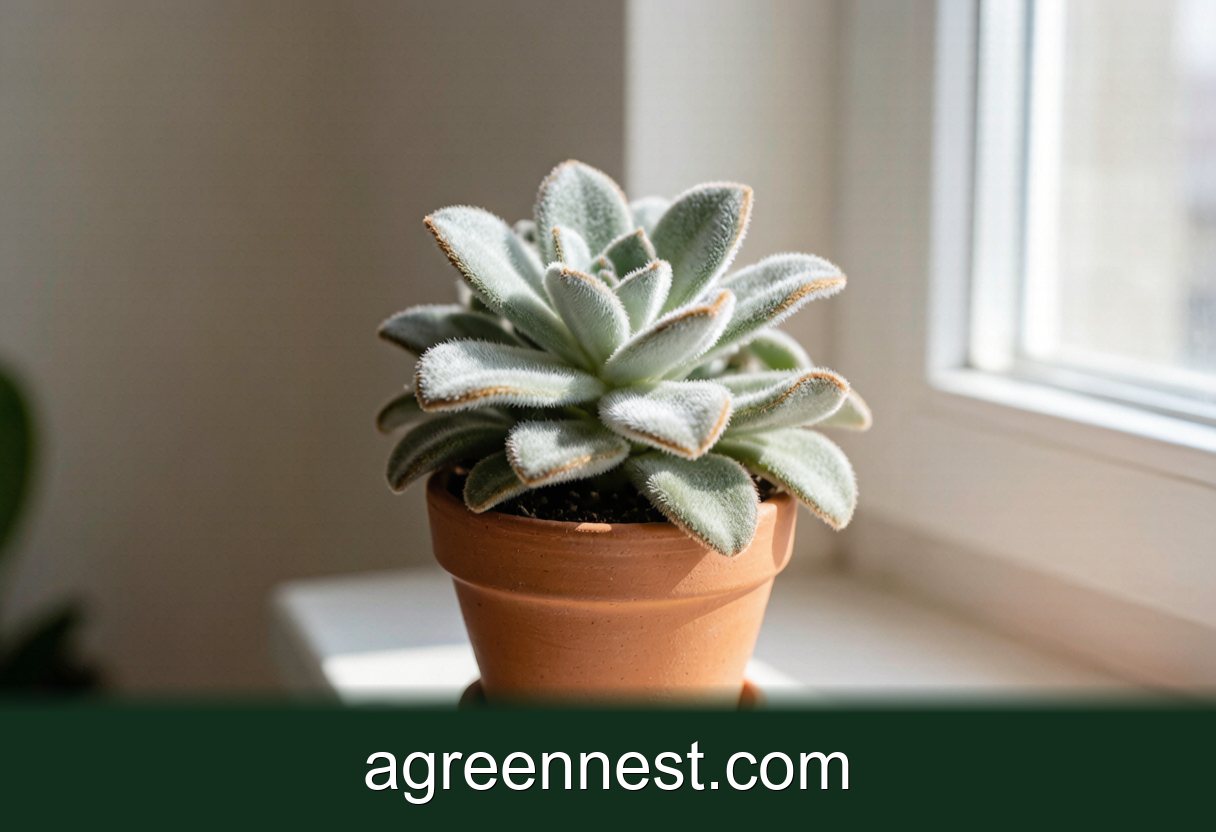
The panda plant (*Kalanchoe tomentosa*) is a slow-growing, fuzzy succulent that wants bright light, gritty soil, and water only when the pot is bone dry, roughly every 12 to 18 days indoors. Keep it above 10°C and avoid wetting the felted leaves, and it stays compact and silver-furred for years.
The first panda plant I owned went from silver and plump to a stretched, half-bald mess in a single winter, and it was entirely my fault. I parked it on a dim bookshelf and watered it on the same Sunday rhythm as my pothos. Kalanchoe tomentosa puts up with a lot of neglect, but that particular combination of low light and steady moisture is the one thing it will not tolerate.
I have grown three of them since, and once you understand what those fuzzy leaves are actually telling you, this is one of the calmest succulents you can keep. Here is everything I have learned about keeping a panda plant compact, silver, and healthy.
Meet the Panda Plant
Kalanchoe tomentosa comes from the rocky highlands of Madagascar, and everything odd about it makes sense once you picture that home. The leaves are covered in fine silver hairs, called trichomes, that reflect harsh sun and trap a thin layer of still air against the leaf. The rusty brown edges, which give cultivars names like "Chocolate Soldier", are just a denser band of those hairs.
Indoors it grows slowly, adding maybe 5 to 8 cm a year, and tops out around 30 to 45 cm over many years. A panda plant will sit happily in the same small pot for two or three years without complaint. If you are new to this plant family, my complete succulent care guide covers the shared basics that apply here too.
How Much Light Does a Panda Plant Need?
Bright light, and more than you think. In its native habitat this plant bakes in full sun, so a dim corner starves it. Indoors I aim for a spot that gets at least 4 to 6 hours of direct or very bright light a day. An east or south window sill is close to ideal.
You can read the plant like a gauge. A well-lit panda plant stays squat, with new leaves emerging close together and the silver colour strong. Starve it of light and it stretches: the stem lengthens, the gaps between leaves widen, and the fur fades to a dull green. That stretching is called etiolation, and it does not reverse, so catch it early. My guide on how to deal with etiolation covers what to do if yours has already stretched.
One caution: if you move a shade-grown plant straight into fierce summer glass, the hairs will not fully protect it and you can scorch the leaves. Ease it into stronger light over a week or two.
Watering: The Part That Kills Most Panda Plants
Overwatering is behind almost every dead panda plant I have been sent a photo of. Those thick leaves are water tanks. The plant stores its own reserve, so it genuinely prefers to run dry between drinks.
My rule is to water only when the soil is dry all the way to the bottom of the pot. In a warm, bright room in summer that works out to roughly every 12 to 18 days for a plant in a 10 cm pot. In winter, when growth slows and light drops, I stretch that to every three or four weeks, sometimes longer. Push a wooden skewer to the base or lift the pot to feel its weight, the same weigh-the-pot habit I recommend in how often to water succulents.
When you do water, soak it thoroughly until liquid runs from the drainage hole, then tip out the saucer. The one extra trick for this species: keep water off the leaves. Those felted hairs hold droplets against the surface, and trapped moisture invites rot and ugly water spots. I water at the soil line only, and if a leaf gets splashed I dab it dry. Cold, soggy, wet-leaved conditions are how you lose one, and it is a classic entry on my list of common succulent care mistakes.
Soil, Pots, and Repotting
Drainage is non-negotiable. I use a gritty mix of about two parts standard succulent or cactus soil to one part perlite or coarse pumice, which drains in seconds rather than staying spongy. A dense, peaty houseplant compost holds far too much water for this plant.
Pot choice matters more than people expect. I grow my panda plants in terracotta, because the porous clay wicks moisture out of the soil and dries the root ball faster, which is exactly what a rot-prone succulent wants. Match the pot size to the plant: a container only 1 to 2 cm wider than the root ball, always with a drainage hole. An oversized pot holds a large volume of wet soil the small roots cannot use up.
Repot only every two to three years, ideally in spring, and let the plant sit dry for about three days before its first watering so nicked roots can callus. For more on sizing, see choosing pots for succulents.
Why Are My Panda Plant's Leaf Tips Turning Brown?
A little rusty brown on the leaf edges is normal and desirable on this species. That is the plant showing off. The problem is a different kind of brown: soft, dark, mushy patches, usually starting at the base or the lower leaves.
Mushy brown almost always means too much water, poor drainage, or cold. If lower leaves go translucent and drop at a touch, ease off watering and check the roots for rot. Dry, crispy brown tips that spread inward point the other way, toward underwatering or scorching sun. Reading which brown you have is half the battle with succulents.
Propagating Your Panda Plant
This is the fun part, and Kalanchoe tomentosa is generous. It propagates readily from single leaves. Gently twist a healthy, plump leaf off so it comes away clean with its base intact, then leave it on a dry surface for two or three days until the wound calluses over.
Lay the callused leaf on top of gritty mix, do not bury it, and mist the soil surface lightly every few days. Keep it warm, around 20 to 24°C, and in bright indirect light. Tiny roots and a pinhead rosette usually appear at the leaf base within a few weeks. The same method works across the family, as I explain in propagating succulents from leaves.
Frequently Asked Questions
Q: Is the panda plant safe around my cat?
A: No. Kalanchoe tomentosa, like other kalanchoes, contains compounds that are toxic to cats and dogs if chewed, and can cause drooling and vomiting. Keep it on a high shelf a curious pet cannot reach, or choose a pet-safe succulent instead.
Q: Why is my panda plant getting tall and leggy with big gaps between leaves?
A: That is etiolation from too little light. The plant is stretching toward the nearest window. Move it to a spot with several hours of bright direct light. The stretched stem will not shrink back, but you can behead the leggy top, let it callus, and root it as a fresh compact plant.
Q: The fuzzy leaves have brown water spots. What happened?
A: Water sat on the felted surface. The trichomes hold droplets, which mark the leaf and can invite rot. Water at the soil only and keep the foliage dry. The existing spots stay, but new growth will come in clean.
Q: How big will a panda plant get, and how fast?
A: Slowly. Expect around 5 to 8 cm of growth a year, reaching perhaps 30 to 45 cm tall after many years indoors. It is a plant for people who like a stable, unchanging little companion.
The panda plant rewards restraint. Give it a bright sill, gritty fast-draining soil, and water only when the pot is truly dry, keeping those beautiful hairs themselves dry too. Do that and it stays silver, squat, and quietly handsome for years, asking almost nothing of you in return. If you want to stop guessing on the watering side, try our free care schedule tool to build a rhythm that matches your light.
Sources & further reading
GreenNest authors research and write every guide independently. The external links below are reputable references we recommend for deeper reading — they are not the sources we copied from.
- Royal Horticultural Society — Houseplants — RHS
- Missouri Botanical Garden — Missouri Botanical Garden
- NC State Extension Plant Toolbox — NC State Extension
Recommended Tools for Succulent Care
Free, no-signup helpers matched to this guide.
Free Ebooks to Explore
Downloadable handbooks — no email required.
Free Ebook
The AGreenNest Succulent Care Handbook
The complete, beginner-to-confident guide to growing fat, happy succulents — 10 chapters and a 20-plant directory.
Share Your Plant Story
Grown something tricky, or found a trick that finally worked? Tell us in the comments, or see what other readers are sharing on our Community page. The best reader tips get folded back into our guides.
Join the Conversation
Have a tip or a question about Panda Plant Care: Growing Kalanchoe tomentosa? Share it below — comments are saved on our server.