 AGreenNest
Succulent Care
Why Are My Succulent Leaves Falling Off?
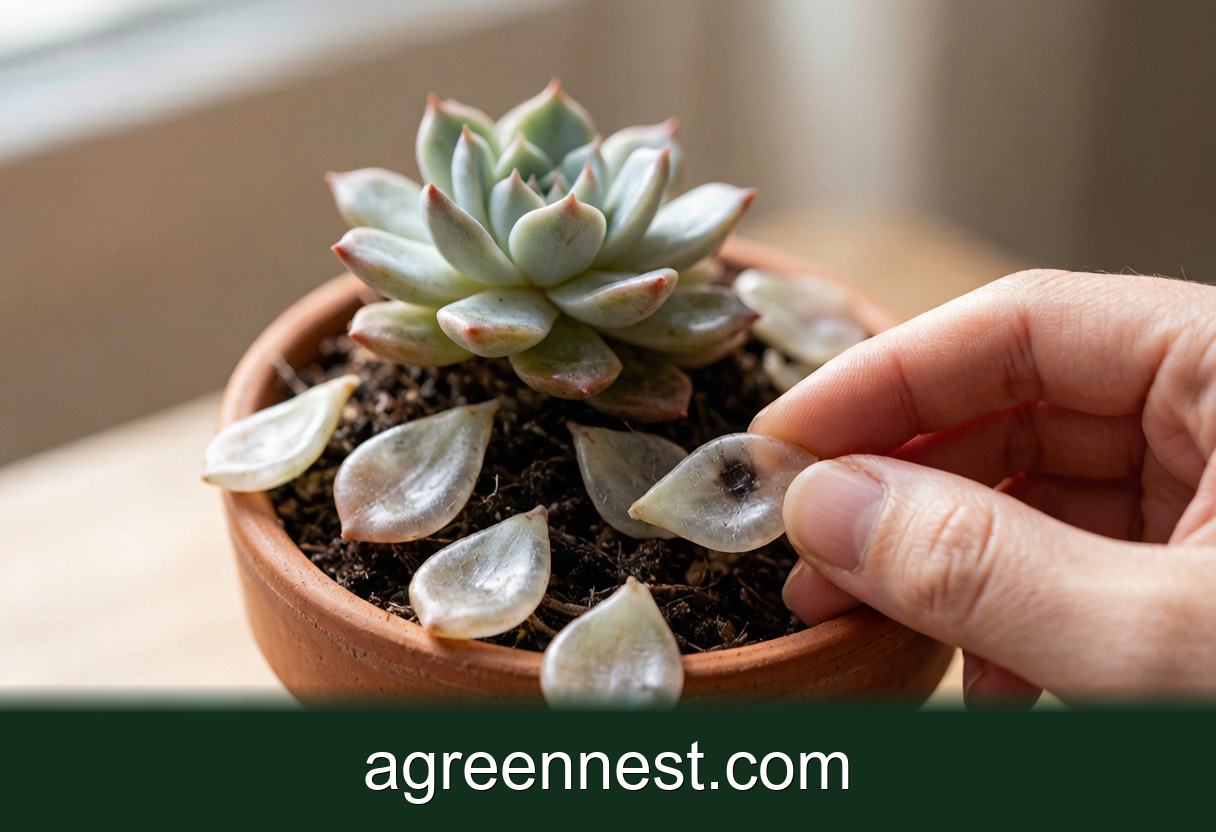
Succulent leaves fall off for a few clear reasons: overwatering makes them yellow, translucent, and mushy before they drop; underwatering leaves them wrinkled and papery; cold below 5°C causes sudden shedding; and a gentle bump knocks off healthy leaves. Match the leaf's texture to the cause, then fix watering first.
The first time it happened to me, I picked up an Echeveria to move it into better light and three leaves came off in my hand. My stomach dropped with them. I was sure I had killed it. I hadn't, and once you learn to read what a dropped leaf is telling you, the panic fades.
Here is the trick that changed how I diagnose this: pick up the fallen leaf and feel it. Its texture tells you almost everything. A leaf that lets go says something specific about water, temperature, or handling, and each cause leaves a different fingerprint. Let's read them one at a time.
Why Are My Succulent Leaves Falling Off?
Start with the leaf in your hand, not the plant. Three questions sort most cases in under a minute.
Is it soft, yellowing, or see-through? That is water sitting in the tissue too long. Is it thin, wrinkled, and papery? That is thirst, or simple old age at the base. Did a perfectly plump, healthy leaf pop off when you barely touched it? That is mechanical, and often nothing is wrong at all.
The plant part matters too. Leaves dropping from the very bottom of the rosette, one or two at a time, are usually just the plant retiring old growth. Leaves falling from the centre or the top, where new growth should be, is the signal to worry.
Overwatering: The Mushy, Translucent Drop
This is the big one, and it is the reason most succulents die indoors. A leaf that has taken on too much water turns yellow or oddly translucent, feels squishy or jelly-like, and detaches with a wet spot at the base. Sometimes it goes brown and black at the stem first.
Succulents like Echeveria, Graptopetalum, and jade (Crassula ovata) store water in those leaves for drought. Keep the soil wet and the roots suffocate, then rot, and the plant sheds leaves it can no longer support. If the stem is soft or dark, you may already be dealing with root rot, which needs fast action.
The fix is rhythm, not a schedule. Water deeply, then wait until the soil is bone dry all the way down, usually every 10 to 14 days in active growth and as little as once a month when the plant rests in winter. A gritty, fast-draining mix and a pot with a drainage hole do half the work for you. I keep my succulents in a mineral-heavy blend for exactly this reason, and our notes on the best soil for succulents explain the ratio I use.
Is It Underwatering or Just Old Age?
The opposite problem looks completely different. Thirsty succulents pull water back out of their oldest leaves first, so those leaves go thin, wrinkled, and crispy at the tips before they drop. If yours look like tiny deflated balloons, they want a drink, and our guide to wrinkled succulent leaves walks through rehydrating them.
Here is the caveat, because succulents love to keep you guessing: a few dry, papery leaves at the very bottom of the plant are completely normal. Every rosette sheds its oldest leaves as it grows taller. If only the lowest ring is going and the top is plump and colourful, do nothing. Peel the dry ones off if they bother you and carry on.
A cheap moisture meter settles the overwater-versus-underwater question when the texture reading is ambiguous. Push it to the bottom of the pot; if it still reads damp days after watering, your problem is drainage, not drought.
Cold, Heat, and Sudden Shock
Succulents drop leaves when they get a fright. A sudden environmental swing is a classic trigger.
Cold is the sharpest. Most common succulents want to stay above about 5°C, and a night on a windowsill behind cold glass, or a draught from an open door in winter, can make a plant shed leaves within a day or two. The ideal range for steady growth is roughly 15 to 25°C. If you move plants seasonally, our succulent overwintering guide covers the transition.
Heat and sunburn do it too. A plant moved straight from a dim shelf into blazing afternoon sun can scorch and drop leaves from stress. Move plants to brighter spots gradually, over a week or two. And any big change, a new home, a repot, a shipment in the post, buys you a few dropped leaves while the plant adjusts. That kind of shedding stops on its own once things settle.
The Ones That Fall at the Slightest Touch
Some succulents are just clumsy by design. Burro's tail (Sedum morganianum) is the famous example; its plump beads detach if you so much as look at them sideways, and every gardener who owns one has left a trail of leaves across the floor. String-of-pearls and many Sedum behave the same way.
If the fallen leaves are firm, green, and healthy, this is mechanical, not a health problem. Handle these plants by the pot, hang them where they won't get brushed, and accept a little leaf loss as the price of admission. Repotting one without casualties is nearly impossible, so I do it over a tray and propagate whatever drops.
How to Grow New Plants From the Leaves You Lost
Do not bin those healthy fallen leaves. This is the happy ending. Most Echeveria, Sedum, and Graptopetalum leaves will root and grow a whole new plantlet.
Lay them on top of dry, gritty soil, somewhere bright but out of direct sun, and leave them alone. After a few days the cut end calluses. Within two to three weeks you will see tiny pink roots, then a miniature rosette. Mist the soil lightly every few days once roots appear. It feels like getting free plants for a mistake, which is my favourite kind of gardening. Choosing a shallow, breathable pot helps here, and our thoughts on pots for succulents apply to propagation trays too.
Frequently Asked Questions
Q: My succulent lost several leaves after I brought it home. Did I do something wrong?
A: Usually not. Shipping and a change of light and humidity commonly trigger a round of leaf drop that stops within a week or two as the plant acclimates. Give it bright, indirect light and hold off on water until the soil is fully dry.
Q: The leaves fell off and the stem is now bare and leggy. Can I save it?
A: Yes. Behead the rosette with a clean blade, let the cut callus for two or three days, and replant the top in dry gritty mix. The bare stem will often sprout new offsets from the base too, so you end up with two plants.
Q: How can I tell rot from normal shedding before it spreads?
A: Check the stem. Normal shedding leaves a clean, firm scar. Rot leaves a soft, brown, or mushy patch that spreads upward. If you see that, cut above the damage into healthy green tissue immediately.
Q: Do succulents drop leaves in winter naturally?
A: Some slow down and shed a few older leaves as they enter dormancy, especially with less light. A modest amount is normal. Heavy drop in winter usually means the plant is too cold or was watered while resting.
Q: Should I water more to stop the leaves falling?
A: Only if the leaves are wrinkled and papery, which signals thirst. If they are soft and translucent, more water is the worst thing you can do. Read the texture first.
A dropped succulent leaf is not a death sentence, it is a message. Soft and yellow means ease off the water; thin and wrinkled means offer a drink; firm and healthy means you just brushed past a fussy Sedum. Read the texture, check where on the plant it came from, and adjust one thing at a time. If you want the bigger picture, our common succulent care mistakes roundup catches the habits behind most leaf drop, or check your light levels with our free light calculator.
Sources & further reading
GreenNest authors research and write every guide independently. The external links below are reputable references we recommend for deeper reading — they are not the sources we copied from.
- Royal Horticultural Society — Houseplant care — RHS
- Missouri Botanical Garden — Missouri Botanical Garden
- NC State Extension — Plant Toolbox — NC State Extension
Recommended Tools for Succulent Care
Free, no-signup helpers matched to this guide.
Free Ebooks to Explore
Downloadable handbooks — no email required.
Free Ebook
The AGreenNest Succulent Care Handbook
The complete, beginner-to-confident guide to growing fat, happy succulents — 10 chapters and a 20-plant directory.
Free Ebook
Haworthia & Haworthiopsis Care Handbook
A focused guide to the striped, forgiving Haworthia clan.
Share Your Plant Story
Grown something tricky, or found a trick that finally worked? Tell us in the comments, or see what other readers are sharing on our Community page. The best reader tips get folded back into our guides.
Join the Conversation
Have a tip or a question about Why Are My Succulent Leaves Falling Off?? Share it below — comments are saved on our server.