 AGreenNest
Hydroponic Growing
Dissolved Oxygen in Hydroponics: The Numbers
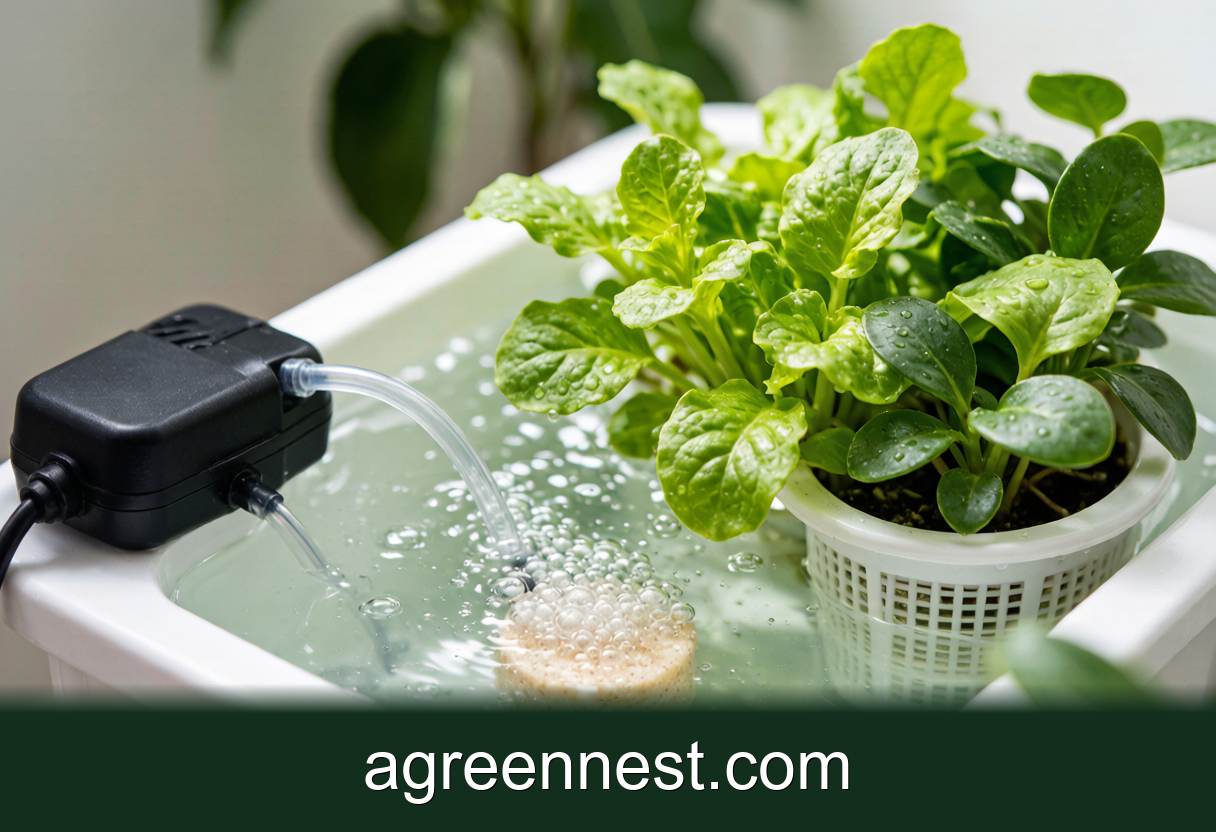
Hydroponic roots need dissolved oxygen above 5 mg/L; below 4 mg/L they suffocate and brown. Keep the reservoir under 22°C, run an air pump rated to at least the tank volume in litres per hour, and use an air stone. Cool, moving, aerated water is the single best defence against root rot.
Stick a cheap dissolved oxygen meter into two reservoirs. One at 20°C with an air stone reads about 8 mg/L. One at 28°C with no aeration reads under 4. Same nutrients, same plants, same room. The second tank is the one where roots turn brown and slimy within a week, and the grower blames the nutrient brand.
Dissolved oxygen, DO for short, is the number most beginners never measure and most rot problems trace back to. Roots breathe. They pull oxygen straight out of the water film around them, and when that water runs low, they shut down and then rot. Here are the actual figures and the setup that hits them.
Why Do Hydroponic Roots Need Dissolved Oxygen?
A root in soil sits in air pockets between particles. A root in a hydroponic solution has no such buffer. Every molecule of oxygen it uses for respiration has to already be dissolved in the water touching it.
When DO drops, two things happen fast. First, the root's own metabolism stalls, so it stops taking up water and nutrients. That is why a plant in a low-oxygen reservoir wilts even though it is sitting in solution. Second, low oxygen is exactly what the rot organisms want. Pythium and Phytophthora, the two usual culprits behind brown mush, thrive in warm, stagnant, oxygen-poor water. Keep DO high and you starve them of the conditions they need. Our hydroponic root rot guide covers the cleanup; oxygen is the prevention.
How Much Oxygen Is Enough?
Target 5 to 8 mg/L at the root zone. That is the working band for nearly every hydroponic crop.
- Above 5 mg/L: roots stay white, firm, and branching.
- 4 to 5 mg/L: a warning zone. Growth slows and rot gets a foothold.
- Below 4 mg/L: active suffocation. Expect browning within days.
The frustrating part is that water cannot hold much oxygen to begin with, and heat makes it worse. Cold water at 15°C can hold roughly 10 mg/L when saturated. Warm water at 30°C tops out near 7 mg/L, and that is before your roots and any microbes start consuming it. So a warm tank starts with less oxygen and burns through it faster. This is the direct link between temperature and rot, and it is why reservoir water temperature deserves as much attention as pH.
What Air Pump and Air Stone Do I Need?
Forget guesswork. Use volume-based sizing.
A common baseline is an air pump rated to move at least the reservoir volume in litres of air per hour. A 40 L tank wants a pump pushing 40 L/h or more, and doubling that does no harm. Aquarium pumps are sold by this rating, so it is easy to match.
The pump alone is not the point. It is the air stone that turns that airflow into oxygen transfer. A stone breaks the stream into fine bubbles, and small bubbles have far more surface area, so they dissolve oxygen instead of just blurping to the top and popping. Use a disc or cylinder stone sized to sit near the bottom of the tank. Bubbles rising the full water column transfer more than bubbles released halfway up.
Three practical rules:
- More, smaller bubbles beat fewer, larger ones. If you can count the bubbles, the stone is too coarse.
- Keep the pump above the water line or fit a check valve, or a power cut will siphon water back into the pump.
- Replace clogged stones. A stone furred with mineral scale or biofilm can lose half its output in a month.
For deep water culture this is non-negotiable, since the roots hang directly in the solution. For a first build, our beginner hydroponics plant list pairs well with a simple air-stone bucket.
Why Is My Water Losing Oxygen So Fast?
Four causes, in rough order of how often I see them.
Heat is number one. Every degree above 22°C both lowers the ceiling and speeds consumption. A reservoir baking under grow lights or sitting on a warm floor will crash its DO by afternoon. Insulate the tank, move it off heat sources, or float a sealed frozen bottle in it during heatwaves.
Biofilm is number two. A slimy film on tank walls and roots is a colony of microbes, and they respire, pulling oxygen out around the clock. High organic load speeds this up.
Overcrowded roots are number three. A mature plant with a huge root mass demands more oxygen than a seedling. Scale your aeration to the crop's size, not the tank's.
Stagnant dead zones are number four. One air stone in the corner of a long tank leaves the far end still. Add a second stone or reposition for even coverage. Skipping this is one of the common hydroponic mistakes that quietly limits yield.
The Fast Fixes That Raise DO Today
If a meter reads low or roots are starting to brown, act in this order:
- Cool the water below 22°C. This is the biggest single lever. A frozen water bottle can drop a small tank several degrees in an hour.
- Add or upgrade the air stone. Finer bubbles, deeper placement, more of them.
- Cut the feed strength temporarily. Very high EC solutions hold slightly less oxygen and stress already struggling roots.
- Clean the tank. Wipe biofilm, rinse roots gently, and refresh the solution. A clean surface holds oxygen better than a slimy one.
You do not need lab gear to track this. An inexpensive DO meter costs less than a season of failed crops and takes the guesswork out entirely.
Frequently Asked Questions
Q: Do I need to run the air pump 24 hours a day?
A: Yes, in deep water culture. Roots consume oxygen constantly, and DO can crash within a couple of hours of the pump stopping, especially in warm water. Put it on the same permanent circuit as your other core gear, not a timer.
Q: My tap water sat out overnight. Is it more oxygenated now?
A: Standing water slowly equilibrates with the air, so it reaches saturation for its temperature, but that is only around 8 to 10 mg/L cold and less when warm. Sitting water is not aerated water. An air stone still does far more.
Q: Will bubbling raise or lower my water temperature?
A: Slightly cools it through evaporation and gas exchange, but the effect is minor. Do not rely on the pump for cooling; manage heat separately.
Q: Can too much aeration hurt roots?
A: Vigorous bubbling that physically thrashes fine root hairs can cause minor damage, and it speeds evaporation, so top up more often. For most home tanks, though, more air is a safe bet.
Q: Does dissolved oxygen change my pH readings?
A: Aeration off-gasses dissolved CO2, which can nudge pH slightly upward over a few hours. Check pH after the pump has been running, not right after mixing, for a stable reading.
Dissolved oxygen is invisible, which is exactly why it gets ignored until roots are already brown. Keep the water under 22°C, run an air stone sized to the tank, and aim for 5 to 8 mg/L. Do those three things and rot rarely gets started. If you are still choosing equipment, our 2026 hydroponic kit roundup and the full hydroponic growing guide cover the rest of the build. Want a shortcut? Try our free light calculator to right-size the grow light heating your reservoir.
Sources & further reading
GreenNest authors research and write every guide independently. The external links below are reputable references we recommend for deeper reading — they are not the sources we copied from.
- Michigan State University Extension — Michigan State University
- University of Minnesota Extension — U Minnesota Extension
- NC State Extension — Plant Toolbox — NC State Extension
Recommended Tools for Hydroponic Growing Care
Free, no-signup helpers matched to this guide.
Free Ebooks to Explore
Downloadable handbooks — no email required.
Free Ebook
The AGreenNest Succulent Care Handbook
The complete, beginner-to-confident guide to growing fat, happy succulents — 10 chapters and a 20-plant directory.
Free Ebook
Haworthia & Haworthiopsis Care Handbook
A focused guide to the striped, forgiving Haworthia clan.
Share Your Plant Story
Grown something tricky, or found a trick that finally worked? Tell us in the comments, or see what other readers are sharing on our Community page. The best reader tips get folded back into our guides.
Join the Conversation
Have a tip or a question about Dissolved Oxygen in Hydroponics: The Numbers? Share it below — comments are saved on our server.