 AGreenNest
Succulent Care
Coppertone Stonecrop Care: Light, Water, and Soil
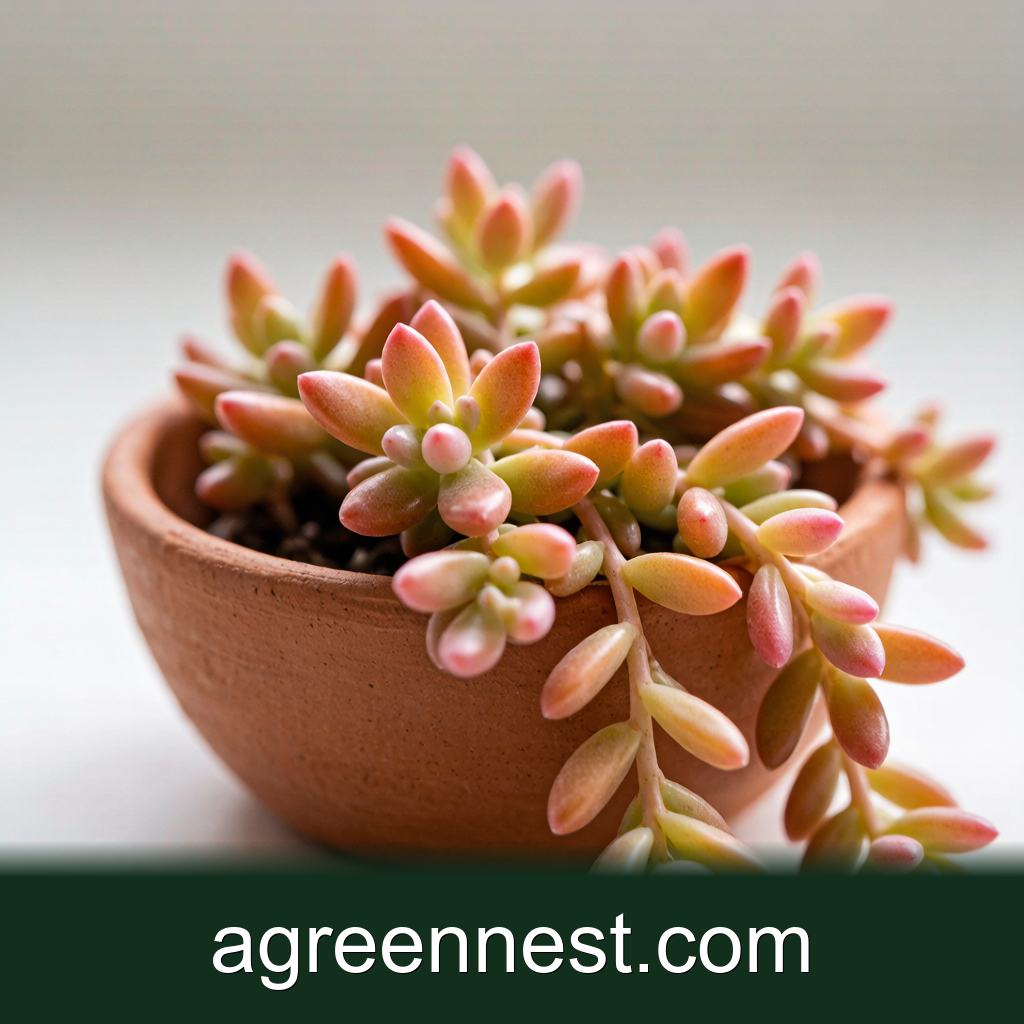
Coppertone stonecrop (Sedum nussbaumerianum) is a trailing succulent that turns copper-orange in 4 to 6 hours of bright direct or indirect light. Water only when the top 3 to 4cm of soil is dry, about every 10 to 14 days in summer, plant it in a gritty mix, and keep it above 4°C to avoid rot and scorch.
The first time I saw Sedum nussbaumerianum it was spilling out of a shallow bowl at a friend's greenhouse sale, and the tips were the colour of a fresh copper penny. I mistook it for a Sedum adolphii at first, which is a common mistake because the two share that warm glow. The plant has since become my go-to recommendation for anyone who wants a succulent that trails without flopping into a soggy heap.
Coppertone stonecrop is one of those plants that tells you exactly how it feels. Give it the light it wants and the leaf tips blush orange and red. Starve it of light and it fades to pale green while the stems stretch and reach. Learn the four things it actually needs and it rewards you with colour most of the year.
What makes coppertone stonecrop special?
The leaves are small, fleshy, and shaped like tiny bananas curving up the stem. New growth sits tight and upright; mature stems arch and trail, which makes the plant perfect for a shelf edge or a shallow bowl where it can spill over the rim. In strong light the whole plant picks up copper and pink tones, and a happy specimen blooms with clusters of white star-shaped flowers in late winter or early spring.
It is native to rocky slopes in Mexico, so it expects gritty soil, dry air, and a lot of sun. Recreate that trio and you will rarely see a problem. Break it, usually by overwatering or by tucking it into a dark corner, and the plant lets you know fast.
How Much Light Does Coppertone Stonecrop Need?
Bright is the short answer. This is not a low-light succulent. Aim for 4 to 6 hours of bright direct or very bright indirect light each day. A south or west window that gives morning or afternoon sun is ideal, and an unshaded east window works in summer. The copper colour is a sunburn response, the good kind, triggered by strong light, so a dim room leaves the plant green and leggy.
If your brightest spot is still weak, a full-spectrum grow light for 10 to 12 hours a day keeps the colour and the compact shape. The moment you see the gaps between leaves lengthen, the plant is asking for more light, and my guide on stretching and pale succulents explains how to read that signal before it gets bad.
How Often Should I Water Coppertone Stonecrop?
Less than you think, and on a feel rather than a calendar. Wait until the top 3 to 4cm of soil is dry, then water thoroughly so it runs from the drainage hole. In summer that is usually every 10 to 14 days; in winter, when growth slows, every 3 to 4 weeks is plenty. The trailing stems store water, so a missed watering is never the emergency it would be for a fern.
I keep a moisture meter handy for the deeper pots, but for a shallow bowl my finger is enough. Push it to the second knuckle; if it comes out with damp soil clinging, wait another few days. The complete succulent watering guide has the full rhythm for every season, and it applies here with the shorter winter gap.
What soil and pot does it want?
Gritty, gritty, gritty. I use two parts standard potting soil, one part coarse sand or horticultural grit, and one part pumice or perlite. That mix drains in minutes and never stays cold and wet around the fine roots. A handful of my own succulent soil recipe works just as well if you would rather build it from scratch.
A shallow terracotta pot is the best home. The clay pulls moisture out of the mix between waterings, which is exactly what this plant wants, and the wide shallow shape suits the spreading roots. The terracotta pot guide covers sizes and what to avoid. Repot only every two to three years, and go up just one size; a deep pot of wet soil is the fastest way to rot the crown.
Why Are My Coppertone Leaves Wrinkling or Dropping?
Wrinkled lower leaves in summer almost always mean thirst. The plant has used its stored water and the stem is pulling from the oldest leaves first. A deep soak usually plumps them within a day. If the leaves are soft, translucent, and dropping from the top down instead, you have gone the other way and rotted the stem with too much water, and you should read my notes on saving a rotting succulent before the whole plant goes.
Brown scorched patches in the middle of summer point to a sudden move into harsh midday sun. The plant loves light but a shock from shade to bake causes marks. Ease it into stronger sun over a week or two and new growth will colour cleanly.
How Do I Overwinter Coppertone Stonecrop?
This is the one seasonal chore. Coppertone stonecrop tolerates cool air but not freezing, so keep it above 4°C and cut water to once a month through the cold months. A bright, unheated sunroom or a cool windowsill is perfect; a hot, dark living room with the heating on is not. My overwintering guide walks through the light and water cuts for every succulent type, and this one follows the same rule of less water, more light.
Can I Propagate Coppertone Stonecrop?
Yes, and it is about as close to foolproof as succulents get. Snip a 5 to 8cm stem, strip the lower leaves, and lay it on dry soil for a week so the cut end calluses. Then press it lightly into gritty mix and water once. Roots usually appear in two to three weeks. The leaf and stem propagation guide has the timing and the common mistakes, but for this plant the main rule is to let the cut dry first.
Frequently Asked Questions
Q: My coppertone stonecrop is all green and not turning copper. What is wrong?
A: It is not getting enough light. The colour is a response to strong sun, so move it to a brighter window or add a grow light for 10 to 12 hours a day. Give it two to three weeks and the tips should start to blush.
Q: Is coppertone stonecrop toxic to pets?
A: The plant contains compounds that can upset a cat or dog that chews it, so keep it on a high shelf or in a room the animals do not reach. It is not the most dangerous succulent, but it is not a salad either.
Q: Why are the bottom leaves shrivelling while the top looks fine?
A: That is normal ageing plus mild thirst. The plant sacrifices the oldest leaves to feed new growth. If the shrivelling climbs the stem, water a little sooner next time.
Q: Can I grow coppertone stonecrop outdoors in summer?
A: In most climates yes, as long as nights stay above 4°C and the pot drains. Morning sun with afternoon shade is safest; full all day sun in a hot region can scorch the leaves.
Q: The stems are getting long and bare at the top. Can I fix it?
A: Trim the leggy part back to a node and propagate the cutting. The stub left behind usually branches and fills back in once it has more light.
Coppertone stonecrop is a generous little trailer that pays you back in colour the moment you give it bright light and a gritty, barely-watered home. Keep it above 4°C through winter, let the top few centimetres of soil dry between drinks, and it spills copper from the rim of its pot for years. If you are still guessing at the light in your room, our free light calculator turns a quick reading into a number you can trust.
Recommended Tools for Succulent Care
Free, no-signup helpers matched to this guide.
Free Ebooks to Explore
Downloadable handbooks — no email required.
Free Ebook
Sedum, Graptopetalum & Graptosedum Care Handbook
Easy trailing and rosy succulents for shelves and wreaths.
Free Ebook
The AGreenNest Succulent Care Handbook
The complete, beginner-to-confident guide to growing fat, happy succulents — 10 chapters and a 20-plant directory.
Sources & further reading
GreenNest authors research and write every guide independently. The external links below are reputable references we recommend for deeper reading — they are not the sources we copied from.
- Royal Horticultural Society — Houseplant care — RHS
- Missouri Botanical Garden — Missouri Botanical Garden
- NC State Extension — Plant Toolbox — NC State Extension
Share Your Plant Story
Grown something tricky, or found a trick that finally worked? Tell us in the comments, or see what other readers are sharing on our Community page. The best reader tips get folded back into our guides.
Join the Conversation
Have a tip or a question about Coppertone Stonecrop Care: Light, Water, and Soil? Share it below — comments are saved on our server.