 AGreenNest
Plant Styling & Display
Living Room Plant Styling: A Room That Feels Alive
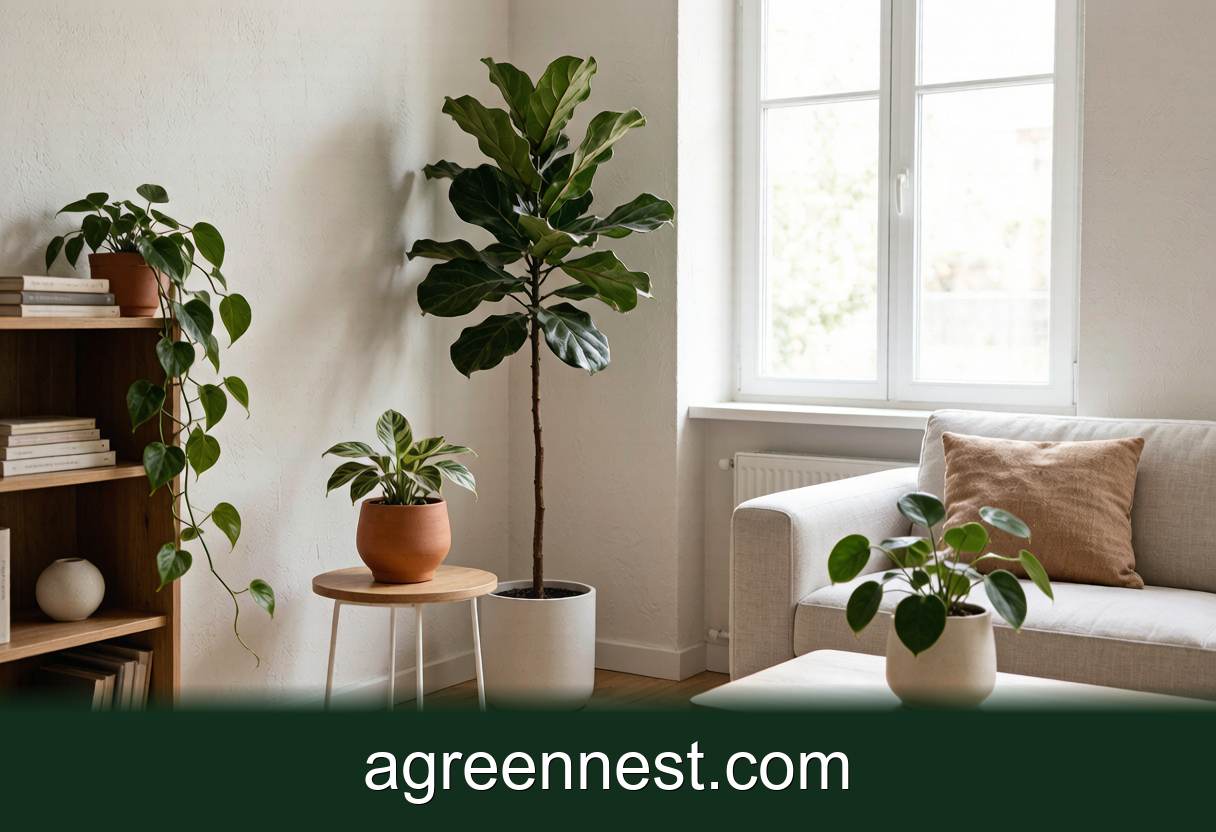
To style a living room with plants, anchor one corner with a floor plant 1.2 to 1.8m tall, add two or three mid-height plants on tables and shelves, and keep every pot in one or two materials. Match each plant to the light it actually gets, not where it looks best.
The first time a guest walked into my living room and said it felt calm, I had not bought a single new piece of furniture. I had just moved five plants around over a weekend. That is the quiet power of styling a living room with greenery: the room does the same job it always did, but it starts to feel looked-after.
A living room is the hardest and most rewarding space to style, because it is big, people actually sit in it, and the light changes across the day. Here is the approach I use, refined over a decade of rearranging pots when I should have been doing other things.
Find the light before you find the plant
Every good living room grouping starts with a slow look at the windows. Stand in the room mid-morning and again in late afternoon, and notice where the sun lands and where it never reaches. A south-facing window can throw bright light 2 to 3m into the room; a north window gives soft, steady light that suits foliage but will not feed a cactus.
I killed a beautiful Ficus lyrata by parking it in a shadowy nook because that is where the design magazine put one. Plants do not read magazines. Match the plant to the corner you actually have, and if the spot you love is genuinely dim, the low-light houseplant list is where I start rather than fighting the room.
Anchor the room with one large plant
Every living room needs a single tall plant to hold the space, usually 1.2 to 1.8m high in a substantial pot. This is your visual anchor, and it belongs where the eye lands first: beside the sofa, next to a bookshelf, or filling that awkward corner by the television.
In a bright room I reach for a fiddle-leaf fig, a rubber plant, or a bird of paradise. For a shadier living room, a Zamioculcas zamiifolia or a tall cast-iron plant holds the same weight without sulking in low light. One confident big plant does more for a room than a dozen small ones scattered on windowsills, and it costs less in fuss.
What plants suit a living room best?
It depends on your light and your patience, but I lean on a reliable cast of foliage plants that look good year-round and forgive a distracted owner. For colour and pattern at mid-height, a Chinese evergreen earns its spot on a side table with pink or silver leaves. A pothos or a heartleaf philodendron trails happily from a shelf and roots from cuttings if you want more for free.
For softness, a Boston fern (Nephrolepis exaltata) breaks up hard furniture lines, though it wants steady moisture and will crisp near a radiator. If you have a pet who chews, keep it honest: many living room favourites are mildly toxic, so I cross-check anything within a cat's reach and steer toward spider plants (Chlorophytum comosum) and calatheas (Maranta leuconeura) where curious mouths roam.
Layer heights across tables and shelves
A living room styled at one level looks flat. The fix is layering, the same trick that makes a shop window work. Think in three tiers: the floor anchor, mid-height plants on side tables and the coffee table at 40 to 70cm, and trailing plants up high on a shelf or a bracket.
Trailing plants are the secret weapon here, because they soften the boxy lines that furniture and bookcases create. A pothos spilling 60cm down the side of a bookshelf turns a storage unit into something living. If shelves are your main canvas, I go deeper on the spacing and staging in the floating-shelf styling guide, and on the up-high options in the trailing plant guide.
One caution: do not crowd the coffee table. One low plant, a book or two, and clear space reads as styled. Three plants and a candle reads as a garden centre display you have to move every time someone puts down a mug.
Keep the pots to a tight palette
Here is the mistake I see in almost every messy-looking plant room, and it is never the plants. It is the pots. Ten plants in ten different pots reads as clutter no matter how healthy they are. Pick one or two materials, terracotta and a warm ceramic, say, and one colour family, and the whole room settles.
Repeat those materials around the room so the groupings feel connected rather than random. I keep my pots to warm terracotta and off-white ceramic, and that single rule does more visual work than any expensive plant. If you want the reasoning behind why grouping in odd numbers and matched materials looks intentional, I set it out in the plant grouping rules.
How do you keep living room plants healthy?
A styled living room that slowly browns is worse than an empty shelf, so give the plants ten minutes a week and they will pay you back for years. Rotate each pot a quarter turn so nothing leans toward the window and goes lopsided. Check soil with a finger before watering, because a plant in the middle of a room dries far slower than one on a bright sill.
Wipe dust off the big glossy leaves once a month. A floor plant beside the sofa collects surprising amounts of it, and dust cuts the light the plant is already rationing. Group plants with similar thirst so one watering round suits them all, and keep anything tender away from the cold draught of a frequently opened door or the hot, dry blast of a heating vent. That small routine is the difference between a room that looks better each season and one that quietly declines.
Frequently Asked Questions
Q: My living room only has one window and it faces north. What will actually grow?
A: North light is soft but steady, and plenty thrives in it: Zamioculcas zamiifolia, cast-iron plant, pothos, and Chinese evergreen all do well 1 to 2m from a north window. Skip cacti and succulents there, since they stretch and pale without direct sun.
Q: How many plants is too many for one living room?
A: There is no number, but there is a feeling. Once you cannot see a clear surface or walk a natural path, it reads as clutter. I aim for one anchor, three to four mid-height plants, and one or two trailers in an average room, then stop.
Q: How do I stop plants looking messy around the television?
A: Keep the grouping to one side rather than framing the screen symmetrically, use pots in a single colour family, and clear the cables. A trailing plant softening one corner of a media unit looks intentional; plants crowding both sides looks accidental.
Q: Are common living room plants safe around cats and dogs?
A: Many are mildly toxic if chewed, including pothos and philodendron. For homes with pets I lean on spider plants and calatheas, and I keep tempting trailers up on high shelves out of reach rather than trusting a bored cat to behave.
Styling a living room with plants comes down to three moves: anchor the space with one big plant, layer heights across tables and shelves, and keep the pots in a tight palette. Match each plant to the light it truly gets and the room stays alive instead of slowly fading. If you are unsure how much light a spot really offers, our free light calculator turns a quick reading into a number you can plan a whole room around.
Sources & further reading
GreenNest authors research and write every guide independently. The external links below are reputable references we recommend for deeper reading — they are not the sources we copied from.
- Royal Horticultural Society — Houseplants — RHS
- Missouri Botanical Garden — Missouri Botanical Garden
- NC State Extension Plant Toolbox — NC State Extension
Recommended Tools for Plant Styling & Display Care
Free, no-signup helpers matched to this guide.
Free Ebooks to Explore
Downloadable handbooks — no email required.
Free Ebook
The AGreenNest Succulent Care Handbook
The complete, beginner-to-confident guide to growing fat, happy succulents — 10 chapters and a 20-plant directory.
Free Ebook
Haworthia & Haworthiopsis Care Handbook
A focused guide to the striped, forgiving Haworthia clan.
Share Your Plant Story
Grown something tricky, or found a trick that finally worked? Tell us in the comments, or see what other readers are sharing on our Community page. The best reader tips get folded back into our guides.
Join the Conversation
Have a tip or a question about Living Room Plant Styling: A Room That Feels Alive? Share it below — comments are saved on our server.