 AGreenNest
DIY Plant Projects
Build a Tabletop Water Garden in a Bowl — No Soil, No Pump
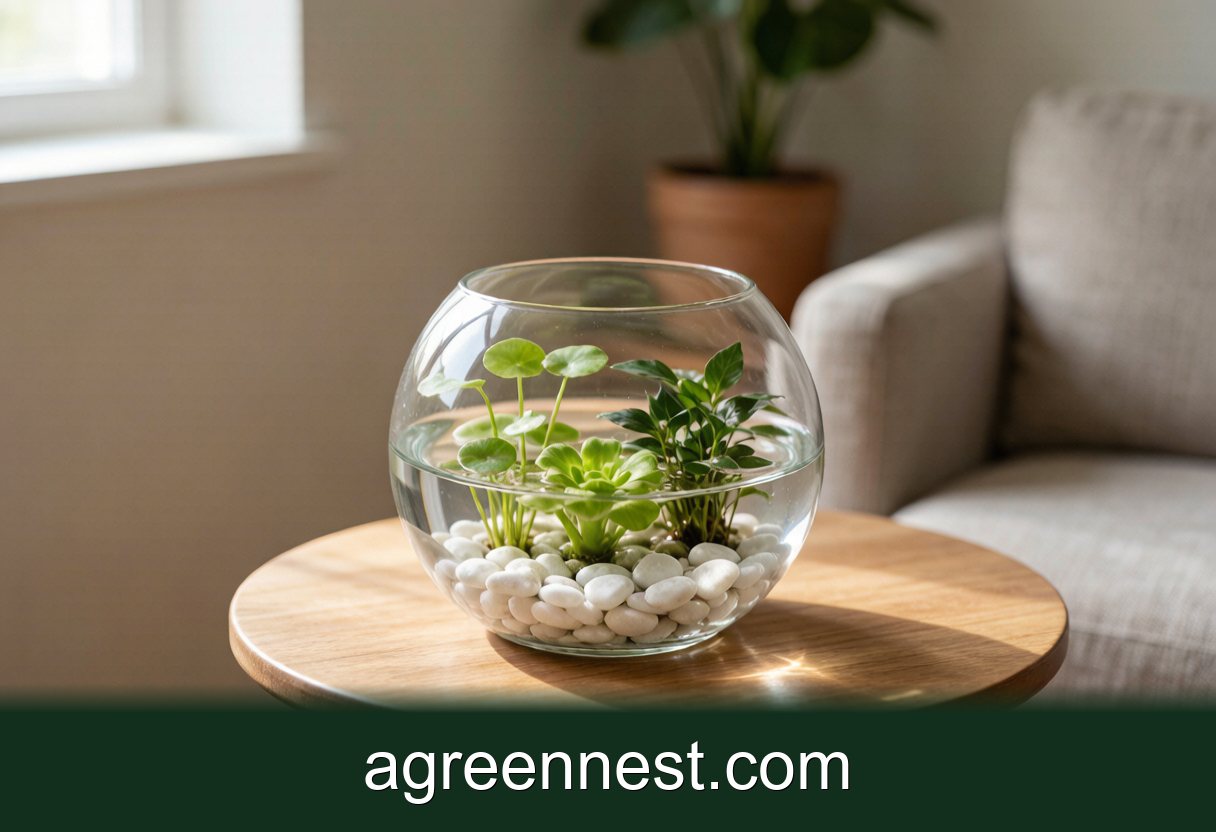
A tabletop water garden grows houseplants directly in a watertight bowl or vase — no soil, no filter, no pump. Choose a wide glass vessel, anchor cuttings of pothos, lucky bamboo, or peace lily in pebbles, keep the water topped up, and change it every one to two weeks. Set it in bright indirect light and it stays green for years.
A tabletop water garden is the calmest project in indoor gardening: one wide glass bowl, a handful of pebbles, a few stems that happily live in plain water, and you have a centerpiece that never drops soil on the table and never wilts because you forgot to water it. It sits somewhere between a water propagation jar garden and a full paludarium — more designed than a row of jars, far less gear than a tank. This guide builds one in about 45 minutes and covers the two things that decide whether it lasts: plant choice and the water-change rhythm.
Choose the Vessel
Any watertight, non-metal container works, but shape decides how easy the garden is to live with. A wide, shallow glass bowl — 20 to 30 cm across and 10 to 15 cm deep, roughly 8 to 12 inches by 4 to 6 — gives roots room to spread sideways and leaves the water surface open, which keeps oxygen exchange high and smells at zero. Clear glass shows off the root structure, which is half the point of a water garden, though it also invites algae faster in a bright room; ceramic hides roots but buys you weeks between glass-scrubbing sessions. Avoid metal bowls and anything with a copper or zinc glaze contact surface, because dissolved metal ions stunt roots in standing water. A footed trifle bowl, an oversized brandy glass, a lab beaker, or a plain salad bowl from the kitchen cupboard all qualify. Wash the vessel with hot water only — soap residue is hard to rinse fully and film on the glass clouds the water later.
The Best Plants for a Bowl of Water
Stick to plants proven to grow long-term in water, not just root in it. Lucky bamboo (Dracaena sanderiana) is the anchor plant: it lives for years in plain water and gives instant vertical structure — the lucky bamboo water guide covers stalk care in detail. Pothos (Epipremnum aureum) supplies the trailing element and grows in water indefinitely, as the pothos-in-water guide shows. Chinese evergreen (Aglaonema) and peace lily (Spathiphyllum) both tolerate permanent water culture once their soil roots adapt — start them from washed-root divisions or water-grown cuttings rather than dropping a soil root ball straight in. Arrowhead plant (Syngonium podophyllum) and tradescantia round out the fast growers. For a 25 cm bowl, three plants is the sweet spot: one upright (lucky bamboo), one mound (aglaonema or peace lily), one trailer (pothos). Skip succulents, cacti, snake plants, and herbs like rosemary — storage-organ plants rot in standing water, every time.
Anchor and Arrange
Roots need to stay down and stems need to stay up, and pebbles solve both. Rinse a bag of aquarium gravel or river pebbles until the runoff is clear, then lay a 3 to 5 cm base layer in the bowl. Stand each plant in place, fan the roots out over the base, and pour a second layer of pebbles around the stems until they hold position on their own. Glass marbles and expanded clay pebbles (LECA) both work; LECA is lighter and wicks moisture up around the stem base, and if you like that route the LECA versus soil comparison explains its habits. Fill with room-temperature water until the roots are fully submerged but at least the bottom third of each stem above the pebble line stays dry — buried, waterlogged stem tissue is the number-one cause of a water garden going swampy in week two. Tallest plant at the back or center, trailer at the front edge, and leave one hand-width of open water surface visible: it reads deliberate rather than crowded, and that open surface is your oxygen window.
Water, Light, and Feeding
Place the bowl in bright indirect light — 1 to 2 m from an east or north window, or behind a sheer curtain in a south-facing room. Direct sun on a bowl of standing water is an algae farm and, in summer, a slow cooker for roots. Top up with room-temperature water every few days as it evaporates, and do a full change every 1 to 2 weeks: lift the plants gently, pour everything out, rinse the pebbles, refill. Tap water left to sit for 24 hours suits most of these plants, but lucky bamboo is sensitive to chlorine and fluoride, so rain, filtered, or distilled water keeps its leaf tips green. Feed sparingly — a quarter-strength liquid houseplant fertilizer once a month in spring and summer, nothing in winter. In plain water there is no soil buffer, so full-strength feed burns roots and feeds algae more than plants. If leaves pale and growth stalls despite good light, that is the cue to feed, not the calendar.
Keep the Water Clear
Green film on the glass means light plus nutrients, and you control both: move the bowl further from the window, shorten the feed schedule, and wipe the inside walls at every water change with a paper towel or bottle brush. Cloudy water within days of a change usually means a leaf or stem section is rotting below the waterline — find it, cut it out cleanly, and rinse everything before refilling. In mosquito season, a full weekly water change breaks the larval cycle on its own, since larvae need standing water for longer than seven days; a bowl that gets changed on schedule never becomes a breeding site. If you want backup, a single drop of the same quarter-strength feed routine and a monthly pebble rinse keep bacterial films from establishing. Roots should always look white to cream — brown, mushy, or sour-smelling roots get trimmed back to firm tissue at the next change, the same triage as any root rot rescue.
Seasonal Rhythm and Refresh
A water garden is not static. In spring and summer, growth is quick enough that you will trim the pothos back monthly and thin roots once they pack the bowl solid — congested roots slow water circulation and invite anaerobic pockets. In winter, cut feeding entirely, slow water changes to every 2 to 3 weeks, and keep the bowl away from radiators and cold windowsills; water below about 15°C (59°F) stalls these tropicals. Every few months, do a full teardown: empty the bowl, scrub the glass, rinse the pebbles in hot water, trim roots and stems, and rebuild. It takes 20 minutes and resets the garden to day-one clarity. Rooted trimmings from the teardown go straight into jars to become gifts or a second bowl — a water garden quietly doubles itself twice a year, and the spare cuttings slot neatly into a propagation station.
Frequently Asked Questions
Q: Which plants can live permanently in a bowl of water?
A: Lucky bamboo, pothos, Chinese evergreen, peace lily, arrowhead plant, and tradescantia all grow in plain water for years. Use water-grown cuttings or washed-root divisions, keep roots submerged and stems dry, and change the water every one to two weeks.
Q: Do I need an air pump or filter for a tabletop water garden?
A: No. A wide bowl with open water surface exchanges enough oxygen passively for houseplant roots. Pumps and filters only become necessary in sealed or deep vessels, or once you add fish — which a tabletop bowl is too small for anyway.
Q: Why does my water garden turn green and cloudy?
A: Green tint on glass is algae driven by direct sun plus fertilizer. Move the bowl into indirect light, feed at quarter strength monthly at most, and wipe the glass at each change. Cloudiness right after a change points to rotting plant tissue below the waterline — find and cut it out.
Q: Can I use tap water for a water garden?
A: Yes for most plants, ideally after letting it sit 24 hours at room temperature. Lucky bamboo is the exception — chlorine and fluoride brown its leaf tips, so use filtered, distilled, or rainwater if bamboo anchors your bowl. Never use softened water; the sodium harms roots.
Q: How do I stop mosquitoes breeding in the bowl indoors?
A: Change the water fully every week in mosquito season. Larvae need standing water for more than about seven days to mature, so a regular change cycle breaks the loop by itself. Keep the surface open and skip saucers of stagnant overflow nearby.
Sources & further reading
GreenNest authors research and write every guide independently. The external links below are reputable references we recommend for deeper reading — they are not the sources we copied from.
- Royal Horticultural Society — Houseplants — RHS
- Clemson Cooperative Extension — Home & Garden Information Center — Clemson Extension
- University of Minnesota Extension — Houseplants — UMN Extension
Recommended Tools for DIY Plant Projects Care
Free, no-signup helpers matched to this guide.
Free Ebooks to Explore
Downloadable handbooks — no email required.
Free Ebook
The AGreenNest Succulent Care Handbook
The complete, beginner-to-confident guide to growing fat, happy succulents — 10 chapters and a 20-plant directory.
Free Ebook
Haworthia & Haworthiopsis Care Handbook
A focused guide to the striped, forgiving Haworthia clan.
Share Your Plant Story
Grown something tricky, or found a trick that finally worked? Tell us in the comments, or see what other readers are sharing on our Community page. The best reader tips get folded back into our guides.
Join the Conversation
Have a tip or a question about Build a Tabletop Water Garden in a Bowl — No Soil, No Pump? Share it below — comments are saved on our server.