 AGreenNest
Hydroponic Growing
Convert a Houseplant to LECA: The Full Semi-Hydro Walkthrough
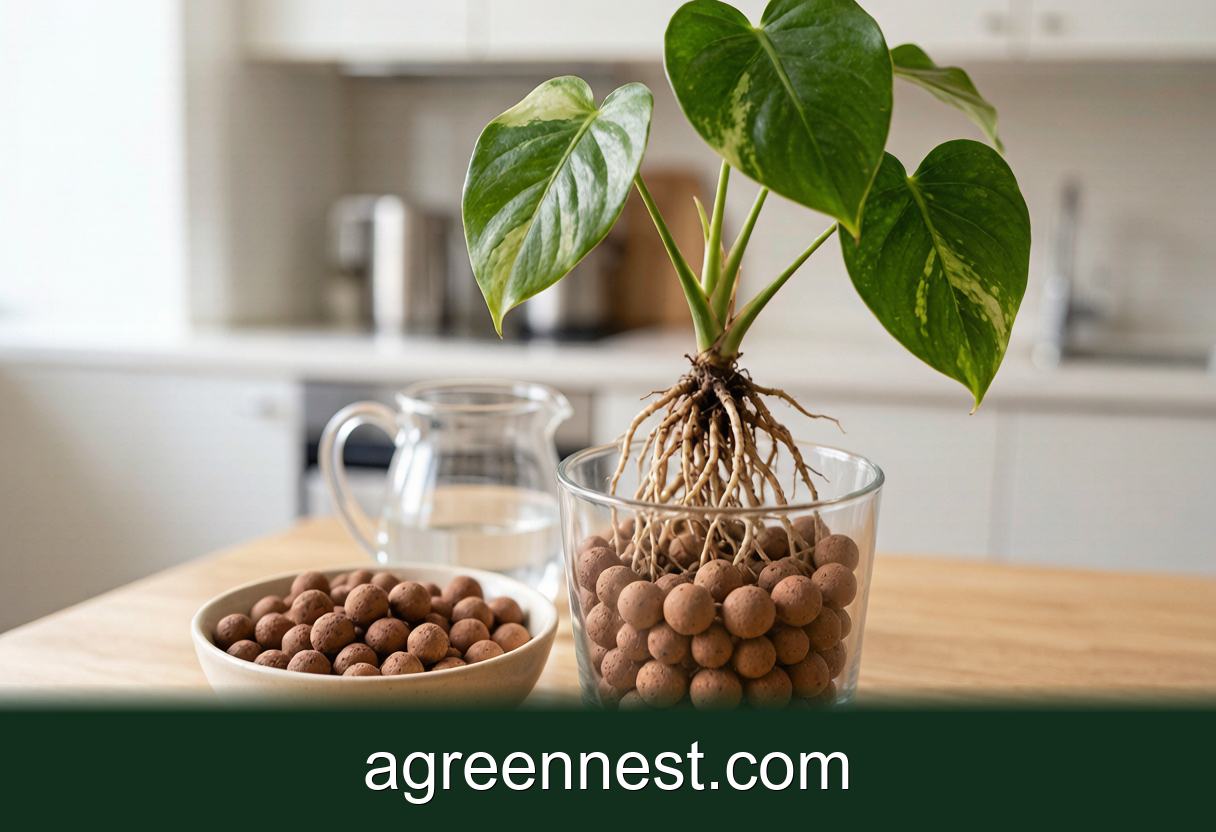
To convert a houseplant to LECA, wash every trace of soil from the roots under lukewarm water, nest the plant in pre-soaked clay balls inside a net pot, and keep a shallow reservoir below the root zone. Expect two to four weeks of transition while soil roots die back and water roots replace them.
The first plant I converted to LECA was a golden pothos, and I did almost everything wrong: I left soil clinging to the roots, I filled the reservoir to the root line, and I fed it full-strength nutrients on day one. It survived anyway, because pothos survives everything. The Calathea I converted the following week did not.
Four years and roughly sixty conversions later, the process is boring in the best way. Here is the exact sequence, including the transition-phase details that most guides skip.
Why Convert at All?
Semi-hydro replaces soil with expanded clay balls (LECA) sitting in a container with a small water reservoir at the bottom. The clay wicks moisture up to the roots; the air gaps between balls keep oxygen at the root zone. The practical wins: watering becomes a schedule you can see through the glass, fungus gnats lose their breeding ground, and root rot becomes far easier to catch early instead of discovering it at repotting time.
If you are still weighing the trade-offs, the LECA vs soil comparison covers cost and long-term care differences. This guide assumes you have decided and want the conversion to actually work.
What You Need Before Touching the Plant
- LECA, rinsed and soaked for at least 12 hours. Dry clay straight from the bag steals moisture from roots and floats uncontrollably.
- A net pot or slotted inner pot that sits inside a watertight outer container. Glass outers are ideal for the first months because you can watch the reservoir and the roots.
- A soft-bristle brush or chopstick for soil removal.
- Hydroponic nutrients, not soil fertilizer. Soil feed assumes microbes and buffering that LECA does not have; the hydroponic nutrients guide explains the difference and doses.
Pick your first candidate carefully. Pothos, philodendron, monstera, spider plants, and syngonium convert with near-zero drama — the same crowd that tops the list of plants that grow happily in plain water. Save ferns and anything from the Marantaceae family (calathea, maranta) until you have three easy conversions behind you.
Step 1: Get Every Gram of Soil Off the Roots
This is the step that decides the outcome. Soil left against roots inside LECA stays permanently wet, and permanently wet organic matter is a rot starter culture.
Unpot the plant and crumble away the loose soil dry — you will remove about 70 percent this way with less root damage than washing alone. Then move to a sink or bucket of lukewarm water and swish the root ball gently, teasing clumps apart with your fingers or a chopstick. Refill and repeat until the water runs clear. On a root-bound plant this takes 15 to 20 minutes; rushing it costs more later.
Trim off anything mushy, brown, or hollow with clean scissors. Healthy roots are firm and white to tan. If you find widespread rot, treat that first — the root rot rescue guide applies here — and convert only what is left healthy.
Step 2: Pot Into LECA the Right Way
Pour a few centimetres of soaked LECA into the net pot, sit the plant on that base, and feed clay balls in around the roots layer by layer, tapping the pot so they settle. Do not compress. The crown of the plant — where stems meet roots — must sit above the ball line, never buried.
Now the detail that saves most conversions: for the first two to four weeks, keep no standing reservoir at all. Instead, run the "shower phase": rinse water through the LECA every two or three days, letting it drain completely. The clay stays damp, the roots stay humid, but nothing sits in water. Soil roots are physically different from water roots, and drowning them before the plant grows replacements is the classic conversion killer.
Step 3: The Transition Weeks (Ugly Is Normal)
Expect the plant to sulk. A leaf or two may yellow; growth pauses. Below the surface, the plant is shedding soil roots and pushing new water roots — smoother, whiter, often visibly different through glass. This is the phase where beginners panic and re-pot back to soil, interrupting the exact adaptation they paid for.
Hold steady if: the stems are firm, new roots appear within three weeks, and yellowing is limited to older leaves. Intervene only if stems soften or roots turn brown and slimy — pull the plant, trim, and restart the shower phase with fresh rinsed LECA.
Once you see 3 to 5 cm of new white root growth, switch to reservoir mode: fill the outer container so the waterline sits about a third of the way up the LECA, below the bottom of the root mass. Roots grow down to drink; the balls wick moisture up to everyone else.
Step 4: Feeding and Ongoing Care
Start nutrients only when reservoir mode begins, at quarter to half strength, because LECA offers zero buffering against overfeeding. Every four to six weeks, flush the whole pot under running water to clear accumulated mineral salts — white crust on the top balls is your cue that you waited too long.
Top up the reservoir when it runs dry, but let it stay empty for a day or two between refills; that dry gap pulls fresh air into the root zone. If you enjoy this style of growing, the same logic scales up to a full jar garden of cuttings grown in water on the windowsill.
Frequently Asked Questions
Q: Can I convert a plant to LECA without washing off all the soil?
A: No — this is the one non-negotiable step. Soil trapped in LECA stays saturated indefinitely and rots the roots it touches. If a stubborn root ball will not come clean, soak it in lukewarm water for an hour and tease it apart in stages rather than leaving residue behind.
Q: How long does a plant take to adjust to semi-hydro?
A: Two to four weeks for easy growers like pothos and philodendron, and up to eight weeks for slower or fussier species. The adjustment is done when you can see several centimetres of new white water roots and the plant resumes putting out leaves.
Q: Why are my plant's leaves yellowing after moving it to LECA?
A: One or two yellowed older leaves during the transition is normal shedding while the root system rebuilds. Yellowing across new growth, soft stems, or a sour smell from the pot signals rot or drowning — check that the reservoir is not touching the roots and return to shower-phase watering.
Q: Do I need special fertilizer for LECA, or can I use my regular houseplant feed?
A: Use a hydroponic formula. Regular soil fertilizers rely on soil microbes to convert nutrients into usable forms and often omit minerals that soil normally supplies, such as calcium and magnesium. Hydroponic nutrients provide the complete profile in immediately available form, dosed at quarter to half strength in semi-hydro.
Q: Which plants should not be converted to LECA?
A: Skip plants with fine, hair-like root systems that resent disturbance — most ferns, calathea and other prayer plants, and anything already stressed or freshly shipped. Succulents and cacti can live in semi-hydro but need a much lower waterline and are unforgiving of mistakes, so they make poor first conversions.
LECA conversion is one careful hour of root washing followed by a month of patience. Do the soil removal properly, run the shower phase instead of an immediate reservoir, and start feeding weak — those three decisions cover ninety percent of the failure modes. Start with a pothos cutting you would not mourn, and let the glass jar teach you what healthy water roots look like before you graduate to the plants you love.
Sources & further reading
GreenNest authors research and write every guide independently. The external links below are reputable references we recommend for deeper reading — they are not the sources we copied from.
- University of Florida IFAS Extension — Hydroponics for Home Gardeners — UF-IFAS Extension
- Royal Horticultural Society — Hydroculture for Houseplants — RHS
- University of Minnesota Extension — Houseplant Care — U Minnesota Extension
Recommended Tools for Hydroponic Growing Care
Free, no-signup helpers matched to this guide.
Free Ebooks to Explore
Downloadable handbooks — no email required.
Free Ebook
The AGreenNest Succulent Care Handbook
The complete, beginner-to-confident guide to growing fat, happy succulents — 10 chapters and a 20-plant directory.
Free Ebook
Haworthia & Haworthiopsis Care Handbook
A focused guide to the striped, forgiving Haworthia clan.
Share Your Plant Story
Grown something tricky, or found a trick that finally worked? Tell us in the comments, or see what other readers are sharing on our Community page. The best reader tips get folded back into our guides.
Join the Conversation
Have a tip or a question about Convert a Houseplant to LECA: The Full Semi-Hydro Walkthrough? Share it below — comments are saved on our server.