 AGreenNest
Plant Styling & Display
Style Plants as a Room Divider That Lets Light Through
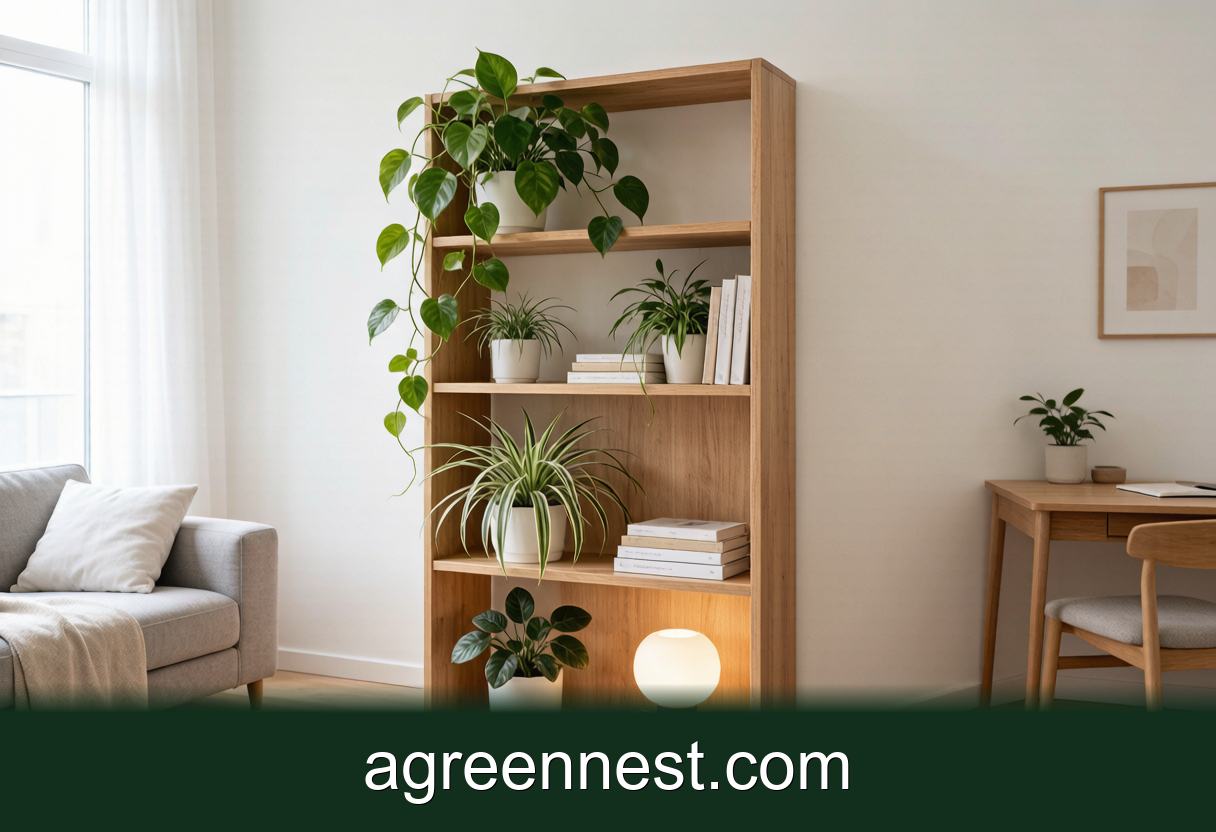
A plant room divider works when it screens sightlines at seated eye level, roughly 100 to 130 cm, while staying open above. An open shelf with trailing pothos, or a row of three *Dracaena fragrans* in 25 cm pots, divides a room visually without stealing the light both zones still need.
The first time I split my living room with plants, I built a wall. A solid rank of tall plants shoulder to shoulder, floor to head height, between the sofa and my desk. It looked dramatic for a month. Then the desk side, cut off from the window, dimmed until I needed the ceiling light at noon, and the plants started leaning into the gaps like commuters on a crowded platform.
What I needed was not a wall. It was a suggestion of one.
What Makes a Divider Read as a Divider?
Sit down in the space you want to separate and look across it. Your seated eye level is somewhere between 100 and 130 cm off the floor, and that band is the only zone a divider truly has to fill. Screen it, and the two areas feel like rooms. Leave it open, and no amount of greenery elsewhere will do the job.
That one measurement changes the shopping list. You do not need 180 cm giants; you need foliage mass between knee and shoulder height, which is why a row of 90 cm plants on a low bench often divides better than two towering palms with bare trunks at eye level.
Everything above 150 cm should stay mostly open. Light, sightlines, and the sense that it is still one room all travel through that upper zone. The divider is a fence, not a hedge.
The Three Layouts That Actually Work
After that first failed wall, I settled on three arrangements, and every divided room since has used one of them.
The open shelf. A backless shelving unit, 120 to 150 cm tall, set perpendicular to the window wall so daylight passes through both sides. Stagger the depths: a Chlorophytum comosum trailing from the top, Peperomia obtusifolia and a small Aspidistra elatior mid-level, books and ceramics filling the gaps so it reads as furniture. The weighting tricks in bookshelf plant display styling apply here, except a divider is seen from both faces, so style front and back.
The floor row. Three floor plants in matching 25 to 30 cm pots, 30 to 40 cm apart along the dividing line. Gaps separate a rhythm from a barricade. Dracaena fragrans is my first pick: its foliage mass sits precisely in the 60 to 130 cm screening band on a clean cane, and the corn plant care notes will tell you it forgives an irregular waterer. Odd numbers, always, per plant grouping rules.
The bench and trailer combination. A 45 cm-high bench along the line, three pots on top, at least one a long trailer like Epipremnum aureum spilling down the face. Cheapest of the three, kindest to small rooms, and the bench doubles as storage. It is the one I recommend for renters, alongside the no-drill ideas in rental-friendly plant styling.
Which Side of the Divider Loses the Light?
One side of your new divider faces the window. The other side now lives in its shadow, and this is the part nobody budgets for.
Take lux readings on both sides before you commit to plant choices, at seated height, mid-morning; the phone method in how dark is your home takes ten minutes. In my flat, the window side of the shelf reads 900 lux on a bright day. The desk side reads 220. That is a different climate: the shadowed face gets the tough crowd, Aspidistra, Sansevieria trifasciata, plain green pothos, while anything fussier earns a window-side berth.
The divider plants get light from one direction only, so they will lean. A quarter turn of every pot each week keeps the screen straight; skip it for six weeks and the whole arrangement bows toward the window like a curtain caught in a draught.
If the dark side reads under 150 lux, clip a slim LED bar under the top shelf facing the shaded zone, 10 hours on a timer. It lifts that face into the 400 lux maintenance range without lighting the whole room.
Why Does My Plant Divider Look Like a Waiting Room?
Because everything matches too little or too much. I have made both mistakes.
Five different pot colours in a row reads as leftovers. One repeated finish, terracotta, matte white, or charcoal, turns the same five plants into a deliberate line; the reasoning in matching pots vs mixed pots goes double for dividers, which are viewed as a single object. Vary the silhouettes instead: one upright cane, one arching rosette, one trailer. Silhouette contrast at eye level is what makes people say it looks styled without knowing why.
And leave one 40 cm gap empty, aligned with the path you actually walk. Rooms need doors, even implied ones.
Watering a Divider Without Dismantling It
A divider is the hardest display in the house to water: half faces away from you, none of it is near a tap.
My Sunday routine: every pot on the shelf is a nursery pot inside a cachepot, so each one lifts out, goes to the sink, soaks 15 minutes, drains 10, and comes back. Floor plants in 25 cm pots are too heavy for that parade, so they get watered in place, in a deep saucer, once the top 4 cm of substrate is dry. A probe beats a guess through the back of a shelf you cannot see; using a moisture meter properly covers the two-spot check I use on big pots.
While each pot is out, it gets its quarter turn and a leaf wipe. The circuit takes 25 minutes for eleven plants, and the divider has not grown a bald, window-starved back side since I started it.
Frequently Asked Questions
Q: My studio flat is 5 x 4 m. Is a plant divider going to make it feel smaller?
A: A solid one will. Use the bench-and-trailer layout at 45 to 90 cm total height and keep everything above it open. In a room that size, cap the divider at a third of the room's width, about 1.6 m, so the eye still travels around it.
Q: Can I use a row of tall snake plants as the whole divider?
A: You can, and the footprint is wonderfully thin, but a Sansevieria row screens poorly above 90 cm because the leaves taper. Pair the row with a 110 cm open shelf behind it, or accept a low divider that zones the floor without blocking seated sightlines.
Q: Which fast growers will fill a see-through divider shelf within a year?
A: Plain green Epipremnum aureum: 60 cm plus of new vine a year at 400 lux, trained along the shelf edges. Chlorophytum comosum fills a cube in a season and throws pups for the gaps. Both tolerate one-directional light.
Q: The side away from the window is too dark for my desk plants. Divider out, or plants out?
A: Neither. Check whether the divider's top half is doing the damage; swapping a solid unit for a backless one often recovers 100 lux. If readings still sit under 200 lux, add a clip-on LED bar for the desk zone first.
Q: How heavy does a plant shelf divider get, and will my floor mind?
A: My 120 x 30 cm unit with nine potted plants, wet, weighs around 55 kg over four feet, fine on any sound floor. The real risk is tipping, not crushing; a freestanding unit over 120 cm tall should be weighted at the base or wired to a wall anchor, especially with cats in residence.
A plant divider earns its floor space when it screens the seated sightline, keeps the upper air open, and holds plants chosen for the light each face actually receives. Start with the bench version if you are unsure; it costs the least and teaches you where the shadow falls. Before buying anything for the dark side, run your readings through our free light calculator so the shade zone gets species that can hold their looks there.
Sources & further reading
GreenNest authors research and write every guide independently. The external links below are reputable references we recommend for deeper reading — they are not the sources we copied from.
- Royal Horticultural Society — Houseplant care — RHS
- Missouri Botanical Garden — Missouri Botanical Garden
- NC State Extension Plant Toolbox — NC State Extension
Recommended Tools for Plant Styling & Display Care
Free, no-signup helpers matched to this guide.
Free Ebooks to Explore
Downloadable handbooks — no email required.
Free Ebook
The AGreenNest Succulent Care Handbook
The complete, beginner-to-confident guide to growing fat, happy succulents — 10 chapters and a 20-plant directory.
Free Ebook
Haworthia & Haworthiopsis Care Handbook
A focused guide to the striped, forgiving Haworthia clan.
Share Your Plant Story
Grown something tricky, or found a trick that finally worked? Tell us in the comments, or see what other readers are sharing on our Community page. The best reader tips get folded back into our guides.
Join the Conversation
Have a tip or a question about Style Plants as a Room Divider That Lets Light Through? Share it below — comments are saved on our server.