 AGreenNest
Low-Light Indoor Plants
Never Never Plant Care: Ctenanthe Indoors
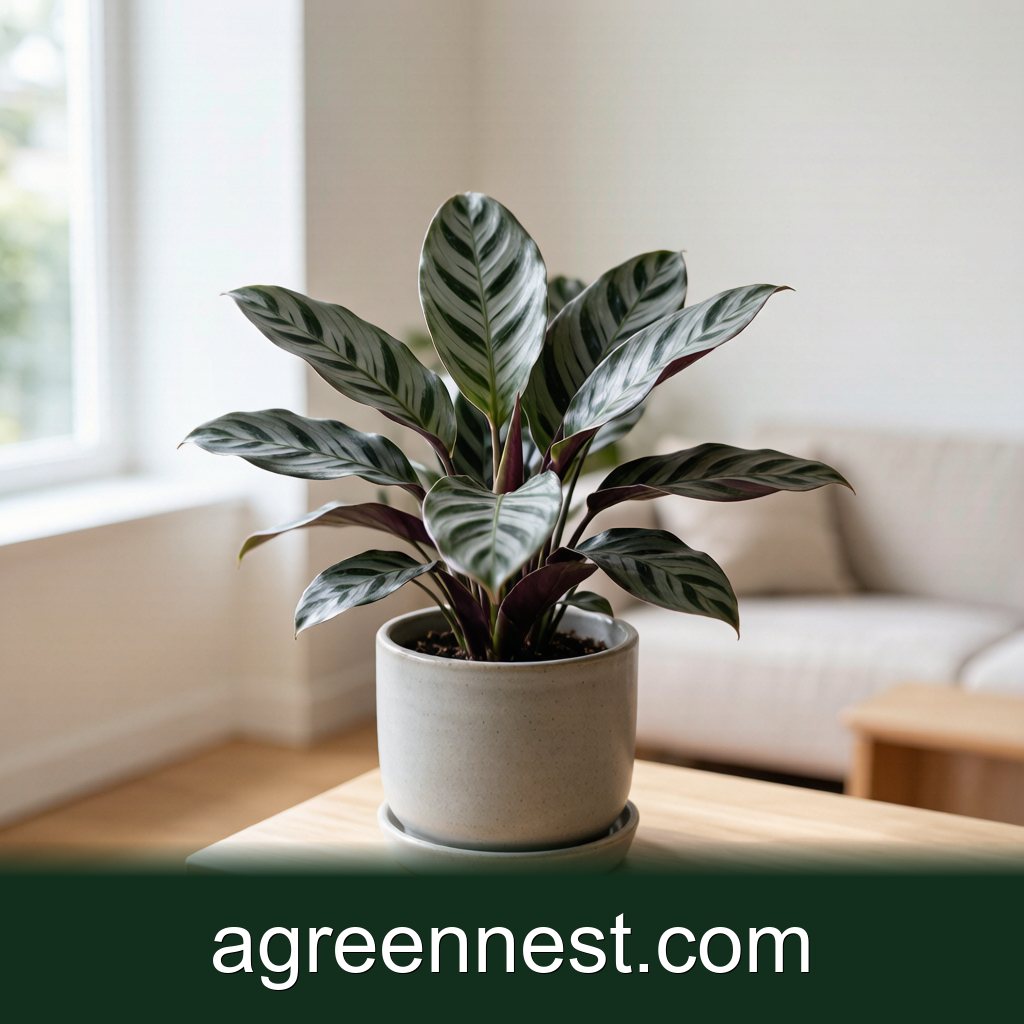
The never never plant (Ctenanthe setosa) wants bright indirect light, 18 to 27 °C, and soil kept lightly moist but never soggy. Water when the top 2 to 3 cm dries, use rain or filtered water, and hold humidity above 50 percent to stop crispy brown leaf edges.
The first Ctenanthe setosa I ever owned came home in a nursery van with a cracked pot, three snapped stems, and a label that just said "prayer plant, assorted." I gave it a corner two metres from an east window and, honestly, low expectations. Eight months later it had thrown eleven new leaves and needed a pot two sizes up. Its calathea neighbour, pampered on the same shelf, had quietly crisped itself to death in the same period.
That is the never never plant in a sentence: the family member who inherited the good looks without the drama. The silvery, banded leaves on aubergine-purple undersides read as high-maintenance, and the care sheet reads like a pothos.
What Kind of Plant Is a Never Never Plant?
Ctenanthe is a genus of about 15 species from the Brazilian rainforest floor, sitting in the Marantaceae family alongside calathea (now Goeppertia), maranta and stromanthe. Two show up in shops. Ctenanthe setosa 'Grey Star' is the big one: metre-tall stems, silver-grey leaves with dark green fishbone banding. Ctenanthe burle-marxii, the fishbone prayer plant, stays compact at 30 to 40 cm and folds its leaves upward every evening with a soft rustle you can actually hear in a quiet room.
Both do the nightly leaf-raising that gives true prayer plants their name. If the leaves stop moving for a week, that is your earliest stress signal, well before any browning starts.
The nickname "never never plant" reportedly comes from the Australian outback slang for remote country, a nod to how long the leaves last. A single healthy leaf routinely stays presentable for 18 months or more.
How Much Light Does Ctenanthe Need?
Bright indirect light grows the fastest, most vividly patterned plant. Mine sits where it receives roughly 200 to 400 foot-candles for most of the day, about two metres back from an east-facing window. If you have no idea what your room measures, the phone lux test takes five minutes and settles the question.
What surprised me is how far down the light scale this plant stays respectable. At 100 foot-candles, deep shade by houseplant standards, my 'Grey Star' still produced four leaves a year. They came in slightly larger and a touch less silvery, which is the classic shade response, but nothing stretched or flopped. Compare that with a calathea in the same spot, which tends to sulk below 150.
Direct sun is the one hard no. Even an hour of midday sun bleaches the silver bands to a washed-out grey and can scorch a leaf in an afternoon. A sheer curtain fixes a south or west window.
Watering, Soil and Feeding
Here is my actual routine, not the idealised one. I check the pot every four or five days by pushing a finger into the top 3 cm of mix. Dry at that depth means water; any dampness means walk away. In summer that works out to roughly every 5 to 7 days for a 17 cm pot, stretching to 10 to 14 days in winter. A probe does the same job with less soil under your fingernails.
Water quality matters more than schedule. Marantaceae leaves brown at the edges when fluoride and dissolved salts build up, and Ctenanthe is only slightly less fussy than its cousins. Rainwater is best, filtered water is fine, and if you use tap water, flush the pot through every second month so salts rinse out the drainage holes.
For soil, I use two parts peat-free houseplant mix, one part perlite, one part fine bark. The target is a mix that holds moisture for most of a week yet never turns to pudding. Soggy mix in dim light is the fastest way to kill this plant, and the symptoms look confusingly similar to underwatering, a trap I have written about in overwatering signs in low light.
Feeding is modest: half-strength balanced liquid fertiliser once a month from March to September, nothing at all in winter. Overfed plants brown at the tips just like salt-stressed ones.
Why Are the Leaf Edges Turning Brown and Crispy?
Dry air, salty water, or both. Work through it in this order:
- Humidity below 40 percent. Ctenanthe tolerates average home humidity better than calathea, but below 40 percent the newest leaves emerge with brown margins already in place. Aim for 50 to 60 percent. Grouping plants helps a little; a pebble tray helps a little more; a small humidifier fixes it outright.
- Tap water minerals. Edges brown slowly over weeks, oldest leaves first. Switch water and flush the pot.
- Erratic watering. Bone dry then drenched produces crisp patches mid-leaf, not just edges.
Curling is a different message. Leaves rolling inward into loose cigars means the plant is losing water faster than the roots supply it: too dry at the root, too hot, or too much sun. Mine curl within hours on 30 °C days and relax the same evening after watering.
Keep the plant between 18 and 27 °C and away from radiators and draughty doors. Below 13 °C growth stops, and a cold, wet winter pot is an invitation to root rot.
Propagation and Repotting
Unlike most houseplants, stem cuttings will not work here; there are no nodes on a leaf stem to root. Division is the only route. In spring, unpot the plant, shake off loose mix, and pull the rhizome clumps apart with your hands. Each division needs at least two stems and a decent handful of root. Pot the divisions into 12 cm pots, keep them at 50 percent humidity or higher, and expect two to three weeks of sulking before new growth resumes.
Repot every second spring, going up 2 to 3 cm in diameter at a time. A 'Grey Star' that reaches a metre tall is perfectly content in a 24 cm pot.
Frequently Asked Questions
Q: My Ctenanthe's leaves stand straight up all day, not just at night. Is it dying?
A: Standing leaves during daytime usually mean light stress, either a recent move to a much brighter spot or heat. Check that the plant is out of direct sun and under 27 °C. If the leaves relax within a few days, it was adjusting. Persistent vertical leaves plus curling means it is thirsty.
Q: Is Ctenanthe setosa the same plant as Stromanthe 'Triostar'?
A: No, though shops mix up the labels constantly. 'Triostar' is Stromanthe sanguinea, with pink-and-cream variegation and a much fussier temperament. 'Grey Star' is silver and dark green, tougher, and grows noticeably faster indoors.
Q: Can I cut off the tall flower spikes my never never plant keeps producing?
A: Yes, and I do. The flowers are small, whitish and unremarkable, and the spike draws energy the plant could spend on leaves. Snip the stalk at its base with clean scissors. The plant flowers most in spring after a bright winter.
Q: The stems on my 'Grey Star' have gone floppy and lean sideways. Too little light?
A: Usually it is normal, not a fault. Mature setosa stems are long and lax, and a metre-tall stem carrying a dinner-plate leaf will lean. A discreet support stake fixes the posture. If new stems come in thin, pale and widely spaced, then light is genuinely short: move it brighter or add a small grow light.
Q: My cat chewed a leaf. Should I worry?
A: Marantaceae, including Ctenanthe, are listed as non-toxic to cats and dogs. The chewed leaf will look ragged forever, but the cat will be fine.
If you have admired prayer plants from a distance and been warned off by calathea horror stories, Ctenanthe is the version that actually cooperates: same folding leaves, same painted patterns, half the tantrums. Give it decent indirect light, water that is not straight from a hard tap, and air above 40 percent humidity, and it will outlive most of the shelf. To check whether your air is the weak link, our free humidity calculator will tell you in under a minute.
Sources & further reading
GreenNest authors research and write every guide independently. The external links below are reputable references we recommend for deeper reading — they are not the sources we copied from.
- Royal Horticultural Society — Houseplant care — RHS
- Missouri Botanical Garden — Missouri Botanical Garden
- NC State Extension Plant Toolbox — NC State Extension
Recommended Tools for Low-Light Indoor Plants Care
Free, no-signup helpers matched to this guide.
Free Ebooks to Explore
Downloadable handbooks — no email required.
Share Your Plant Story
Grown something tricky, or found a trick that finally worked? Tell us in the comments, or see what other readers are sharing on our Community page. The best reader tips get folded back into our guides.
Join the Conversation
Have a tip or a question about Never Never Plant Care: Ctenanthe Indoors? Share it below — comments are saved on our server.