 AGreenNest
Plant Pests & Diseases
Cinnamon for Plant Pests? Home Remedies Put to the Test
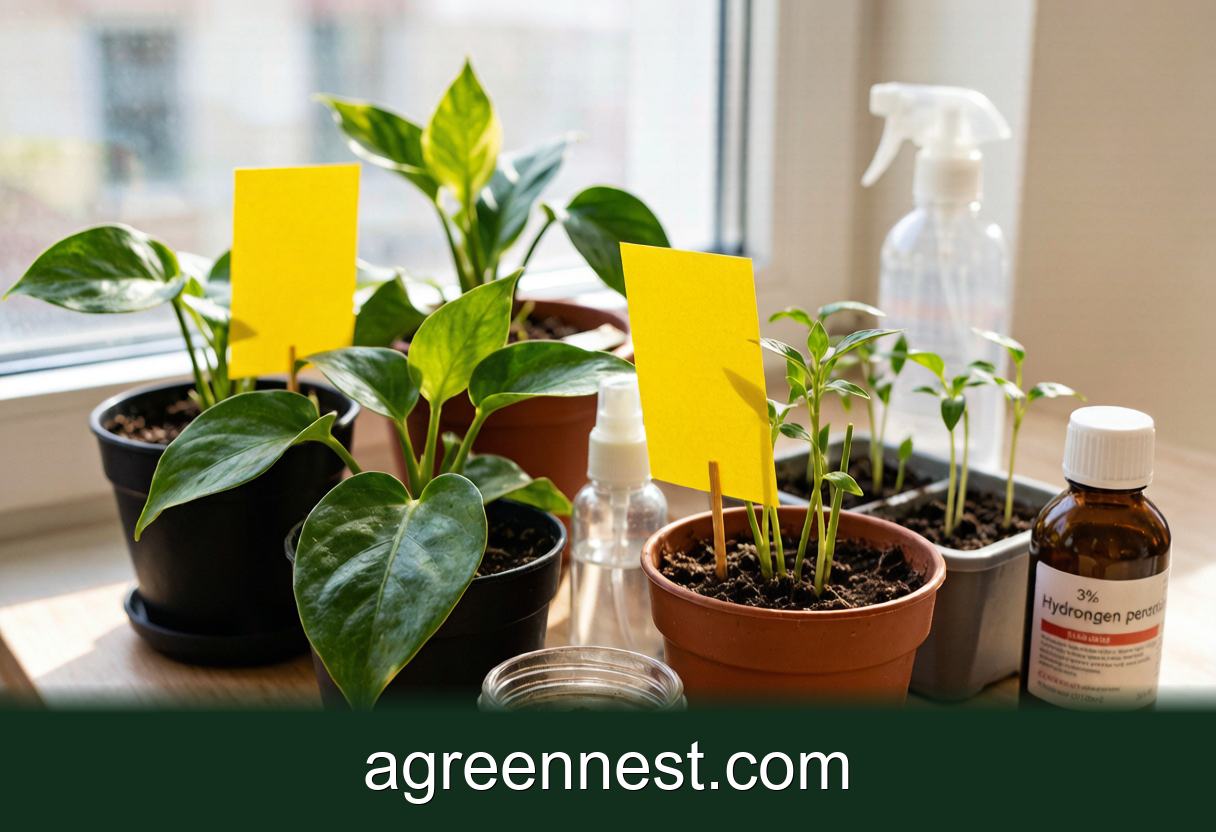
Cinnamon will not clear a fungus gnat infestation: it slows surface fungi, not the larvae below. Dish soap can scorch leaves that true insecticidal soap leaves unharmed. A 1:4 drench of 3% hydrogen peroxide kills some larvae on contact but nothing that hatches tomorrow. Traps, drying, and real soap still win.
My aunt swears by cinnamon. Sprinkle it on the soil, she says, and the gnats pack up and leave. Half the internet agrees with her. The other half is dunking pots in hydrogen peroxide and spraying dish soap on aphids like it costs nothing, which, to be fair, it nearly does.
So I spent six weeks finding out who is right. Six pots, two pest problems, three kitchen remedies, and a yellow sticky trap in every pot so I could count instead of guess. Here is what actually happened.
How I Ran the Test
Nothing fancy, but controlled enough to trust. Three pots of Epipremnum aureum had an established fungus gnat problem (Bradysia species, confirmed by the classic weak zigzag flight). Three chilli seedlings on the same windowsill carried green peach aphids (Myzus persicae), maybe 30 to 50 per plant.
Each pest group got one remedy per pot: ground cinnamon on the soil for the gnats, a 3% hydrogen peroxide drench diluted 1:4 with water for the gnats, and a homemade dish soap spray at 5 ml per liter for the aphids, against a control sprayed with commercial insecticidal soap. I counted trapped adults on the sticky cards every Monday for six weeks and photographed the aphid colonies weekly.
One test in one flat does not equal a peer-reviewed trial. I know. But counts beat vibes, and the pattern was not subtle.
Does Cinnamon Actually Stop Fungus Gnats?
No. And the reason is worth understanding, because cinnamon is not useless, it is just aimed at the wrong target.
Cinnamon contains cinnamaldehyde, a compound with genuine antifungal activity. Dusted on the soil surface, it can slow the fuzzy saprophytic fungi and damping-off organisms that appear on chronically wet potting mix. That is the kernel of truth the myth grew from: less visible mould, so people assume the pests are handled too.
But fungus gnat larvae live in the top 3 to 5 cm of moist soil, feeding on fungal threads, algae, and fine roots. A surface dusting of spice does not reach them at lethal doses. My cinnamon pot logged 38 trapped adults in week one and 41 in week four. Statistically, the gnats did not notice.
Two teaspoons of cinnamon per pot, every week, for six weeks. The colony carried on. Meanwhile the pot I dried out aggressively between waterings, as described in our guide to getting rid of fungus gnats for good, dropped from 42 trapped adults to 6 over the same period. Moisture control did what the spice rack could not.
Verdict: myth, with a footnote. Use cinnamon on damping-off mould around seedlings if you like. Do not expect it to touch a gnat infestation.
Can Dish Soap Replace Insecticidal Soap?
This one hurts, because dish soap does kill aphids. It also, in my test, damaged the plant more than the aphids did.
Insecticidal soap is a specific thing: potassium salts of long-chain fatty acids, formulated at 1 to 2 percent to dissolve the waxy cuticle of soft-bodied insects while sparing most plant tissue. The US EPA lists these soaps among the lower-risk options for home pest control precisely because the chemistry is narrow and short-lived.
Modern dish detergent is a different chemistry aimed at a different job. It carries degreasers, fragrances, and dyes designed to strip lipids off a lasagne pan. Leaf cuticles are lipids. On my chilli seedling, the 5 ml per liter dish soap spray knocked down about three-quarters of the aphids within two days. By day four, the youngest leaves showed water-soaked patches that turned crisp and brown. The plant spent the next month recovering.
The commercial insecticidal soap pot cleared roughly the same share of aphids per spray, needed the same repeat schedule of three applications seven days apart, and burned nothing. If you want the cheap route, a proper recipe using pure soap without additives is safer; we walk through one in our DIY insecticidal soap guide.
Verdict: half true, not worth it. Dish soap kills on contact, but the collateral damage on tender growth, ferns, and anything with a powdery coating makes it a bad trade.
What About Hydrogen Peroxide for Root Pests?
Hydrogen peroxide is the most interesting of the three, because it does something measurable. It just does not do what the posts claim.
A drench of 3% peroxide diluted 1:4 with water fizzes on contact with organic matter, releasing oxygen and damaging soft-bodied larvae it directly touches. My peroxide pot dropped from 44 trapped gnat adults in week one to 19 in week three. Real progress. Then week five: back up to 33.
The mechanism explains the rebound. Peroxide breaks down into water and oxygen within hours of hitting the soil. It kills the larvae present that afternoon and nothing else. Eggs already laid keep hatching, adults keep flying in from the pot next door, and the damp conditions that invited them remain. Unless you fix the watering habit, you are renting relief by the week. If your plants are also showing the shiny residue that often rides along with sap-sucking pests, that is a separate diagnosis; our piece on why plant leaves get sticky covers it.
Verdict: temporarily true. A peroxide drench is a fair one-off strike while you fix drainage and drying. Alone, it is a treadmill.
The Scorecard After Six Weeks
- Cinnamon on gnats: no measurable effect on adult counts. Mild mould suppression on the soil surface. Myth.
- Dish soap on aphids: killed aphids, burned the plant. Replaced by real insecticidal soap at the same cost of effort. Not recommended.
- Peroxide drench on gnats: 50 to 60 percent knockdown that faded within two weeks. Useful once, useless as a strategy.
- Boring controls (dry topsoil, sticky traps, proper soap): the only pots that stayed clean at week six.
Neem oil deserves an honourable mention here. It was not in this test, but unlike the kitchen remedies it has published dose rates and a residual effect on feeding insects. A 5 ml per liter spray fits the same weekly schedule.
If a remedy sounds free and instant, check it against the pattern in our roundup of common plant pest myths. The remedies that survive testing are rarely the exciting ones.
Frequently Asked Questions
Q: Does cinnamon at least stop mould on seedling trays?
A: It can slow damping-off fungi on the surface, and that is its one legitimate use. Dust lightly after sowing. It still will not compensate for poor airflow or soggy mix, which are the real causes.
Q: What ratio of hydrogen peroxide is safe for a soil drench?
A: One part 3% peroxide to four parts water is the common drench strength. Stronger mixes risk damaging fine roots and beneficial soil microbes for no extra pest control.
Q: Why did dish soap burn my plant when my neighbour uses it fine?
A: Formulas differ wildly between brands, and so does leaf sensitivity. Thick, waxy leaves on a rubber plant shrug off what crisps a chilli seedling or a maidenhair fern. You are gambling on two unknowns at once.
Q: How many insecticidal soap sprays does an aphid colony need?
A: Plan on three rounds, seven days apart. Soap only kills the insects it wets, so eggs and hidden nymphs survive each pass and need the follow-up.
Q: Are coffee grounds worth trying against gnats since they are also a kitchen item?
A: No. Spent grounds hold moisture on the soil surface, which is exactly what fungus gnat larvae want. You would be feeding the problem.
Test results are boring in the best way: dry topsoil, yellow traps, and honest soap beat every clever kitchen hack in my flat. Keep the cinnamon for toast, keep the peroxide for cuts, and put the effort into moisture control instead. If you are not sure which pest you are even fighting, start with our guide to dealing with fungus gnats and work from a confirmed ID.
Sources & further reading
GreenNest authors research and write every guide independently. The external links below are reputable references we recommend for deeper reading — they are not the sources we copied from.
- US EPA — Safer Pest Control — US EPA
- NC State Extension — Plant Toolbox — NC State Extension
Recommended Tools for Plant Pests & Diseases Care
Free, no-signup helpers matched to this guide.
🔍 Free Tool
Pest & Problem Identifier
Pick the symptoms you see and get the likely culprit plus a fix.
Free Ebooks to Explore
Downloadable handbooks — no email required.
Free Ebook
The AGreenNest Succulent Care Handbook
The complete, beginner-to-confident guide to growing fat, happy succulents — 10 chapters and a 20-plant directory.
Free Ebook
Haworthia & Haworthiopsis Care Handbook
A focused guide to the striped, forgiving Haworthia clan.
Share Your Plant Story
Grown something tricky, or found a trick that finally worked? Tell us in the comments, or see what other readers are sharing on our Community page. The best reader tips get folded back into our guides.
Join the Conversation
Have a tip or a question about Cinnamon for Plant Pests? Home Remedies Put to the Test? Share it below — comments are saved on our server.