 AGreenNest
Low-Light Indoor Plants
Spider Plant Not Making Babies? The Real Fix
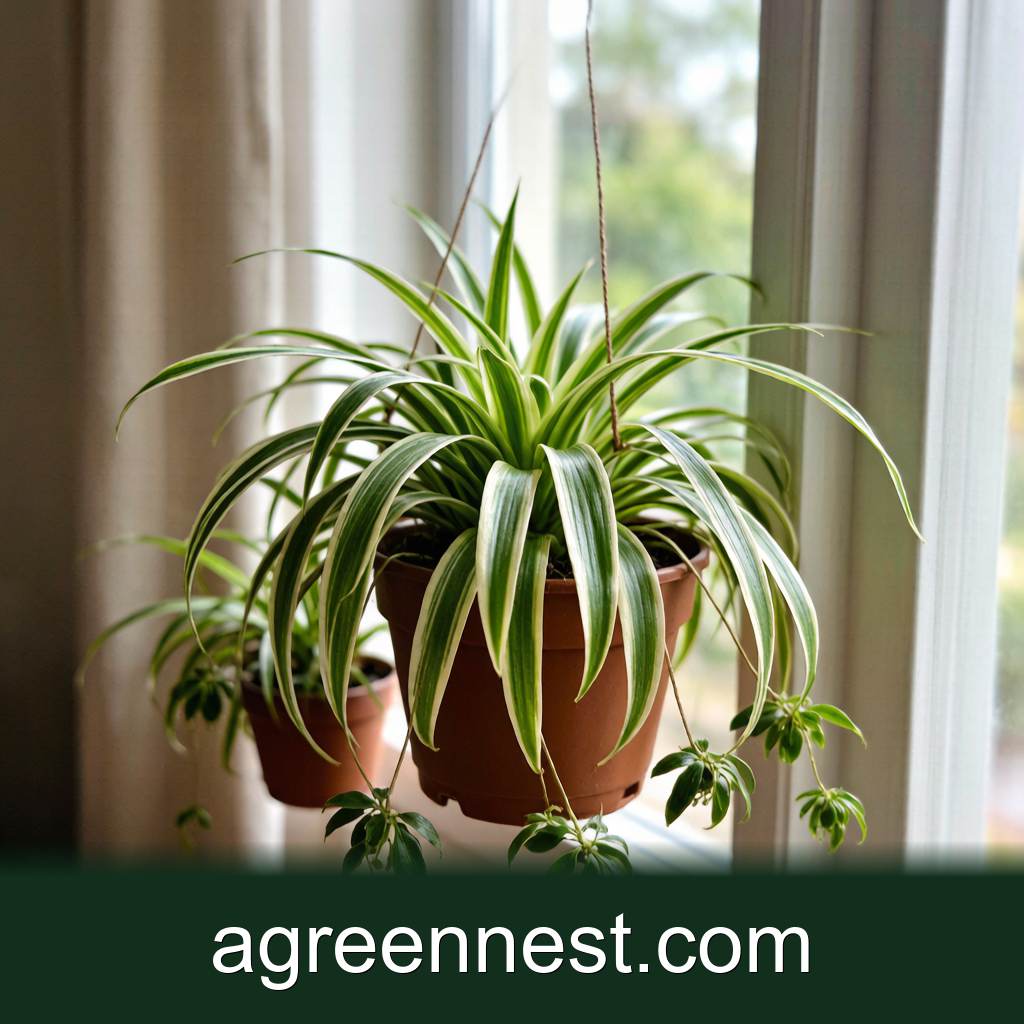
A spider plant needs three things before it makes babies: maturity of a year or more, a snug pot, and short days. Spiderettes are triggered by roughly three weeks of long, unbroken nights, so a lamp burning beside the plant every evening is the most common hidden blocker.
For two years my mother's spider plant sat in a dim hallway, watered whenever she remembered, and it threw out so many babies the runners touched the floor. Mine lived in a bright kitchen, got filtered water and monthly feeding, and produced nothing. Not one spiderette. The pampered plant was barren and the neglected one would not stop.
That contradiction annoyed me enough to dig into why, and the answer changed how I treat every Chlorophytum comosum I own. If yours is green, growing, and stubbornly childless, one of four things is in the way, and the biggest is something most care guides never mention.
Why Isn't My Spider Plant Making Babies?
Four causes account for nearly every babyless spider plant I have been asked about:
- The plant is too young. Spider plants rarely flower before they are around a year old, and many wait closer to two.
- The pot is too roomy. A spider plant in a generous pot pours its energy into thick white storage roots and fresh leaves instead of runners.
- The nights are too bright. This is the sneaky one. Spiderettes form on flowering stems, and flowering is triggered by short days with long, uninterrupted darkness.
- The feeding is too rich. Constant nitrogen tells the plant to make leaves, not flowers.
Notice what is missing from that list: watering schedule, humidity, misting. None of those decide whether babies appear. The difference between "healthy" and "healthy with 30 spiderettes" lives in those four points.
Is Your Plant Old and Root-Snug Enough?
Start with the two boring checks, because they are the cheapest to fix.
Age first. A plantlet potted up last spring is still a toddler. Give it a full year of growth, ideally two, before expecting runners.
Then slide the plant out of its pot. You want a dense wrap of fat, water-storing roots holding the soil together, filling at least three quarters of the pot. If soil crumbles away freely and roots occupy only the middle, the pot is telling the plant to keep expanding instead of reproducing. Mine finally flowered the year I ignored the standard advice and skipped repotting.
The practical rule I use now: repot a spider plant only when roots are pushing the plant visibly upward out of the pot or creeping from the drainage hole, and even then go up just 2 to 3 cm in diameter. The general timing logic in our repotting guide still applies to everything else on the shelf; spider plants are the exception that likes life a little cramped.
The Short-Day Secret Most Care Guides Skip
Here is the part that finally explained my mother's hallway plant. Chlorophytum comosum initiates flowers in response to short days, meaning it needs a stretch of long nights, around 12 hours of genuine darkness, sustained for about three weeks, before it commits to flowering stems. The spiderettes you want grow on those same stems after the tiny white flowers fade.
My kitchen plant never got that signal. The room lights were on until eleven every night, all year round. As far as the plant could tell, it was permanently midsummer, so it never flowered, so it never made babies. The hallway plant sat in natural light only; when autumn nights lengthened, it got the message and ran with it.
Even brief light breaks matter. A hallway lamp, a streetlight through thin curtains, the glow of a television: any of these can interrupt the dark period enough to cancel the signal. Poinsettia growers know this problem well. Spider plant owners mostly never hear about it.
The fix costs nothing. From early autumn, put the plant somewhere the lights go off when the sun goes down: a spare room, a stairwell window, a bedroom where evenings are dark. Hold that routine for three to four weeks. In my experience the first wiry flower stems appear within six to eight weeks of starting.
Could Your Light and Feeding Be Working Against You?
Darkness at night does not mean gloom all day. A spider plant in a truly dark corner has no spare energy for runners, no matter what the photoperiod says. Bright, indirect light, an east window or a metre or so back from a south one, gives it the daytime fuel to act on the short-day trigger. If you are unsure what your spot really delivers, the lux test takes five minutes with a free phone app, and our low-light spider plant profile covers what the plant tolerates versus what it prefers.
In a genuinely dim room, a small LED panel on a timer solves the daytime side, with one caveat: set the timer so the light runs during daylight hours only. A grow light burning into the evening recreates exactly the long-day problem you are trying to escape. The scheduling details are in the grow light timer guide.
Feeding is the last lever. I fed my kitchen plant monthly like clockwork, and that steady nitrogen kept it in leaf-making mode. Since then I feed spider plants at half strength, once in spring and once in midsummer, and stop entirely from September. Plants shrugging off that generosity with runner after runner suggest the light change matters far more than fertiliser ever did.
How Do I Trigger Spiderettes on Purpose?
The full recipe, condensed from everything above:
- Confirm the plant is at least a year old and reasonably root-bound.
- Park it in bright, indirect daytime light at 18 to 24 °C.
- From early autumn, guarantee 12-plus hours of unbroken darkness nightly for three to four weeks. No lamps, no hallway spill.
- Cut feeding to nothing during the trigger period.
- Wait. Thin, arching stems with small white flowers come first; plantlets follow over the next month or two.
Once babies arrive, leave them attached until each has starter root nubs, then pot them up or root them in water; the routine is in the spider plant care guide. If a plant refuses even after all this, check the variety: compact 'Bonnie' cultivars are shy producers indoors compared with the classic 'Vittatum'.
Frequently Asked Questions
Q: My spider plant flowered but the flowers dried up with no babies. Why?
A: Flowers and plantlets form on the same stem, but not every flower node converts. Keep the plant in good daytime light while the stem matures and resist trimming it, even when the spent flowers look untidy. Plantlets often emerge two to four weeks after the blooms fade.
Q: Does a spider plant have to be root-bound before it will produce runners?
A: Snug helps; strangled does not. Aim for roots filling most of the pot while water still drains within a few seconds. A plant so root-bound that water races through untouched needs a pot 2 to 3 cm wider, or it will start shedding leaf tips instead of making babies.
Q: Can I leave my spider plant outside in autumn to get the short-day trigger?
A: Yes, and a shaded porch works well, with one limit: bring it in before nights drop below about 10 °C. A couple of cool weeks actually seem to help flowering along, but frost will end the experiment overnight.
Q: My variegated spider plant makes fewer babies than my friend's all-green one. Is that normal?
A: Normal. The white leaf sections carry no chlorophyll, so a heavily variegated 'Vittatum' banks less energy per day than a plain green plant in the same window. Compensate with brighter indirect light and expect somewhat fewer runners; that is the price of the stripes.
The barren kitchen plant that started all this now spends every autumn in our darkened guest room, and every winter it pays rent in spiderettes, eleven of them last year. Sort the age, the pot, and above all the dark nights, and the babies come. To find the spot in your home with the right daytime brightness for the trigger to work, our free window light estimator will narrow it down in about a minute.
Sources & further reading
GreenNest authors research and write every guide independently. The external links below are reputable references we recommend for deeper reading — they are not the sources we copied from.
- Royal Horticultural Society — Houseplant care — RHS
- Missouri Botanical Garden — Missouri Botanical Garden
- NC State Extension Plant Toolbox — NC State Extension
Recommended Tools for Low-Light Indoor Plants Care
Free, no-signup helpers matched to this guide.
Free Ebooks to Explore
Downloadable handbooks — no email required.
Share Your Plant Story
Grown something tricky, or found a trick that finally worked? Tell us in the comments, or see what other readers are sharing on our Community page. The best reader tips get folded back into our guides.
Join the Conversation
Have a tip or a question about Spider Plant Not Making Babies? The Real Fix? Share it below — comments are saved on our server.