 AGreenNest
DIY Plant Projects
Drill Drainage Holes in Ceramic Pots Safely
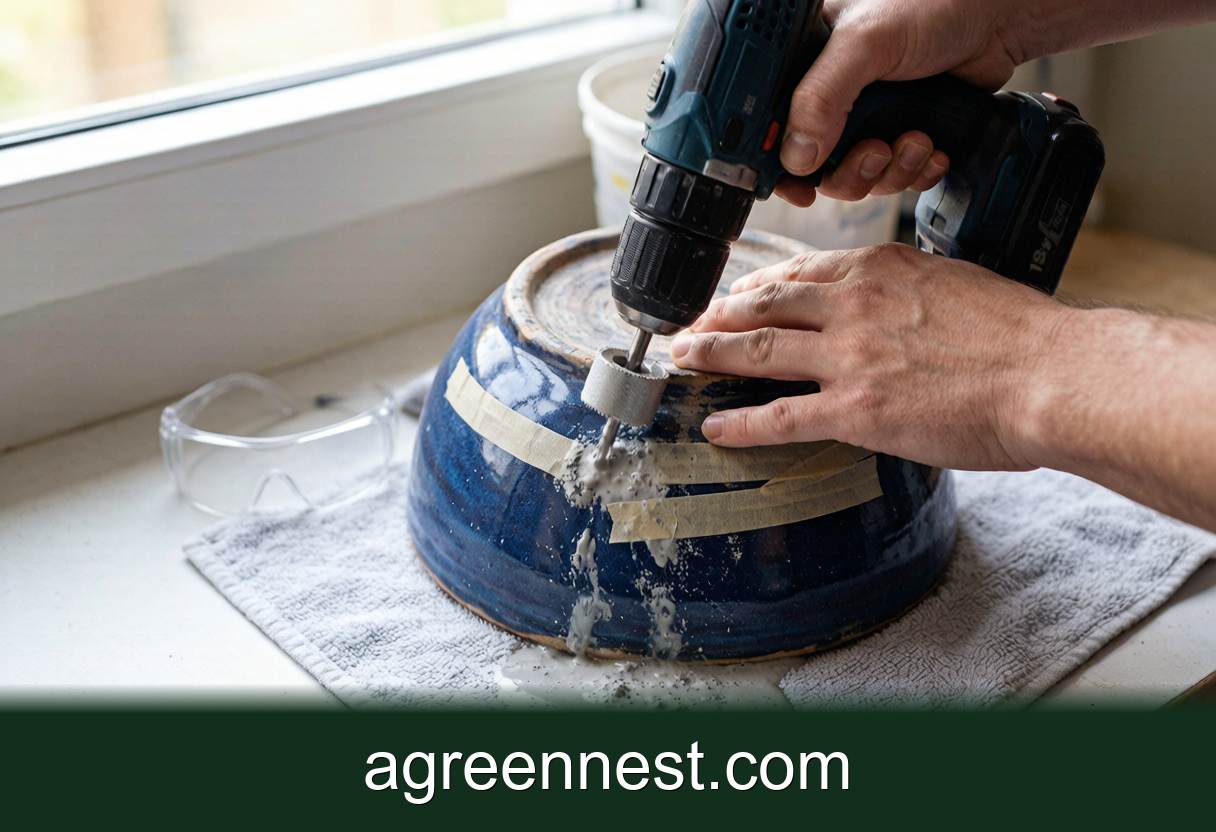
You can drill a drainage hole in almost any ceramic pot with a diamond hole saw, water for cooling, and low speed. Use a 12 mm diamond bit at 600-900 RPM, start at a 45-degree angle, keep the cut wet, and let the bit's weight do the work. Total time: about 4 minutes per hole.
Half the pots in my workshop started life as something else. A glazed ramen bowl. A thrift-store ceramic planter with no hole. A fruit bowl my neighbour was throwing out. Every one of them now grows something, because a 12 mm diamond hole saw costs less than a single decent ceramic pot and turns the entire second-hand market into your pot supplier.
The catch is that ceramic cracks if you treat it like wood. Drill it dry, at high speed, with pressure, and you get a hairline fracture and two useless halves. Drill it wet, slow, and patient, and the hole comes out cleaner than factory. Here is the exact process, bits, speeds, and all.
What Bit Actually Drills Through Glazed Ceramic?
Not a masonry bit, at least not for glazed stoneware or porcelain. The carbide tip skates on the glass-hard glaze and chips it before it bites. Save masonry bits for soft unglazed terracotta, where they work fine.
For anything glazed, buy a diamond hole saw. It is a hollow steel tube with diamond grit bonded to the rim, and it grinds instead of cuts. Sizes that matter for pots:
- 8 mm: pots under 12 cm across, small herbs and cuttings
- 12 mm: the workhorse, right for pots 12-25 cm across
- 20 mm and up: floor pots over 30 cm, or drill three 12 mm holes instead
A set covering 6 to 30 mm runs cheap online, and mine has survived roughly 60 holes so far. One more spec: use a cordless drill with a clutch and variable trigger. You want fine control at low speed, not torque.
How Do You Stop the Pot From Cracking?
Three rules carry the whole job. Heat, pressure, and vibration are what split ceramic, so every rule attacks one of them.
Rule 1: keep the cut wet. Diamond grinding generates heat fast, and heat expands the ceramic unevenly until it cracks. I set the pot upside down in a shallow tray with 1 cm of water and pour a small puddle onto the drilling spot, topping it up whenever it runs dry. Some people run a trickle from a bottle; either works. If you see white dust instead of grey slurry, the cut is dry and you are cooking the bit.
Rule 2: low speed, light touch. 600 to 900 RPM, which on most drills is a quarter to a third of the trigger. Let the weight of the drill do the pressing, nothing more. Forcing it saves 30 seconds and risks the whole pot.
Rule 3: support the pot. Rest it on a folded towel on a solid surface so vibration has somewhere to go. Never drill a pot held between your knees. Ask me how I know.
Step by Step: The 4-Minute Hole
- Mark the centre of the pot base with a permanent marker. For pots wider than 25 cm, mark three points in a triangle about 5 cm apart instead of one big centre hole.
- Stick a strip of masking tape over the mark and re-mark on the tape. The tape gives the bit its first grip on slick glaze.
- Flood the spot with water. Safety glasses on; ceramic slurry flicks.
- Start the bit at a 45-degree angle, touching one edge of the rim to the tape, and run it slowly until you grind a small crescent groove, about 15 seconds.
- Tilt the drill upright gradually while the groove holds the bit in place. You are now cutting a full circle.
- Hold steady at 600-900 RPM with light pressure. Lift the bit out every 20 seconds to let water back into the groove.
- Ease off as you feel it break through. The last millimetre is where blowout chips happen, so finish on trigger pressure alone.
- Rinse, and knock the ceramic plug out of the hole saw.
My average on a 12 mm hole through 8 mm stoneware is just under 4 minutes. Porcelain runs longer, 6 to 8 minutes, because it is fired harder. Unglazed terracotta takes under 2, and if terracotta is your material of choice anyway, my terracotta vs plastic comparison covers where each one earns its spot.
Which Pots Should You Not Drill?
Some ceramics are not worth the gamble. Skip these:
- Anything with existing hairline cracks. The vibration finds them, every time. Tap the pot; a clear ring means sound, a dull thud means cracked.
- Tempered or laminated glass. It shatters into granules by design. Ceramic only.
- Thin porcelain under 4 mm, like fine teacups. Survival rate in my experience is about half, so only drill ones you can afford to lose.
- Valuable or sentimental pieces. Use them as cachepots instead: keep the plant in a plastic nursery pot with holes and lift it out to water. Same look, zero risk, and the pairing works especially well with a self-watering insert.
Concrete and thick stoneware floor pots drill fine but chew through diamond grit faster. Budget one cheap hole saw per two or three big concrete holes, or cast your own planter with the hole built in, as in my concrete planter build.
Does One Hole Actually Drain Well Enough?
A single 12 mm hole in a 20 cm pot drains a full watering in under a minute with a decent mix, and that is enough for most houseplants. The hole is rarely the bottleneck; compacted, peat-heavy soil is. If water sits on the surface for minutes, fix the mix before drilling more holes.
Two upgrades cost nothing while you are set up. First, drill a second hole in pots 25 cm and wider, because a single central hole can sit blocked against a flat saucer. Second, drop a shard of broken ceramic curved-side-up over each hole before potting. It stops soil washing out without slowing drainage. What it does not do is fix an overwatering habit, and no hole count will; if roots are already suffering, root rot triage comes before any hardware.
Frequently Asked Questions
Can I use a regular masonry bit on a glazed pot if I go slow?
You can try, and it will usually skate and chip the glaze in a starburst around the mark. Masonry bits are for unglazed terracotta and soft brick. Glaze is glass; grinding beats hammering, so diamond wins.
My drill only shows speeds like 1 and 2, not RPM. Which do I use?
Gear 1, the slow high-torque setting, with the trigger held at roughly a third. Exact RPM matters less than avoiding full speed, which overheats the rim of the bit in seconds.
The bit wanders off my mark before it bites. What am I doing wrong?
Starting vertical. A spinning hole saw on flat glaze has nothing to grip. Start at 45 degrees, grind a crescent notch first, then tilt upright inside that notch.
Water and a power drill sound like a bad mix. Is this safe?
Keep the drill body and your hands above the waterline, use a battery drill rather than mains, and stop if the tray water rises near the motor. The puddle sits at the cut, not around the tool.
How many holes will one diamond hole saw last?
In stoneware, 15 to 25 holes before it slows noticeably. Porcelain wears it about twice as fast, soft terracotta barely wears it at all. When a hole starts taking double the time, the grit is done.
A diamond hole saw, a puddle of water, and 4 patient minutes turn any bowl, mug, or holeless planter into a working pot. Start angled, stay wet, stay slow, and let the bit grind at its own pace. Before you commit the new pot to a plant, run the numbers on size with our pot size calculator so the upgrade fits the root ball and not just the windowsill.
Sources & further reading
GreenNest authors research and write every guide independently. The external links below are reputable references we recommend for deeper reading — they are not the sources we copied from.
- Michigan State University CANR — Michigan State University
- University of Minnesota Extension — U Minnesota Extension
- NC State Extension Plant Toolbox — NC State Extension
Recommended Tools for DIY Plant Projects Care
Free, no-signup helpers matched to this guide.
Free Ebooks to Explore
Downloadable handbooks — no email required.
Free Ebook
The AGreenNest Succulent Care Handbook
The complete, beginner-to-confident guide to growing fat, happy succulents — 10 chapters and a 20-plant directory.
Free Ebook
Haworthia & Haworthiopsis Care Handbook
A focused guide to the striped, forgiving Haworthia clan.
Share Your Plant Story
Grown something tricky, or found a trick that finally worked? Tell us in the comments, or see what other readers are sharing on our Community page. The best reader tips get folded back into our guides.
Join the Conversation
Have a tip or a question about Drill Drainage Holes in Ceramic Pots Safely? Share it below — comments are saved on our server.