 AGreenNest
Plant Pests & Diseases
7 Pest Treatment Mistakes That Make Things Worse
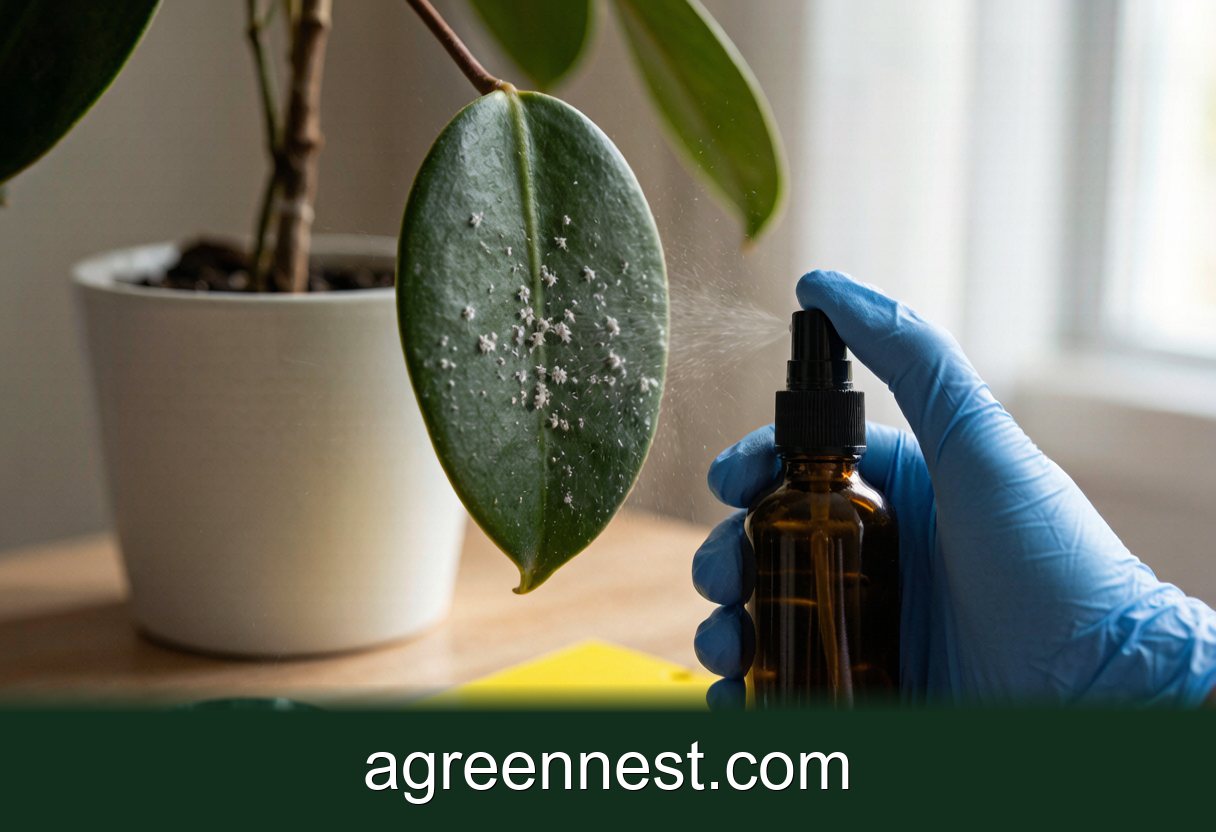
Most failed pest treatments fail for the same reasons: one spray instead of a series, treating only the visibly infested plant, spraying oils in direct sun, and killing the pests but not their eggs. Fix those four habits and the same products that failed you will suddenly start working.
Last spring I ran an informal survey in a houseplant forum: 84 people who said neem oil "did nothing" against their mealybugs. I asked each one three questions. How many times did you spray? Did you treat the neighbouring plants? Did you get the leaf undersides? Only 9 out of 84 answered yes to all three. The product was rarely the problem. The application was.
That pattern repeats with every pest and every treatment, so this is not about which spray to buy. It is about the seven mistakes I see constantly, why each backfires biologically, and the habit that replaces it.
Why Did One Spray Not Fix It?
Mistake one is the big one: treating a pest infestation like a one-time event instead of a campaign.
Nearly every houseplant pest lays eggs that sprays cannot reach. Spider mite eggs hatch in 3 to 5 days at room temperature. Mealybug eggs sit inside a waxy sac that sheds water-based sprays entirely. Scale eggs hide under their mother's dead shell. Spray once and you kill the adults, feel victorious for a week, and then the next generation hatches into a plant with no surviving competitors.
The fix is a series: spray, wait 5 to 7 days, spray again, and repeat for at least three rounds. For spider mites in a warm room I tighten that to every 4 days, because their egg-to-adult cycle can finish in under a week at 27°C. Put the follow-up dates in your phone when you do the first spray. Memory is not a pest control strategy, and this is exactly where treating spider mites usually goes wrong.
Are You Only Treating the Plant That Looks Infested?
Mistake two: quarantining your attention to the plant with visible damage.
By the time you spot cotton fluff or webbing, crawlers have almost always reached the neighbours. Spider mites disperse on air currents from a fan or an open window. Mealybug crawlers, the mobile first stage, are barely 0.5 mm and travel along touching leaves and shelf edges. In my own worst outbreak, the Hoya carnosa showed mealybugs first, but under a hand lens, four of the six plants on that shelf were already carrying crawlers.
Treat the infested plant plus every plant within touching distance, and inspect everything else in the room with a lens or your phone camera at maximum zoom. Isolation still matters too. Move the worst plant a full room away, the same protocol as quarantining a new arrival, and keep it there until you have completed the full spray series with no new sightings for two weeks.
Why Did the Leaves Burn After Spraying?
Mistake three: spraying oils or soaps in bright light or heat.
Neem and horticultural oils coat the leaf in a thin film. In direct sun, that film acts like a lens and cooks the tissue underneath, which is why a Saturday-morning spray session so often produces scorched patches by Sunday. Above roughly 30°C, even indirect light plus an oil coat can damage soft new growth.
Spray in the evening, or keep the plant away from the window for 24 hours afterwards. Always patch-test: one leaf, two days, check for browning before committing the whole plant. This matters double for fuzzy-leaved species like Saintpaulia (African violets), which hold droplets against the leaf surface far longer than glossy foliage does. My full walkthrough of dilution and timing is in the neem oil application guide.
Is Stronger Concentration Actually Better?
Mistake four: doubling the dose when the label rate "did not work".
It is intuitive and it is wrong. A 2% neem solution does not kill twice as many mealybugs as 1%; insects that contact the spray die at either rate, and the ones sheltered in leaf axils survive both. What the double dose does change is phytotoxicity. Over-concentrated neem burns leaves into dark, water-soaked blotches 24 to 48 hours after spraying, and I have watched people diagnose those blotches as a disease and reach for yet another treatment.
Follow the label. For most neem products that means 5 ml per litre of water plus a few drops of mild soap as emulsifier. Coverage beats concentration: every leaf underside, the stem joints, the top 2 cm of soil. A pest that never touches the spray does not care how strong it was.
What About the Soil and the Pot?
Mistake five: treating the leaves and ignoring everything below them.
Several common pests spend part of their life cycle off the foliage. Fungus gnat larvae live in the top 5 cm of moist soil. Root mealybugs never come up at all; you find them as blue-white crust on the root ball. Spider mites hide around the pot rim and drainage tray. If your spray program keeps "working" for a fortnight and then failing, check downstairs.
For gnats, let the top 3 to 4 cm of soil dry fully between waterings and monitor adults with yellow sticky cards; the fungus gnat protocol covers the full sequence. For suspected root pests, slide the root ball out and look. Thirty seconds of inspection saves three weeks of pointless leaf spraying. Wipe the pot, tray, and shelf with soapy water each treatment round.
Are You Declaring Victory Too Early?
Mistake six: stopping monitoring the moment visible pests disappear.
No webbing for a week does not mean no mites; it means the population dropped below your detection threshold. I keep treated plants under watch for a full month: a weekly leaf-underside check with a 10x lens, plus a sharp eye on new growth, always the first tissue reinfested. Sticky traps stay up the whole time as an early-warning system, not a control measure.
Mistake seven belongs here too: never identifying the pest at all. Soap sprays that flatten aphids do little against armoured scale, and no spray fixes damage that was actually sunburn misread as pest damage. Two minutes with our pest identifier or the ID guides at NC State Extension before you mix anything will save a wasted fortnight. Match the weapon to the enemy, then run the campaign.
Frequently Asked Questions
Q: I sprayed neem three times and mealybugs keep coming back on the same plant. What am I missing?
A: Almost certainly the hiding spots: leaf axils, the pot rim, and possibly the roots. Check the root ball for root mealybugs, and touch-treat visible clusters with a swab dipped in 70% isopropyl alcohol between sprays.
Q: Can I shorten the 5-7 day interval between sprays to kill them faster?
A: Spraying more often than every 4 days adds leaf stress without adding much kill, because you are waiting for eggs to hatch into a vulnerable stage. Use 4 days for spider mites in warm rooms, 5 to 7 for mealybugs and aphids.
Q: Do I really need to treat plants that show zero symptoms?
A: Treat plants in direct contact with the infested one, and inspect everything else in the room weekly. Crawler stages are nearly invisible, and contact plants are infested days before symptoms show.
Q: My leaves got dark blotches two days after spraying. Pest, disease, or the spray?
A: Timing is the clue. Damage appearing 24 to 48 hours after treatment, concentrated on the sprayed side and soft new growth, is almost always phytotoxicity, especially if the plant sat in sun afterwards.
Q: Is it safe to spray insecticidal soap on every houseplant I own as prevention?
A: No, and it does not work as prevention anyway; soap only kills on direct wet contact. Blanket spraying stresses sensitive species (ferns, Calathea, succulents with farina) for zero protective benefit. Spray only when you find something.
Every mistake on this list comes down to treating pest control as a product instead of a process: one spray, one plant, one glance a week later. The gardeners who win are running a boring, methodical campaign of repeated sprays, neighbour checks, and a month of follow-up monitoring. Before your next round, take two minutes to confirm what you are actually fighting with our pest identifier.
Sources & further reading
GreenNest authors research and write every guide independently. The external links below are reputable references we recommend for deeper reading — they are not the sources we copied from.
- US EPA Safer Pest Control — US EPA
- NC State Extension Plant Toolbox — NC State Extension
Recommended Tools for Plant Pests & Diseases Care
Free, no-signup helpers matched to this guide.
🔍 Free Tool
Pest & Problem Identifier
Pick the symptoms you see and get the likely culprit plus a fix.
Free Ebooks to Explore
Downloadable handbooks — no email required.
Free Ebook
The AGreenNest Succulent Care Handbook
The complete, beginner-to-confident guide to growing fat, happy succulents — 10 chapters and a 20-plant directory.
Free Ebook
Haworthia & Haworthiopsis Care Handbook
A focused guide to the striped, forgiving Haworthia clan.
Share Your Plant Story
Grown something tricky, or found a trick that finally worked? Tell us in the comments, or see what other readers are sharing on our Community page. The best reader tips get folded back into our guides.
Join the Conversation
Have a tip or a question about 7 Pest Treatment Mistakes That Make Things Worse? Share it below — comments are saved on our server.