 AGreenNest
Hydroponic Growing
Hydroponic Root Rot: Save Plants With Brown Slimy Roots
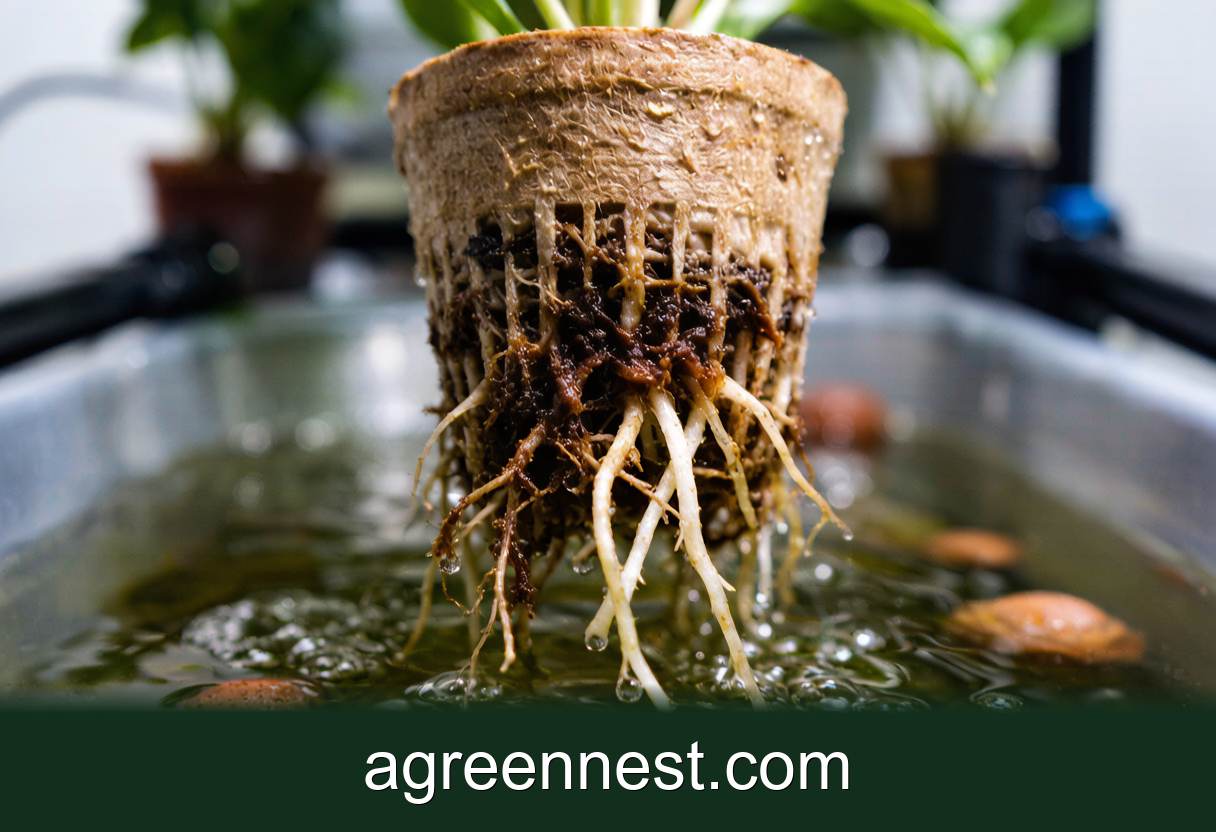
Brown, slimy, sour-smelling roots in hydroponics are root rot, usually Pythium, and it moves fast in warm water. Rescue: trim every brown root, rinse, dose the reservoir with 3ml of 3% hydrogen peroxide per litre, swap the nutrient solution, and keep water at 18 to 21°C. Healthy roots are white or cream and firm.
Two summers ago I lost an entire six-site lettuce system in nine days. Day one, a faint sour smell near the reservoir. Day four, one droopy plant I blamed on heat. Day nine, every root mass in the tub had turned the colour of wet cardboard and slid apart between my fingers. That was Pythium, and its speed is why this article is a checklist, not an essay.
How Do I Know It's Root Rot and Not Normal Staining?
Pull a net pot and look, because the reservoir hides everything. Healthy roots are white to cream, firm, and smell like nothing. Now the two impostors:
Nutrient staining is fine. Roots sitting in a tinted solution pick up a tan or light brown surface colour, and the discolouration is even across the whole root mass. Rub a strand between two fingers: a stained root stays solid and springy.
Rot is structural. Infected roots turn grey-brown in patches, feel slimy, and the outer sheath slides off the root core like a loose sock when you tug. Add a sour, swampy smell and drooping leaves, and you have your answer. In deep water culture the first above-water sign is usually wilting on the warmest afternoon of the week.
The culprit is almost always Pythium, a water mould rather than a true fungus, with Phytophthora and Fusarium in supporting roles. It spreads through the shared solution, which is why one sick plant in a DWC system becomes six sick plants within a week.
Why Did My Reservoir Get Infected in the First Place?
Three numbers explain nearly every case I have seen.
Water temperature above 22°C. Warm solution holds less dissolved oxygen and doubles as a Pythium incubator. At 26°C you are running a pathogen spa. The full physics is in hydroponic water temperature, but the working targets are 18 to 21°C.
Dissolved oxygen too low. Oxygen-starved roots die back, and dead tissue is the entry ticket rot needs. A silent, undersized, or scale-clogged air pump crashes oxygen overnight. Budget roughly 1 litre per minute of air per 4 litres of reservoir for DWC.
Light leaking into the solution. Light grows algae, algae die and feed the microbe load, and the whole biological balance tips. If your tub glows green when the room light is on, fix that first with the covers described in preventing algae in hydroponics.
Dirty starts matter too. Reused net pots, old clay pebbles, and an unscrubbed reservoir all carry spores forward. My rule now: nothing goes back in the system without a 10% bleach soak and a rinse.
The Rescue Protocol, Step by Step
Move fast; a mild case becomes a fatal one in 3 to 5 days of warm weather. Total time for a small system: about an hour.
- Pull every plant and inspect. Any plant with more than roughly 80% brown mush is a loss. Bin it away from the others. Borderline plants with some firm white root remaining are worth saving.
- Trim ruthlessly. With sterilised scissors, cut every brown, slimy strand back to clean tissue. Wipe blades with rubbing alcohol between plants. A plant can regrow roots; it cannot un-infect them.
- Rinse the survivors under lukewarm running water until no slime remains.
- Drain and scrub the entire system. Reservoir, lid, net pots, air lines, stones. Wash with hot water and a 10% bleach solution or 3% hydrogen peroxide, then rinse until you smell nothing.
- Refill with cool, fresh solution mixed to reduced strength, about half your normal EC, so damaged roots are not salt-stressed while they regrow. Mixing maths lives in the hydroponic nutrients guide.
- Dose with hydrogen peroxide: 3ml of 3% H2O2 per litre of reservoir water, repeated every 3 to 4 days for two weeks. It oxidises pathogens and adds a little dissolved oxygen. Do not exceed that rate; peroxide does not distinguish between Pythium and new root tips.
- Fix the cause identified above: chill the water, upsize the air pump, block the light. Skip this and you will rerun the whole protocol in a month.
Expect visible new white root growth in 5 to 10 days on lettuce and herbs, and 2 to 3 weeks on slower fruiting crops.
Can Roots Recover, or Should I Just Start Over?
Run the numbers on time. Lettuce reaches harvest in 30 to 40 days from seed, so a badly hit lettuce is rarely worth two weeks of intensive care; reseed and move on. A pepper carrying fruit at week 8 is a different bet, and a hard trim plus the protocol usually pays off.
My threshold: save a plant if at least 20% of the root mass is still firm and white and the growing tip looks alive. Below that, a fresh start overtakes the recovery. For a passive Kratky jar with one sick basil, wash the jar and restart with a cutting.
How Do I Stop Root Rot Coming Back?
Prevention costs minutes; the cure costs your crop. The standing routine that has kept my systems clean since the disaster year:
- Check water temperature twice a week. Above 22°C, act: shade the reservoir, swap in a frozen bottle, or move the system off the warm floor.
- Change the solution every 7 to 14 days, faster in summer, and rinse the reservoir at every change rather than topping up for a month.
- Keep the air pump running 24/7 and replace air stones every 2 to 3 months, since scale quietly halves their output.
- Blackout everything. No light reaches the solution, ever.
- Quarantine new starts. A seedling from a shop tray can carry Pythium on day one. Give new plants their own jar for a week before they join a shared reservoir, the same logic as quarantining new plants in soil.
A reliable air pump and a cheap aquarium thermometer are the two purchases that matter most here; a full starter setup bundles both.
Frequently Asked Questions
Q: My roots are brown but the plant looks healthy. Do I still need to act?
A: Do the tug test first. If the brown wipes off or the roots stay firm, it is nutrient staining and you can relax. If any strand is slimy or sheds its outer layer, start the protocol now while the plant is still strong; you will save it in an hour instead of losing it in a week.
Q: Can I use the peroxide dose while plants are in the reservoir?
A: Yes, that is the point of the 3ml per litre rate of 3% H2O2. It is gentle enough for roots at that concentration and breaks down into water and oxygen within a day or so. What you must not do is pour in stronger horticultural peroxide (often 29 to 35%) without diluting it down first.
Q: Does root rot from my hydro system spread to my soil houseplants?
A: Not through the air. Pythium travels in water and on wet tools, so the realistic route is a shared watering can or a rinsed net pot. Keep hydro and soil tools separate and the collections stay isolated. Soil root rot is covered in root rot first aid.
Q: Will beneficial bacteria products stop Pythium better than peroxide?
A: They solve different problems. Peroxide is a reset button that kills indiscriminately, useful mid-outbreak. Inoculants like Bacillus blends provide ongoing competition against Pythium, so use them after cleanup, not during it. Never run both at once; the peroxide kills the bacteria you just paid for.
Hydroponic root rot is not a mystery disease; it is warm, under-oxygenated, light-exposed water doing what biology says it will. Catch it at the first sour smell, trim hard, peroxide at 3ml per litre, and fix the temperature and aeration numbers so the door stays shut. The protocol above has kept every system of mine clean through two hot summers since. If you are still choosing a setup, start with deep water culture step by step and build the prevention habits in from day one.
Sources & further reading
GreenNest authors research and write every guide independently. The external links below are reputable references we recommend for deeper reading — they are not the sources we copied from.
- Michigan State University Extension — Michigan State University
- NC State Extension Plant Toolbox — NC State Extension
- University of Minnesota Extension — U Minnesota Extension
Recommended Tools for Hydroponic Growing Care
Free, no-signup helpers matched to this guide.
Free Ebooks to Explore
Downloadable handbooks — no email required.
Free Ebook
The AGreenNest Succulent Care Handbook
The complete, beginner-to-confident guide to growing fat, happy succulents — 10 chapters and a 20-plant directory.
Free Ebook
Haworthia & Haworthiopsis Care Handbook
A focused guide to the striped, forgiving Haworthia clan.
Share Your Plant Story
Grown something tricky, or found a trick that finally worked? Tell us in the comments, or see what other readers are sharing on our Community page. The best reader tips get folded back into our guides.
Join the Conversation
Have a tip or a question about Hydroponic Root Rot: Save Plants With Brown Slimy Roots? Share it below — comments are saved on our server.