 AGreenNest
Plant Styling & Display
7 Plant Styling Mistakes That Make Rooms Feel Cluttered
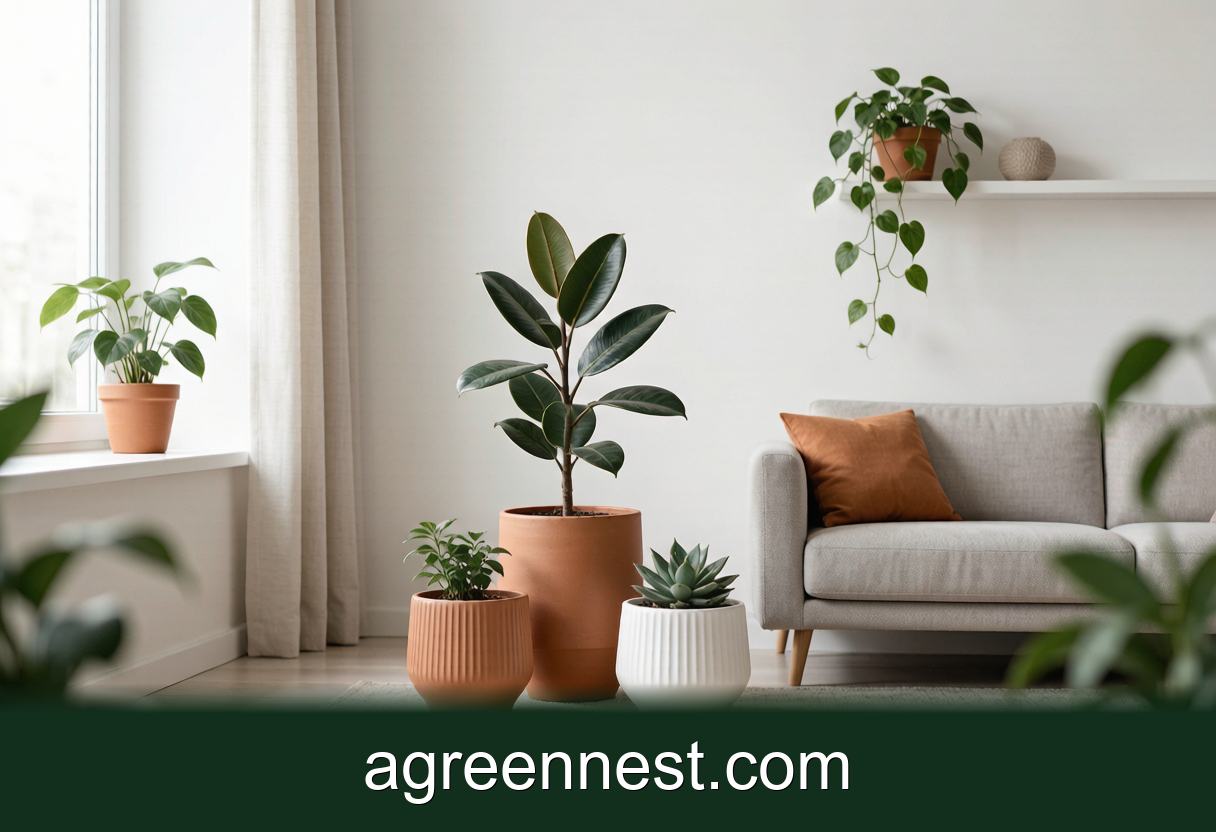
Rooms with many plants look cluttered when pots clash, plants sit at one height, and every surface holds something green. Fix it by limiting pot finishes to two or three, grouping plants in odd numbers at varied heights, and clearing at least a third of each shelf or sill so the eye can rest.
A reader sent me two photos of the same living room last month. Same plants, same furniture, same afternoon light. The first shot looked like a secondhand shop after a busy Saturday. The second looked like a page from a design magazine. Between the photos she had bought nothing and thrown out nothing. She had moved things.
That is the strange truth about plant styling: clutter is rarely about how many plants you own. I keep somewhere north of sixty in a not-large house, and guests call it calm. The mess comes from a handful of specific, fixable habits. Here are the seven I see most, and what to do about each.
Mistake 1: Every Pot Is a Different Colour and Material
This is the big one. A shelf holding a glazed blue pot, a white plastic nursery pot, a woven basket, an orange terracotta pot, and a mug with a cactus in it reads as noise before you register a single leaf.
Pick a palette of two or three finishes and repeat them. Mine is raw terracotta, matte white ceramic, and one warm wood tone, and that trio carries the whole house. The plants provide plenty of variety on their own; leaf shapes and greens are the show, pots are the frame. Repotting everything at once is a chore, so cheat: drop nursery pots inside matching cachepots and swap the outsides in twenty minutes. Plain terracotta is the cheapest way to unify a collection, and it dries evenly too, which your succulents will thank you for.
Mistake 2: Everything Sits at the Same Height
Line ten pots along a sill and you have built a hedge, not a display. The eye slides along the row and finds nowhere to land.
Work in triangles. In any grouping, aim for a tall point, a middle mass, and something low or trailing, so the eye moves up and down as it travels. A 120 cm Ficus elastica on the floor, a 40 cm Calathea on a stool beside it, and a trailing Epipremnum aureum spilling from a 25 cm stand behind them: that is one triangle, and it feels composed the moment you step back. Plant stands, stacked books, and upturned pots all buy you height for almost nothing. My shelf styling guide walks through the same principle across a whole bookcase.
Why Does My Room Full of Plants Still Look Messy?
Usually because there is no empty space left. This is the mistake I fell into hardest myself. Around year three of collecting, every windowsill, shelf end, and side table in my house held something green, and the whole place hummed with visual static. I loved each plant individually. Together they cancelled each other out.
Designers call the fix negative space, and it costs nothing. Clear at least a third of every surface. Group the plants you keep into clusters of three or five, and let the gaps between clusters do the framing. When I cut my living room from nineteen scattered pots down to twelve in three groups, two friends separately asked if I had bought new plants. I had not. They could finally see them. If your collection has outgrown the room rather than the styling, small-space styling tricks can recover a surprising amount of floor.
Mistake 4: Ignoring What the Plant Needs to Stay Beautiful
A styling plan only works if the plants stay alive inside it. The dim corner that begs for a tall plant is precisely where a Ficus lyrata drops half its leaves by November, and nothing reads as clutter faster than a struggling plant shedding onto the rug.
Match the spot's light to the species first, then style. Dark corner: Aspidistra elatior or a Sansevieria trifasciata, both of which hold their shape on 100 lux and neglect. Bright sill: that is succulent and cactus territory. If the corner you love gets no usable light at all, a small grow light mounted out of sight keeps the composition alive, and warm-white models no longer look like a laboratory.
Mistake 5: Dead Leaves, Dusty Foliage, Bare Stems
Grooming is styling. A Monstera deliciosa with three yellow leaves and a crust of dust looks worse than an empty corner, whatever pot it sits in.
Once a week, while the kettle boils, I walk one room with scissors: snip spent leaves at the base, pinch leggy growth, wipe the biggest leaves with a damp cloth. Ten minutes. Dust alone can dim a leaf noticeably, and glossy foliage is half of what makes a styled room glow. Leggy, stretched plants usually mean the light is wrong for that spot, and our guide to rescuing a leggy pothos covers the rescue.
Mistake 6: Forgetting the Vertical Plane
When people say they have no room for more plants, they almost always mean no more floor. The walls and ceiling are standing empty.
A trailing Philodendron hederaceum on a wall shelf, a hanging basket in the dead zone above the reading chair, a rail of small pots beside the window: vertical placements pull the eye up, make ceilings feel higher, and empty the crowded surfaces below. Renting? Tension rods and adhesive hooks rated to 2 kg will hold most hanging plants without a single drill hole. The hanging and trailing styling guide lists my favourite low-commitment mounts.
Is It Ever Just Too Many Plants?
Honestly, yes, and the room will tell you before I can. If daily watering feels like a shift at work, if plants block walkways and door swings, if healthy specimens sit in permanent shadow behind other plants, the collection has outgrown the space.
Cull kindly. Cuttings make gifts, local plant swaps are full of eager homes, and one thriving Monstera beats five sulking ones. I rehomed eight plants two springs ago and have not missed one of them. The room breathes, the survivors get better light, and my watering round dropped from ninety minutes to under an hour.
Frequently Asked Questions
Q: Do all my pots have to match exactly to look tidy?
A: No, and identical pots can look sterile. Aim for a family, not a uniform: two or three finishes repeated through the room. Vary the sizes and shapes within that palette and it reads as collected rather than chaotic.
Q: What is the odd-number rule and does it actually matter?
A: Groups of three or five feel natural because the eye cannot split them into neat pairs, so it reads the cluster as one shape. It matters most under five plants. Past seven or so in one grouping, nobody is counting.
Q: How do I style plants on a windowsill without blocking the light?
A: Keep tall plants at the sides and low growers in the middle, and cap the sill at three to five pots depending on width. A packed sill shades its own back row, which is how sills turn into plant hospitals by midwinter.
Q: My rental has beige walls and brown carpet. Can plants fix that?
A: They help more than anything else you can do without a paintbrush. Big-leaf greens like Monstera and Strelitzia against a plain wall become the focal point, and grouped pots in a consistent palette add colour that leaves with you when the lease ends.
Q: Should I style around the seasons?
A: Lightly. I shift trailing plants away from radiators in October and pull sun-lovers closer to the glass, then reverse it in April. Treat the reshuffle as a twice-yearly excuse to rethink groupings rather than a decorating project.
Clutter is a styling problem, not a plant-count problem. Unify the pots, build height into every grouping, leave real gaps, groom weekly, and use the walls, and the same collection that felt chaotic will feel deliberate. Start with the pot palette this weekend; it is an hour of swapping cachepots and it changes the whole room. For a full room-by-room plan, our complete plant styling guide takes it from here.
Sources & further reading
GreenNest authors research and write every guide independently. The external links below are reputable references we recommend for deeper reading — they are not the sources we copied from.
- Royal Horticultural Society — Houseplant care — RHS
- Missouri Botanical Garden — Missouri Botanical Garden
- NC State Extension — Plant Toolbox — NC State Extension
Recommended Tools for Plant Styling & Display Care
Free, no-signup helpers matched to this guide.
Free Ebooks to Explore
Downloadable handbooks — no email required.
Free Ebook
The AGreenNest Succulent Care Handbook
The complete, beginner-to-confident guide to growing fat, happy succulents — 10 chapters and a 20-plant directory.
Free Ebook
Haworthia & Haworthiopsis Care Handbook
A focused guide to the striped, forgiving Haworthia clan.
Share Your Plant Story
Grown something tricky, or found a trick that finally worked? Tell us in the comments, or see what other readers are sharing on our Community page. The best reader tips get folded back into our guides.
Join the Conversation
Have a tip or a question about 7 Plant Styling Mistakes That Make Rooms Feel Cluttered? Share it below — comments are saved on our server.