 AGreenNest
Succulent Care
Rescue an Overwatered Jade Plant: 7-Day Plan
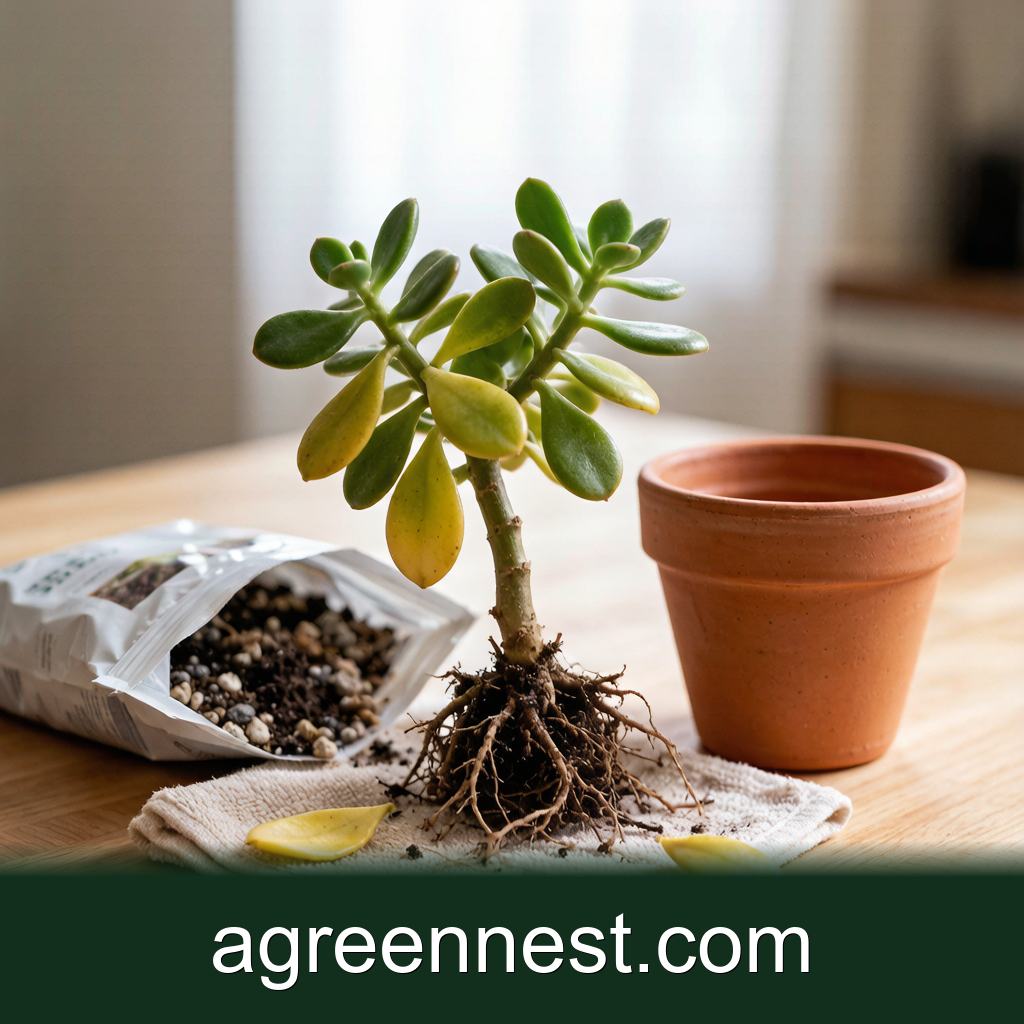
An overwatered jade plant drops soft, yellowing leaves and its trunk may turn dark near the soil line. Unpot it, trim any brown mushy roots, let the root ball air-dry for 24 to 48 hours, then repot into a gritty mix and hold off watering for a week.
The first jade plant I ever owned belonged to my grandmother, and I killed it in under four months. Not through neglect. Through devotion. I watered that poor Crassula ovata every Sunday like it was a fern, and by Christmas the leaves were falling off at a touch and the trunk had gone dark and soft at the base.
I know now the plant was still saveable at that point. If yours is shedding squishy leaves right now, you probably have a week or two of margin left. Here is how to use it.
Why Is My Jade Plant Dropping Soft Yellow Leaves?
A jade stores water in its thick 3 to 4 cm leaves, stems, and trunk. When the roots sit in wet mix for weeks, the plant keeps absorbing water it cannot use while the fine feeder roots suffocate and rot in the airless soil.
The result is a strange contradiction. The leaves swell, turn a paler yellow-green, feel squishy rather than firm, and drop from the lower branches first at the lightest bump. New growers read this as thirst and water more, which is exactly the mistake I made. A thirsty jade looks different: its leaves wrinkle and flatten but stay attached and stay deep green.
Three more signals that point to overwatering:
- A dark, soft zone on the trunk near the soil line. Healthy jade trunk is firm and woody-tan. Rot climbs from the roots up.
- Soil still damp 10 days after watering, especially in a plastic pot.
- A sweetish, swampy smell at the drainage hole.
Caught at the leaf-drop stage, recovery odds are good. Once the trunk is mushy more than a third of the way up, skip to the cuttings section; the pattern matches rescuing a rotting succulent.
How Do I Know if the Roots Are Still Alive?
You cannot diagnose this from the top of the pot. Tip the plant out. Yes, right now, even if the mix is wet; a rotting jade has nothing to gain from staying put.
Crumble the soil away and look at the roots under good light. Live jade roots are pale cream to white and snap crisply. Dead ones are brown to black, feel slimy or hollow, and the outer sheath slides off between your fingers like a wet sock, leaving a thread behind. The photos in dealing with root rot show the difference if you are unsure.
Count the fraction still white:
- More than half alive: excellent. Trim and repot, and expect close to full recovery.
- A quarter to half alive: worth trying. Trim hard, repot into a smaller pot, and take 2 or 3 insurance cuttings anyway.
- Nearly all brown, trunk base soft: stop working on the roots. The cuttings are the plant now.
The 7-Day Drying Rescue
This is the plan I wish someone had handed me that first winter. The treatment for a drowned jade is doing less, slower.
Day 1: trim and air-dry. Cut every brown, mushy root back to clean white tissue with sterilised scissors, wiping the blades with rubbing alcohol between cuts. Then set the bare-root plant on a dry towel in a bright room, out of direct sun, and walk away for 24 to 48 hours so the cut surfaces callus dry. A jade can sit bare-root for a week without harm.
Day 2 or 3: repot into gritty mix. Fresh soil, always; the old mix is saturated and carries the rot organisms. Use a blend at least 50 percent mineral, such as 1 part cactus mix to 1 part pumice or perlite, and a pot only just big enough for the trimmed roots. If you removed half the roots, go down a pot size; a 20 cm pot around a fist of roots holds a wet zone the plant cannot drink. Terracotta helps because the walls wick moisture out.
Days 3 to 7: no water at all. Dry mix, bright indirect light, 18 to 24 °C. Trimmed roots heal and restart in dry soil, not wet.
Day 7 to 10: first careful watering. Water lightly around the trunk, about a quarter of the normal amount, and only if the plant shows no new softness. Then return to a proper cadence: soak thoroughly, then wait until the top 5 cm of mix is bone dry. In my house that means every 2 to 3 weeks in summer and monthly or less in winter.
Expect the plant to sulk. A rescued jade often drops a few more leaves in week one, then sits still for a month before pushing new growth. Firm is the word you are watching for: leaves that stop falling and feel solid again mean the roots are back on duty.
When the Trunk Has Gone Soft: Restart From Cuttings
A jade with a rotten trunk base cannot be saved as-is, but almost any healthy branch can become a new plant. Take 8 to 12 cm cuttings from firm branches well above the rot. Let the cut ends dry for 3 to 5 days until a papery callus forms, then stand them 2 to 3 cm deep in barely damp gritty mix. Roots form in 3 to 5 weeks at 20 to 24 °C, and even single leaves sprout plantlets if laid on the mix, though that route takes months. The full technique is in propagating succulents from leaves.
My grandmother's jade lives on this way, four plants removed from the original. Nobody in the family calls that a failure anymore.
Watering a Jade So This Never Happens Again
Every drowned jade I have met died of a schedule. Sunday watering, first-of-the-month watering, watering because the calendar said so. The plant does not read calendars; it reads soil.
Check the mix, not the date. Push a finger or a wooden skewer 5 cm down, and water only when it comes up dry and clean. A cheap probe works too, with caveats I cover in moisture meter versus the finger test. Light matters as much as water: a jade getting 4 or more hours of direct sun drinks its soil dry in days, while one in a dim corner may take a month. The rhythm in how often to water succulents applies here fully.
Frequently Asked Questions
Q: My jade's leaves are falling off green and firm, not yellow. Is that still overwatering?
A: Usually not. Firm green leaf drop right after moving the plant points to sudden temperature or light change, and jades shed healthy leaves in cold draughts below about 10 °C. Check the trunk and roots anyway; firm trunk plus white roots rules rot out.
Q: Can I save a jade whose trunk is soft only at the top of one branch?
A: Yes, odds are good. Tip rot is usually localised damage, not root failure. Cut the branch 3 to 4 cm below the last soft tissue, into clean firm flesh, and let the wound dry. Confirm the soil is not also staying wet.
Q: My jade sits in a pot with no drainage hole. Can it recover in there?
A: No. Water pools at the base and the lowest roots never dry. Drill a hole or move it to a pot that drains. A sealed pot survives on luck and a stingy watering hand, and a rescued jade has no margin for that gamble.
Q: How long before an overwatered jade looks normal again?
A: Leaves stop dropping within 1 to 2 weeks of repotting if the rescue worked. New growth takes 4 to 8 weeks in the growing season, longer in winter. Cosmetic recovery of a plant that lost most lower leaves takes a year or more, since jades regrow from the tips.
An overwatered jade is rarely a dead jade, if you act while the trunk is still firm. Unpot, trim, dry, repot lean, then do the hardest thing: leave it alone. Water by the state of the soil from now on; our free watering calculator will get you close to a real interval for your pot size and light.
Sources & further reading
GreenNest authors research and write every guide independently. The external links below are reputable references we recommend for deeper reading — they are not the sources we copied from.
- Royal Horticultural Society — Houseplant care — RHS
- Missouri Botanical Garden — Missouri Botanical Garden
- NC State Extension Plant Toolbox — NC State Extension
Recommended Tools for Succulent Care
Free, no-signup helpers matched to this guide.
Free Ebooks to Explore
Downloadable handbooks — no email required.
Free Ebook
Crassula (Jade) Care Handbook
Everything you need to grow a Jade Plant that lives for decades.
Free Ebook
The AGreenNest Succulent Care Handbook
The complete, beginner-to-confident guide to growing fat, happy succulents — 10 chapters and a 20-plant directory.
Share Your Plant Story
Grown something tricky, or found a trick that finally worked? Tell us in the comments, or see what other readers are sharing on our Community page. The best reader tips get folded back into our guides.
Join the Conversation
Have a tip or a question about Rescue an Overwatered Jade Plant: 7-Day Plan? Share it below — comments are saved on our server.