 AGreenNest
Plant Care Accessories
Pot Sizes Explained: What 12 cm Actually Means
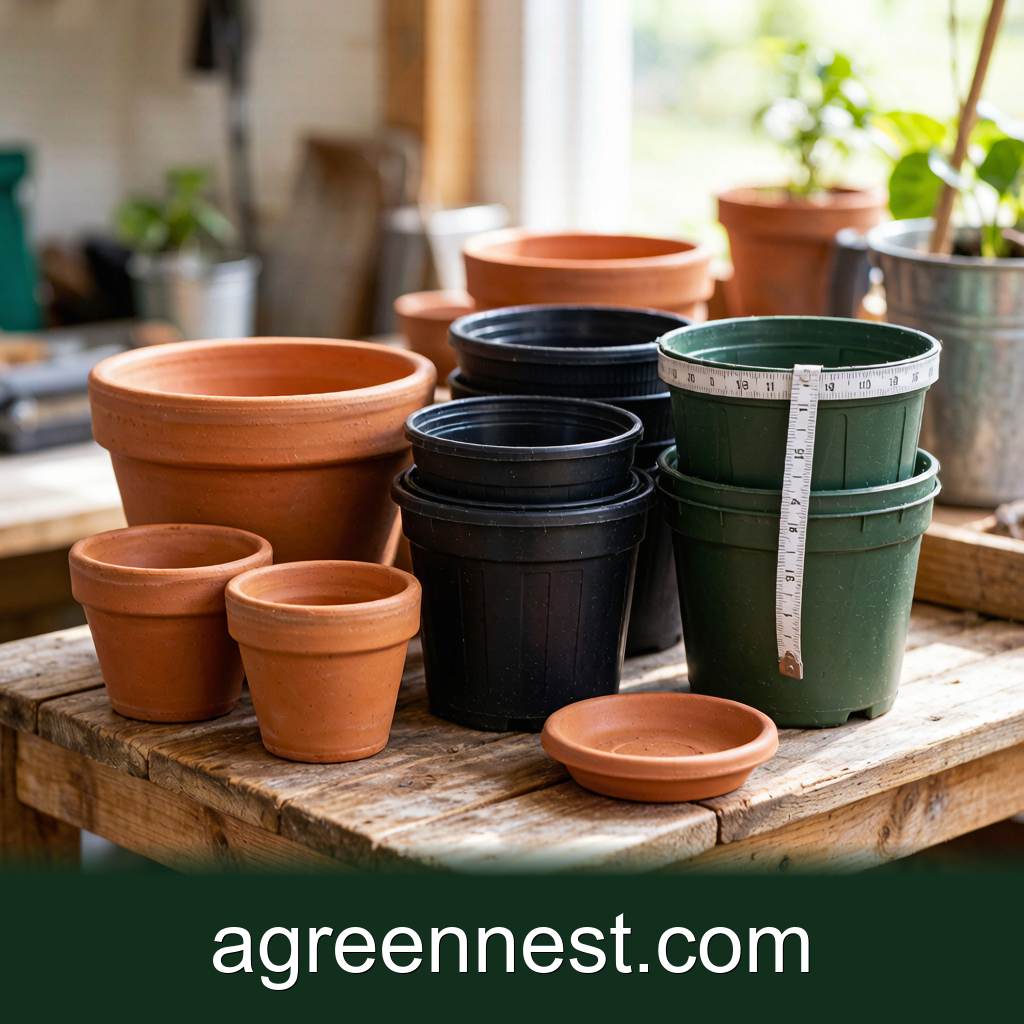
A pot size like 12 cm or 4 inch is the diameter measured across the inside of the rim, not the height or volume. When repotting, go up 2 to 3 cm for pots under 20 cm, and 5 cm above that. A 12 cm pot holds roughly 0.8 L of mix; a 17 cm pot holds about 2.5 L.
Order a "12 cm pot" from three different shops and you can receive three noticeably different pots. One is squat, one is tall, one holds nearly half a litre more soil than the others. All three are honestly labelled. That is the state of pot sizing, and it trips up almost everyone who buys a pot online.
The number on the label measures exactly one thing: the inside diameter across the top rim. Height, taper, and volume are left to the manufacturer's imagination. Once you know that, and a handful of standard measurements, buying the right pot stops being a guessing game.
What Does a Pot Size Number Actually Measure?
Rim diameter, inside edge to inside edge, at the widest point of the opening. A 12 cm pot is 12 cm across the top. That is the whole standard.
Everything else varies. A "standard" pot is roughly as tall as it is wide, so a 12 cm standard stands about 11 to 12 cm tall and holds around 0.8 L of mix. An "azalea" pot is three quarters height, better for shallow-rooted plants. A "pan" or bulb pot is half height. Same 12 cm label on all three, with soil volumes running from about 0.4 L to 0.8 L.
Metric and imperial labels overlap in annoying ways. The common conversions you will meet in shops:
- 6 cm ≈ 2 inch (seedlings, plugs)
- 9 cm ≈ 3.5 inch (rooted cuttings, small succulents)
- 12 cm ≈ 4.5-5 inch (young houseplants)
- 14 cm ≈ 5.5 inch (the most common supermarket houseplant size)
- 17 cm ≈ 6.5-7 inch (mature pothos, medium monstera)
- 21 cm ≈ 8 inch (floor plants, large ferns)
American growers add a third system: trade gallons. A "#1" nursery container is about 2.8 L of actual volume, not the 3.8 L a true gallon implies. A #2 is around 5.7 L. Trade sizes describe volume, not diameter, which is why a #1 pot and an 8 inch pot are not the same thing even when they look similar.
How Much Soil Does Each Size Hold?
Volume is what your plant actually lives in, and it climbs much faster than diameter. Rough working numbers for standard-proportion pots:
| Rim diameter | Approx. volume |
|---|---|
| 9 cm | 0.35 L |
| 12 cm | 0.8 L |
| 14 cm | 1.4 L |
| 17 cm | 2.5 L |
| 21 cm | 4.5 L |
| 25 cm | 8 L |
Two jumps matter here. From 12 to 14 cm the soil nearly doubles. From 17 to 25 cm it more than triples. That is why "just put it in a big pot so I repot less often" backfires: the root ball sits in a mass of wet mix it cannot drink down, and the pot stays damp for two weeks instead of four days. The overwatering spiral that follows looks exactly like the low-light overwatering pattern, even in a bright room.
These volumes also tell you how much mix to buy. Repotting five 14 cm plants needs about 7 L of fresh mix, so a 10 L bag covers it with sensible spillage. I keep a note on my phone with the table above; it has saved me from both half-empty bags and a cupboard full of spares.
Which Size Should I Buy When Repotting?
The rule I use and have never regretted: under 20 cm, go up 2 to 3 cm; over 20 cm, go up 5 cm. A plant in a 12 cm nursery pot moves to a 14 or 15 cm pot. A monstera in a 21 cm pot moves to a 26 cm, not a 30 cm.
Why so stingy? Roots need to colonise new soil before it sours. A 2 to 3 cm ring of fresh mix around the root ball is claimed within a season. A 10 cm ring is a swamp by week two. The step-by-step mechanics are in our repotting guide, but sizing is the decision that matters most before you ever touch the plant.
Three practical notes that go with the rule:
- Measure your current pot before ordering. Inside rim, not outside. Decorative pots often quote outside dimensions, which run 1 to 2 cm larger.
- Buying a cachepot? Add 1 cm of clearance to the nursery pot diameter so it slides in and out without a fight. A 14 cm grower pot wants a 15 to 16 cm cachepot.
- Succulents break the rule downward. They prefer an even tighter fit, and a shallow azalea shape beats a standard for most rosettes; the reasoning is in our succulent repotting walkthrough.
Material changes the effective size too. At the same 14 cm label, unglazed terracotta dries perhaps twice as fast as plastic, so a plant that stays soggy in plastic can behave in clay one size larger. The full comparison is in terracotta versus plastic.
Why Are Nursery Pots Sold in Such Odd Sizes?
Because commercial growers standardised around bench space and trays, not around your windowsill. European growers work in centimetre sizes that tile neatly into Danish trolley shelves: 6, 9, 10.5, 12, 14, 17, 21. That is why supermarket plants arrive in those specific sizes and why a 14 cm grower pot is the most common houseplant size in Europe.
The practical payoff: match your decorative pots to those grower sizes and every plant swap becomes plug-and-play. I keep cachepots in 15, 18, and 22 cm, and any plant from any shop drops straight in. No repot on arrival, which most new plants appreciate anyway; give them 3 to 4 weeks to settle before disturbing roots.
One more oddity worth knowing: "10.5 cm" pots exist because two of them fit a standard tray slot side by side. Nothing horticultural about it. Logistics wrote the size chart, and we all garden inside it.
Frequently Asked Questions
Q: My new pot says 15 cm but my 14 cm plant's root ball will not fit in it. How?
A: The 15 cm is almost certainly the outside diameter of a thick-walled ceramic pot, leaving perhaps 13 cm inside. Grower pot sizes are inside measurements; decorative pot listings often are not. Check the product's stated inner diameter, or bring a tape measure to the shop.
Q: Is a taller pot better for a monstera than a wide one at the same diameter?
A: Height adds volume but also depth that stays wet longest at the bottom. For a 17 cm monstera, a standard proportion pot plus a moss pole beats a tall pot; the pole handles the climbing, the pot handles drainage. A moisture probe reading at the bottom third tells you if a tall pot is staying too wet.
Q: Can I put a 12 cm plant straight into a 21 cm pot to skip two repottings?
A: You can, and it works maybe one time in three, usually with fast, thirsty growers in bright light. The other two times the unused soil stays wet, the roots sit in it, and rot follows. With a 4.5 L pot around a 0.8 L root ball, you are betting the plant can drink five times its root volume. Bad odds.
Q: What size pot do trade gallon plants from US nurseries actually need indoors?
A: A #1 trade gallon holds about 2.8 L, which lands between a 17 and 21 cm standard pot. Measure the root ball diameter after unpotting; most #1 root balls sit around 16 cm across and slot into an 18 cm pot with the usual 2 cm ring of fresh mix.
Pot sizing looks chaotic until you learn it is just rim diameter plus regional habit, and then it becomes a five-second check: measure the inside rim, add 2 to 3 cm, mind the material. Your repotting days get shorter and your plants stop sulking in swamps. For matching the pot to how much water your mix actually holds, our free pot size calculator does the arithmetic for you.
Sources & further reading
GreenNest authors research and write every guide independently. The external links below are reputable references we recommend for deeper reading — they are not the sources we copied from.
- Michigan State University — College of Agriculture & Natural Resources — Michigan State University
- NC State Extension Plant Toolbox — NC State Extension
- University of Minnesota Extension — U Minnesota Extension
Recommended Tools for Plant Care Accessories Care
Free, no-signup helpers matched to this guide.
Free Ebooks to Explore
Downloadable handbooks — no email required.
Free Ebook
The AGreenNest Succulent Care Handbook
The complete, beginner-to-confident guide to growing fat, happy succulents — 10 chapters and a 20-plant directory.
Free Ebook
Haworthia & Haworthiopsis Care Handbook
A focused guide to the striped, forgiving Haworthia clan.
Share Your Plant Story
Grown something tricky, or found a trick that finally worked? Tell us in the comments, or see what other readers are sharing on our Community page. The best reader tips get folded back into our guides.
Join the Conversation
Have a tip or a question about Pot Sizes Explained: What 12 cm Actually Means? Share it below — comments are saved on our server.