 AGreenNest
Plant Care Accessories
Cachepot vs Drainage Pot: Which Setup Wins?
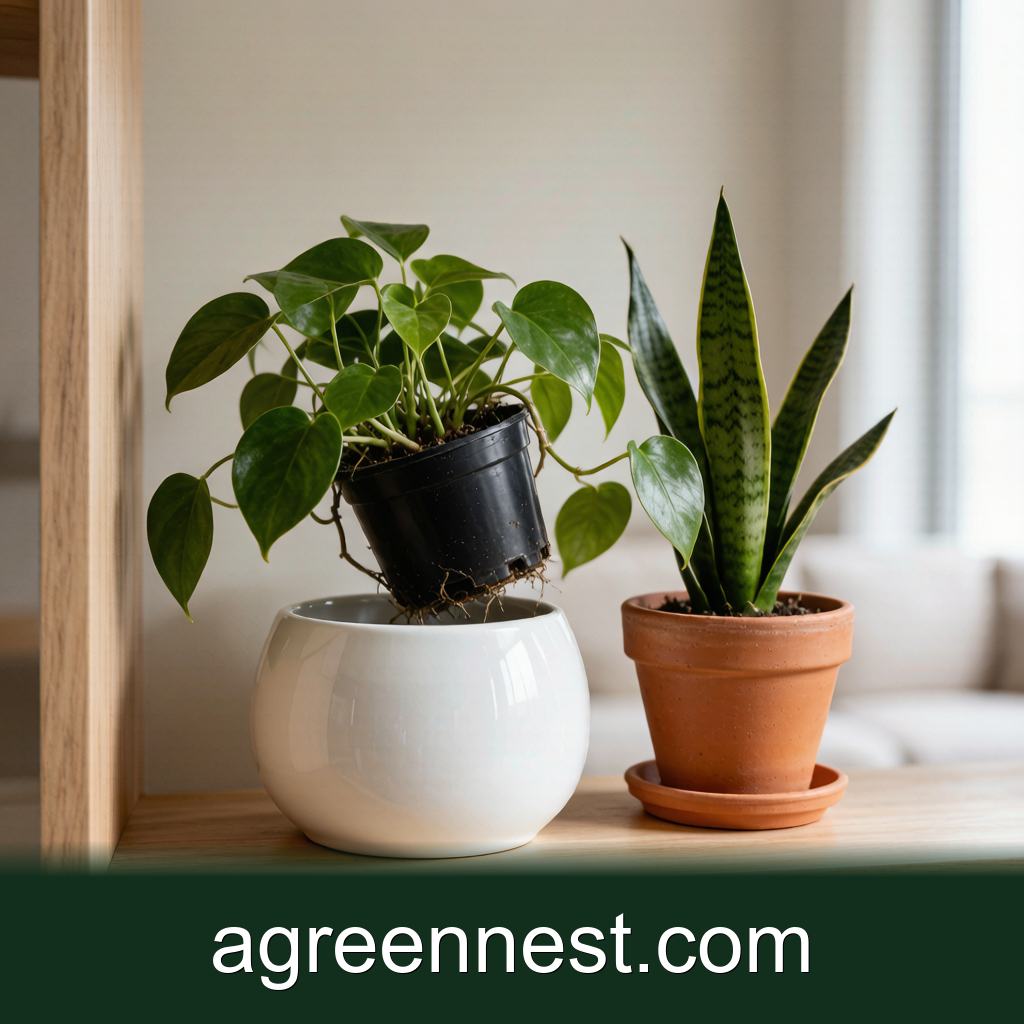
A cachepot is a decorative outer pot with no drainage hole; the plant stays in its plastic nursery pot inside it. A drainage pot is planted directly. Cachepots win on flexibility and floor protection, drainage pots on root health margin. The deciding factor is whether you will remember to empty hidden runoff water.
Half the "my plant is dying and I do not know why" emails I get include a photo of a gorgeous ceramic pot. No hole. Plant in it directly, soil against the glaze. Planting straight into a hole-less vessel is the setup with the highest failure rate I know of, and yet the vessel itself is not the problem. Used correctly, that same pot is a cachepot, and a cachepot system is how interior landscapers run thousands of plants.
The real comparison is two complete systems: a nursery pot dropped inside a decorative shell, versus planting directly into a pot with a drainage hole and a saucer. I run both at home, 23 plants on the cachepot system and 15 planted direct. Here is how they differ.
What Counts as a Cachepot System?
Three parts: the plastic nursery pot the plant already lives in, a decorative outer pot 1 to 2 cm wider in diameter, and ideally a spacer at the bottom, which can be a 2 cm layer of expanded clay pebbles, a pot riser, or an upturned saucer. Water the plant, let it drain, and any runoff you miss collects below the nursery pot instead of around the roots.
The 1 to 2 cm gap matters more than people think. A 14 cm nursery pot needs a 15 to 16 cm cachepot opening. Too tight and you cannot lift the pot out without tipping the whole thing; too loose and the nursery pot leans sideways. Measure the nursery pot's top outer diameter before you buy, not the label size; my pot size guide covers the conventions.
The drainage-pot system is simpler on paper: terracotta or glazed ceramic with a hole, saucer underneath, soil in direct contact with the pot wall. The pot material now participates in drying, which is exactly the trade-off examined in terracotta versus plastic.
Which System Dries Out Faster?
The drainage pot, and it is not close when the pot is terracotta. I weighed two 16 cm pots of Epipremnum aureum in identical mix after watering both to saturation: the direct-planted terracotta returned to its dry weight in 6 days, while the plastic nursery pot sitting inside a glazed cachepot took 10. The cachepot shell blocks airflow around the plastic and traps a humid air pocket, so evaporation through the pot wall is close to zero. All drying happens through the soil surface and the leaves.
That slow-down is a feature or a bug depending on the plant. Ferns, Calathea, and moisture-loving aroids ride it out happily. A Sansevieria trifasciata or any succulent in a cachepot on a north sill can sit wet for two weeks, and that is root rot territory. If you run succulents in cachepots, pull the nursery pot out, water it in the sink, let it drain 20 minutes, and only then put it back. Never water a succulent in place inside the shell.
A cheap moisture meter earns its keep here, because the top of the soil in a cachepot dries long before the base does.
Where Does the Runoff Go, and Who Forgets It?
This is the deciding question, and I mean that literally: pick your system based on your own honesty here.
With a drainage pot and saucer, runoff is visible. You see the saucer fill, you empty it, done. The failure mode is staining: an unglazed terracotta saucer wicks water through and prints a white ring on a wooden shelf within a month. Use glazed saucers or a cork mat.
With a cachepot, runoff is invisible. It pools at the bottom of the shell, under the nursery pot, where you cannot see it. If there is no spacer layer, the nursery pot stands in that puddle and the soil wicks it straight back up through the drainage holes. The plant then behaves overwatered even though you watered a normal amount. My rule for the 23 cachepots I run: every fourth watering, lift each nursery pot and look. It takes 10 seconds per plant. In winter I find water in maybe a third of them. The symptoms of that hidden-puddle problem look identical to classic overwatering signs: yellowing lower leaves and soil that never dries.
If even that check sounds like too much admin, a self-watering pot with a water-level gauge is the more forgiving version of the same idea.
Repotting, Swapping, and the Real Cost Difference
The cachepot system wins the practicality column outright:
- Seasonal swaps. Moving a plant from a living-room shelf to a brighter summer spot means lifting a nursery pot, not repotting. Rotating decor takes seconds.
- Repotting. You size up the 2-dollar plastic pot and keep the 30-dollar ceramic. Direct planting means the ceramic is committed to one plant size; when the roots need a 19 cm pot, your 16 cm ceramic is out of a job.
- Sick bay. A pest-hit plant lifts out for quarantine without disturbing roots.
- Drilling is the escape hatch. If you fall in love with a hole-less vessel and want to plant direct anyway, a 6 mm diamond bit and patience will add a drainage hole to ceramic in about 10 minutes.
Direct planting wins on two points: stability and looks. A 16 cm terracotta pot with soil in it weighs 2 to 3 kg and does not tip when a cat leans on the plant; a nursery pot in a lightweight resin shell can. And there is no plastic rim peeking above the ceramic. For pots that need to look right from every angle, direct planting still gives the cleanest line; choosing pots for succulents walks through matching material to plant.
Frequently Asked Questions
Q: Can I put pebbles in the bottom of a cachepot instead of emptying the water?
A: A 2 to 3 cm pebble layer buys you a reservoir the nursery pot does not touch, which is exactly what you want. It postpones the emptying, not replaces it. Standing water below the roots still evaporates upward and eventually goes stagnant, so tip the shell out roughly monthly.
Q: Why does my plant in a cachepot have yellow lower leaves when I barely water it?
A: Lift the inner pot out. Nine times out of ten there is a hidden puddle at the bottom of the shell and the soil has been wicking it up for weeks, so the roots have stayed wet regardless of your schedule. Empty it, add a spacer layer, and let the pot dry fully before the next watering.
Q: How much bigger should a cachepot be than the nursery pot?
A: Opening 1 to 2 cm wider than the nursery pot's top outer diameter. For a 14 cm nursery pot, that is a 15 to 16 cm cachepot. Check the height too: the nursery rim should sit level with or 1 cm below the cachepot rim.
Q: Is it ever fine to plant directly into a pot with no drainage hole?
A: Only with a technique-heavy setup most people abandon: a deep charcoal and pebble base, measured watering by volume, and a plant that tolerates wet feet. I have seen it work with Cyperus and pothos cuttings, and fail with nearly everything else. Drill a hole or use it as a cachepot.
Q: Do interior landscapers really use cachepot systems for office plants?
A: Almost exclusively. Commercial maintenance depends on swapping plants fast: a tired Dracaena lifts out and a fresh one drops in during one visit, no soil work on site.
Run cachepots where you want flexibility and decor, and accept the 10-second lift-out check as the tax. Plant direct where weight, stability, and a clean silhouette matter, and accept that the ceramic is married to one plant size. My own split settled at roughly 60/40 in favour of cachepots, and the ratio is drifting further that way every time I repot. Before you buy the next pot in either system, run your plant through our free pot size calculator to get the diameter right the first time.
Sources & further reading
GreenNest authors research and write every guide independently. The external links below are reputable references we recommend for deeper reading — they are not the sources we copied from.
- Michigan State University — College of Agriculture & Natural Resources — Michigan State University
- NC State Extension Plant Toolbox — NC State Extension
- University of Minnesota Extension — U Minnesota Extension
Recommended Tools for Plant Care Accessories Care
Free, no-signup helpers matched to this guide.
Free Ebooks to Explore
Downloadable handbooks — no email required.
Free Ebook
The AGreenNest Succulent Care Handbook
The complete, beginner-to-confident guide to growing fat, happy succulents — 10 chapters and a 20-plant directory.
Free Ebook
Haworthia & Haworthiopsis Care Handbook
A focused guide to the striped, forgiving Haworthia clan.
Share Your Plant Story
Grown something tricky, or found a trick that finally worked? Tell us in the comments, or see what other readers are sharing on our Community page. The best reader tips get folded back into our guides.
Join the Conversation
Have a tip or a question about Cachepot vs Drainage Pot: Which Setup Wins?? Share it below — comments are saved on our server.