 AGreenNest
Plant Pests & Diseases
Why Do Spider Mites Explode in Summer?
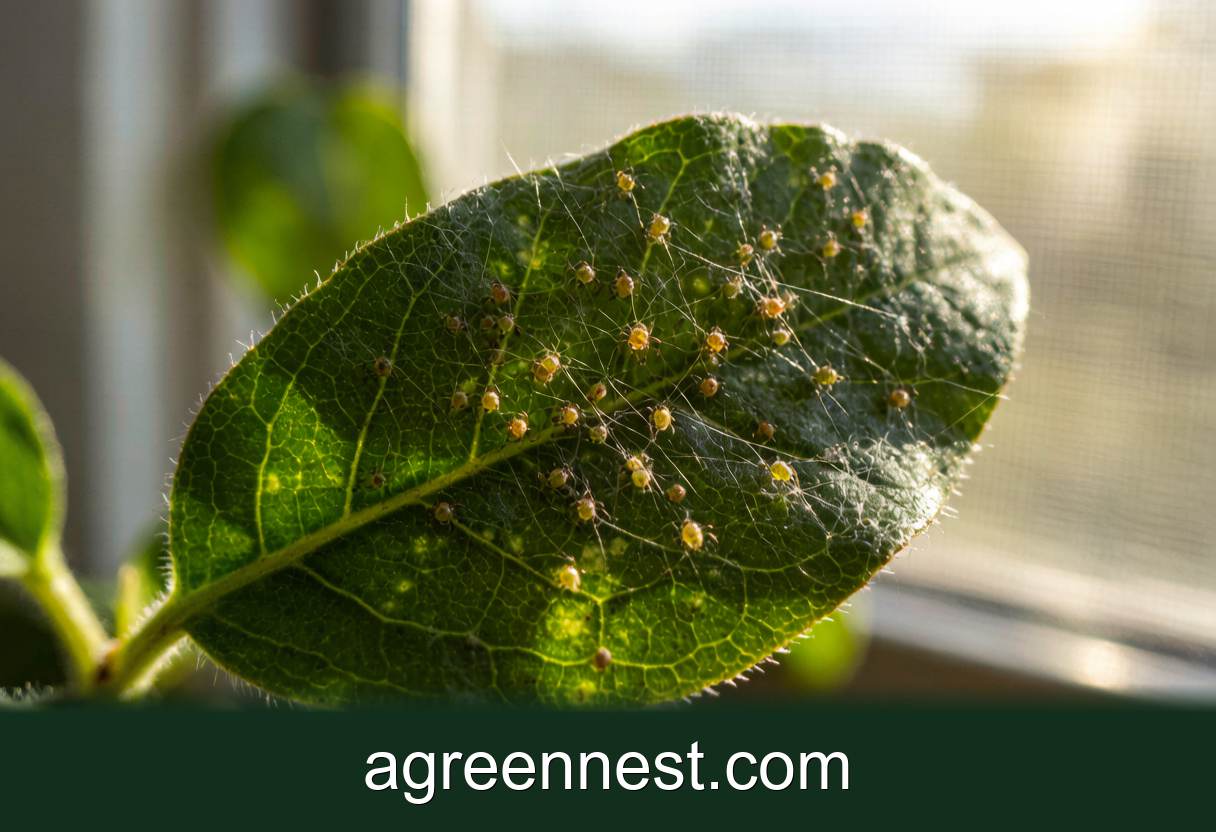
Spider mites (*Tetranychus urticae*) explode in summer because heat compresses their life cycle: egg to breeding adult takes about a week at 30°C versus three weeks at 20°C, and dry air below 50% humidity favours them further. Check leaf undersides weekly from June, raise humidity, and treat early with insecticidal soap.
Last July I counted mites. Actual counting, with a 10x loupe and a tally sheet, on the same Calathea leaf every three days, because I wanted to know whether the "summer mite explosion" people complain about was real or just gardeners paying more attention. On June 30th I found four moving dots on that leaf. By July 21st, three weeks later, the count had passed two hundred and the leaf was stippled grey. Nothing about my care had changed. The weather had.
So yes, the explosion is real. And once you see the arithmetic behind it, you will never treat a heatwave as neutral news for your houseplants again.
What Does Heat Actually Do to a Spider Mite's Life Cycle?
The two-spotted spider mite, Tetranychus urticae, runs its whole life on a thermostat. At a mild 20°C, the trip from freshly laid egg to egg-laying adult takes roughly three weeks. At 30°C, that same trip takes about seven days. The cycle does not speed up a little; it nearly triples.
Now stack the generations. One female lays in the region of 5 to 10 eggs a day, around 100 in her lifetime. In cool spring conditions you might see two overlapping generations a month, which your weekly wipe-down comfortably absorbs. In a 30°C summer flat, you can get four. Each generation multiplying on the last is how four dots become two hundred in three weeks, exactly what my tally sheet recorded.
There is a second summer accomplice: dry air. Mites thrive when relative humidity drops below about 50%, partly because their eggs suffer in damp conditions and partly because their natural checks do better in humid air. Summer heat plus closed windows plus air conditioning is a triple gift to them. Air conditioning cools you, but it also dries the room, often into the 30 to 40% range where mites do their best work.
Why Do Outbreaks Show Up Near Windows and Radiator Shelves First?
Because mites colonise the hottest, driest microclimates in the room before anywhere else. A south-facing windowsill in July can sit 5 to 8°C above the middle of the room. That sill is running a faster mite clock than the rest of your home.
My own outbreak map, from three summers of keeping records, is boringly consistent: south and west windowsills first, then plants above heat sources, then anything touching those plants. Leaves that touch are bridges. Mites do not fly, but they walk well and they balloon on silk threads across surprising gaps.
This is also why summer mite damage gets mistaken for sun damage. Both show up on the bright-window plants, both bleach the leaf. The tell is the pattern: sunburn comes as patches on the sun-facing side, mite stippling is a fine speckle that starts near the leaf's midrib and underside. I walked through the side-by-side comparison in sunburn vs pest damage.
The Five-Minute Summer Mite Check
From June to September I run this weekly on the high-risk shelf, and it has caught every outbreak early since I started:
- Flip one leaf per plant and scan the underside near the midrib with any 10x loupe or your phone camera at full zoom. You are looking for moving dots, cast skins, and pinprick pale speckling on the top surface.
- Hold a sheet of white paper under a branch and tap the stem three times. Wait ten seconds. Specks that walk are mites; specks that sit still are dust.
- Check the webbing zones last: leaf axils and the tips of new growth. Visible silk means the population is already in the thousands, and you are firefighting, not monitoring.
The paper tap is the one I trust most. It found my Alocasia infestation a full two weeks before any leaf symptom showed.
How Do You Break a Summer Outbreak Without Spraying the Whole House?
Work with the biology instead of against it. Mites hate moisture and disruption, so give them both, then follow with a contact treatment.
Start with a hard shower. Take the plant to the bathroom and blast every leaf underside with lukewarm water. A decent rinse physically removes 70 to 80% of the population, eggs included, and costs nothing.
Then treat what remains. Insecticidal soap at label strength, sprayed to dripping on the undersides, repeated every 5 to 7 days for three rounds, tracks the compressed summer breeding cycle; miss the repeat sprays and the eggs you could not kill hatch and restart the clock. Neem or horticultural oil works on the same schedule if you prefer it; the full treatment sequence is in deal with spider mites, and there is a worked rescue case in rescue a monstera from spider mites.
Quarantine is not optional in summer. A treated plant goes at least 1m from its neighbours for three weeks, with no touching leaves, because one walking female restarts the whole outbreak.
And change the microclimate so the survivors inherit worse conditions. A pebble tray lifts the humidity right around the foliage, which is where it counts; my build notes are in make a pebble humidity tray. Moving air helps too, both for the plant and against the mites, and a small fan run a few hours a day does it, as covered in airflow for indoor plants.
Frequently Asked Questions
Q: I rinsed and sprayed once and the mites came back in two weeks. Why?
A: One treatment cannot reach every egg, and in summer heat those eggs become breeding adults in about a week. A single spray just resets the population to day zero. Three rounds, 5 to 7 days apart, is the minimum that outruns the summer cycle.
Q: Does misting my plants every day prevent spider mites?
A: Not reliably. A quick mist raises humidity for minutes, then evaporates. Mites live on leaf undersides where casual misting rarely lands. A pebble tray, grouped plants, or a humidifier holding the area above 50% RH does far more than a spray bottle.
Q: Can spider mites come in through an open window in summer?
A: Yes. Mites balloon on silk strands and ride wind currents, and outdoor populations peak in the same hot weeks. Window screens do not stop them. Check plants nearest open windows more often, and inspect anything that summered on a balcony before it comes back inside.
Q: My air-conditioned room stays at 24°C. Am I safe?
A: Cooler, but not safe. At 24°C the life cycle still runs around two weeks, and air conditioning drops humidity into the mite-friendly 30 to 40% band. You have traded the heat accelerant for the dryness one, so keep up the weekly underside checks.
Q: Which houseplants should I check first during a heatwave?
A: The classic summer targets in my records are Calathea, Alocasia, Cordyline, ivy (Hedera helix), and anything thin-leaved sitting on a south or west sill. Thick waxy leaves like Hoya and most succulents get hit later, if at all.
Summer does not create spider mites; it hands them a faster clock and drier air, and they cash both in. Beat them by checking undersides weekly from June, keeping humidity above 50% near the vulnerable shelf, and committing to the full three-round treatment whenever the paper tap finds walkers. If a bad infestation has already cost a plant most of its leaves, confirm what you are fighting with our free pest identifier before you decide whether to treat or compost.
Sources & further reading
GreenNest authors research and write every guide independently. The external links below are reputable references we recommend for deeper reading — they are not the sources we copied from.
- US EPA — Safer Pest Control — US EPA
- NC State Extension Plant Toolbox — NC State Extension
Recommended Tools for Plant Pests & Diseases Care
Free, no-signup helpers matched to this guide.
🔍 Free Tool
Pest & Problem Identifier
Pick the symptoms you see and get the likely culprit plus a fix.
Free Ebooks to Explore
Downloadable handbooks — no email required.
Free Ebook
The AGreenNest Succulent Care Handbook
The complete, beginner-to-confident guide to growing fat, happy succulents — 10 chapters and a 20-plant directory.
Free Ebook
Haworthia & Haworthiopsis Care Handbook
A focused guide to the striped, forgiving Haworthia clan.
Share Your Plant Story
Grown something tricky, or found a trick that finally worked? Tell us in the comments, or see what other readers are sharing on our Community page. The best reader tips get folded back into our guides.
Join the Conversation
Have a tip or a question about Why Do Spider Mites Explode in Summer?? Share it below — comments are saved on our server.