 AGreenNest
Plant Pests & Diseases
Rescue an Alocasia From Thrips: 6-Week Plan
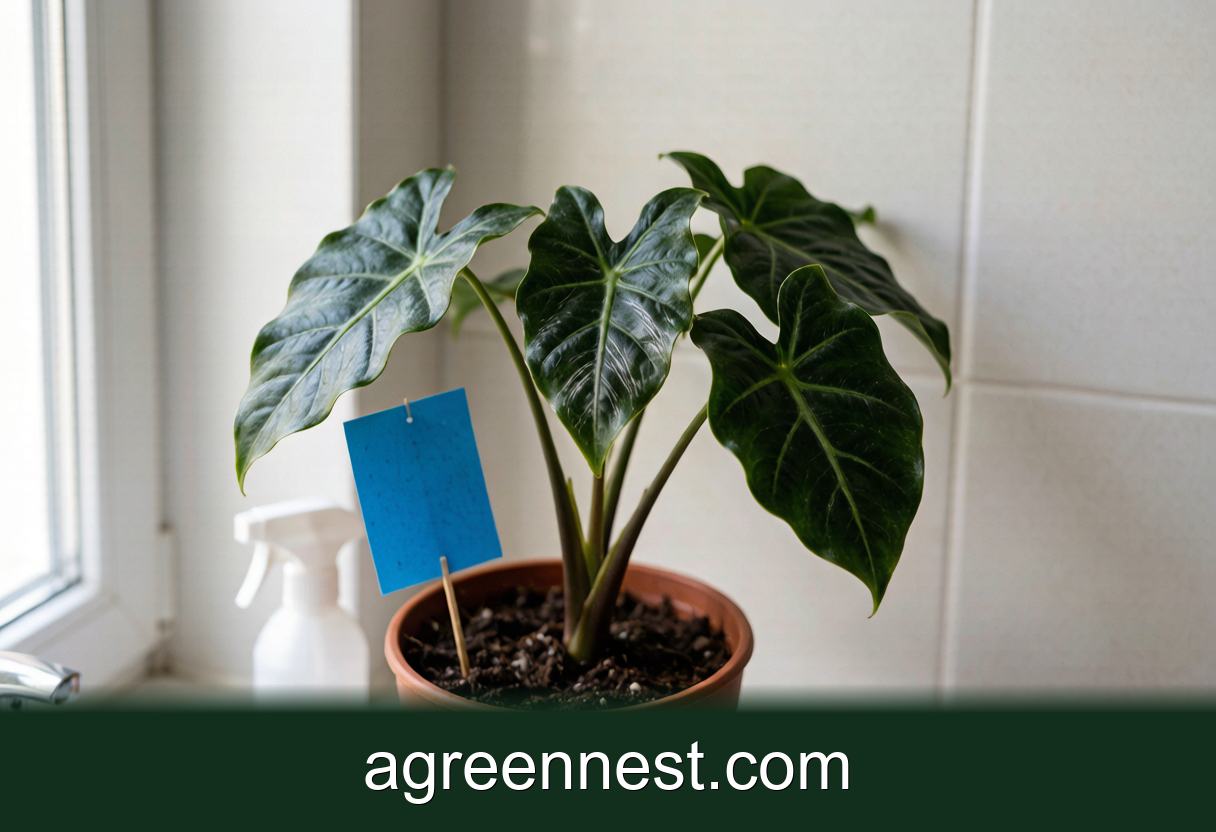
Thrips on an Alocasia show up as silvery, scratched-looking streaks with tiny black droppings. To save the plant: isolate it, cut leaves that are more than half damaged, spray insecticidal soap on both leaf surfaces every 5 to 7 days for 4 rounds, and add blue sticky traps to catch the fliers.
The Alocasia arrived at my desk in a nursery box with two leaves and a problem I did not spot for eleven days. Under a hand lens, the "dust" on the newest leaf turned out to be moving. Thrips. By then the silvery scratch-marks covered a third of the leaf and the culprits had already found my Monstera deliciosa two shelves away.
I kept notes through the whole six-week rescue, mostly because thrips advice online tends to stop at "spray neem." Here is what worked, what did nothing, and the week-by-week schedule that got the plant to push clean new growth.
How Do I Know It's Thrips and Not Spider Mites?
Both pests leave pale damage, and I have watched people treat the wrong one for a month.
Thrips damage on Alocasia looks like fine sandpaper scratches: irregular silvery streaks along the veins, dotted with black specks the size of a full stop. Those specks are droppings, and they are the confirmation. The insects themselves are 1 to 2 mm slivers, cream when young and dark brown as adults.
Spider mites make thousands of pinprick dots rather than streaks, plus fine webbing at leaf joints once the colony matures. No black specks. If you cannot decide, the side-by-side photos in identifying plant pests early settle it faster than any description.
One more check: tap a damaged leaf over white paper. Thrips fall and crawl in a hurried line. Mite debris just sits there.
Week 1: Isolation and Leaf Triage
Move the plant at least 3 m away, ideally to another room. Adult thrips fly, poorly but well enough, so a 30 cm shelf gap is not a quarantine. Mine spent the rescue on a bathroom windowsill. The general rules in how to quarantine new plants apply doubly to an active infestation.
Then triage the leaves. This is the part people flinch at. A leaf that has lost more than half its surface to thrips scarring will never repair itself; the silver patches are dead cells. Worse, larvae hide in the tight furl of new leaves. I cut both damaged leaves off at the base, leaving one healthy leaf and the corm. A drastic haircut, but Alocasia replaces leaves readily, and the pest population crashed by an order of magnitude with those two cuts.
Bag the cut leaves immediately; never leave them in an open bin near the plant shelf.
The Spray Schedule That Actually Broke the Cycle
Thrips have a five-stage life cycle and two of the stages sit in places sprays barely reach: eggs inside leaf tissue and pupae down in the potting mix. That is why one heroic spraying session fails. Contact products only kill what they touch on the day, so the schedule matters more than the product.
What I used, following the soft-chemistry-first approach the EPA recommends for homes: insecticidal soap at label strength, sprayed to runoff on both leaf surfaces, the petioles, and the top 2 cm of the mix. Every 5 to 7 days. Four rounds minimum.
The 5-to-7-day interval is the whole trick. Eggs that survived round one hatch into larvae within about a week, and the next spray catches them before they mature and lay again. Stretch the gap to two weeks and you are farming thrips, not treating them.
Two additions pulled real weight:
- Blue sticky traps. Thrips prefer blue over the standard yellow, a quirk I tested properly in yellow vs blue sticky traps. One trap at canopy height caught 30-plus adults in the first week and, just as useful, became my population meter. Falling catch counts meant the plan was working.
- A shower before round one. A firm lukewarm rinse, leaf undersides included, knocked off half the visible insects before a drop of soap was spent.
What did nothing: cinnamon on the soil (a persistent myth), and a single-shot neem application without follow-up. Neem works as an anti-feedant over repeated rounds, but as a one-off it mostly makes the leaves shiny.
Why Are There Still Thrips After a Month?
Because of the pupae. Mature larvae drop off the leaves and pupate 1 to 2 cm deep in the potting mix, where no foliar spray reaches them. They emerge as flying adults on their own calendar, which is how a plant that looked clean in week 3 sprouts fresh silver streaks in week 5.
I handled the soil reservoir two ways on my Alocasia. First, the top 3 cm of potting mix went in the bin, replaced with fresh mix. Second, the sticky traps stayed up for a full month after the last adult sighting to intercept stragglers as they emerged. NC State's extension notes put thrips egg-to-adult at roughly 2 to 4 weeks indoors depending on temperature, so a month of clean traps is the earliest I would call victory.
If you skip this stage, expect a relapse around day 35. Half-finished schedules are the top entry in pest treatment mistakes for a reason.
Weeks 4 to 6: Regrowth Without Reinfestation
A defoliated Alocasia rebuilds fast when the corm has energy. Mine pushed a new spear in week 4 and unfurled it by week 6, unmarked. New growth is your cleanest signal: thrips gravitate to tender tissue, so a fresh leaf that stays silver-free for two weeks means the population is genuinely gone.
Support the rebuild with steady care: bright indirect light, water when the top 2 to 3 cm of mix dries, no fertiliser for the first fortnight after the last spray. Once two new leaves are out, resume feeding at half strength; the recovery care in helping a plant recover after pests covers the following months.
Before it rejoins the shelf, inspect every neighbour. My Monstera needed two precautionary soap rounds; thrips commute.
Frequently Asked Questions
Q: The new Alocasia leaf came out deformed and sticky. Thrips again?
A: Probably yes. Larvae feed inside the furled new leaf, so damage shows the moment it opens: puckering, brown-edged notches, silver smears. Unfurl-and-inspect is the most reliable thrips check on Alocasia. Restart the 5-to-7-day soap schedule and trap the adults before they cycle again.
Q: Can I just cut all the leaves off and let the corm restart clean?
A: With a healthy corm, yes, and for a heavy infestation it is often the fastest route. Cut at the base, replace the top few centimetres of mix, spray the stump and soil surface once with soap, and keep traps up. You still need the follow-up sprays; eggs in remaining tissue and pupae in the mix survive the haircut.
Q: Do thrips from my Alocasia spread to succulents and cacti?
A: They feed on far more than aroids, though thin-leaved tropicals get hit first and worst. Treat anything within flying range as exposed: inspect weekly for a month and keep one blue trap per shelf.
Q: Is a systemic granule a better fix than four rounds of spraying?
A: Systemics reach larvae inside tissue that sprays miss, so for a recurring infestation they are worth considering. They do nothing for pupae already in the mix, though. Check the label is rated for indoor houseplants, and follow the EPA's guidance on reading pesticide labels before using one in a home with pets.
Q: My tap water is softened. Does that matter for soap sprays?
A: Softened water is high in sodium and can push a soap mix from mildly drying to leaf-burning on thin Alocasia foliage. Mix sprays with distilled, rain, or filtered water, and test on one leaf 48 hours before a full application.
Thrips are beatable, but they are a schedule opponent, not a single-battle one. Triage hard in week 1, spray on the insects' calendar rather than yours, trap the fliers, and respect the pupae in the pot. Six weeks from silver streaks to a clean new spear is a realistic timeline. If you are still unsure which pest you are fighting, run your symptoms through our pest identifier tool before you mix a single spray.
Sources & further reading
GreenNest authors research and write every guide independently. The external links below are reputable references we recommend for deeper reading — they are not the sources we copied from.
- US EPA — Safer Pest Control — US EPA
- NC State Extension Plant Toolbox — NC State Extension
Recommended Tools for Plant Pests & Diseases Care
Free, no-signup helpers matched to this guide.
🔍 Free Tool
Pest & Problem Identifier
Pick the symptoms you see and get the likely culprit plus a fix.
Free Ebooks to Explore
Downloadable handbooks — no email required.
Free Ebook
The AGreenNest Succulent Care Handbook
The complete, beginner-to-confident guide to growing fat, happy succulents — 10 chapters and a 20-plant directory.
Free Ebook
Haworthia & Haworthiopsis Care Handbook
A focused guide to the striped, forgiving Haworthia clan.
Share Your Plant Story
Grown something tricky, or found a trick that finally worked? Tell us in the comments, or see what other readers are sharing on our Community page. The best reader tips get folded back into our guides.
Join the Conversation
Have a tip or a question about Rescue an Alocasia From Thrips: 6-Week Plan? Share it below — comments are saved on our server.