 AGreenNest
Low-Light Indoor Plants
5 Silver-Leaf Plants That Glow in Dark Rooms
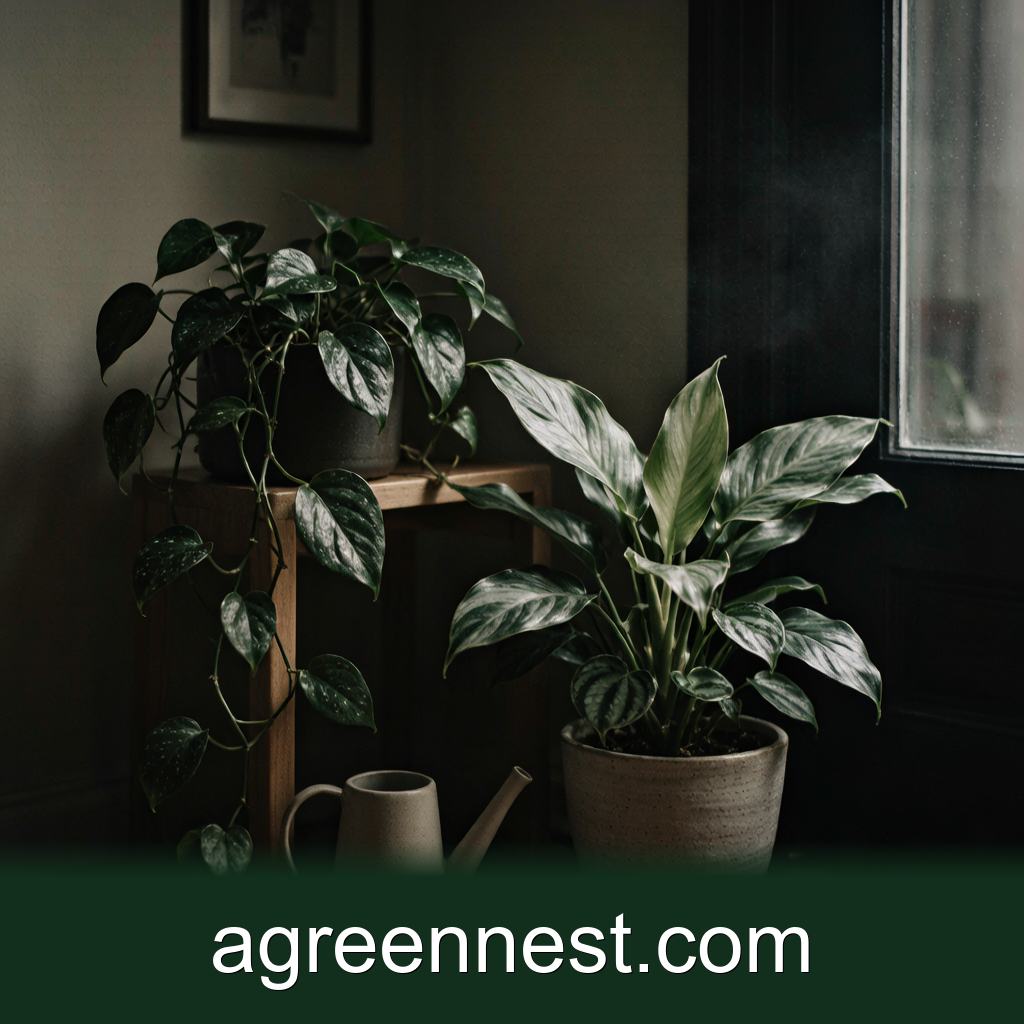
Silver-leaf houseplants like satin pothos, Aglaonema 'Silver Bay', and aluminum plant look luminous in rooms as dim as 500 to 1500 lux because air pockets under the leaf surface reflect light back at you. Pick one matched to your actual lux reading and water only when the top 3 cm of mix is dry.
The darkest corner of my old Portland apartment sat two and a half metres from a north window, and every green plant I put there turned into a sad silhouette by November. Then a friend handed me a cutting of satin pothos, and something odd happened. In light where a regular pothos looked flat and murky, those speckled leaves appeared to give off their own faint shimmer, like frost catching a streetlight.
That shimmer is not magic. Silver foliage bounces what little brightness a room has straight back at your eye, which makes it my most reliable trick for dim spaces. Below are the five silver-leaf plants I reach for again and again, with the light levels each tolerates and the mistakes I made so you can skip them.
Why Do Silver Leaves Look So Bright in Dim Rooms?
The silver on these leaves is not pigment. On most of them it is structure: a thin layer of air pockets trapped between the clear upper skin of the leaf and the green cells underneath. Botanists call this blister variegation. Light hits the air gap, scatters, and reflects back out before the green tissue can absorb it, which is why the patches read as metallic rather than pale.
Two practical consequences follow. First, these species evolved the trait in shaded forest floors, so most are genuinely tolerant of low light rather than merely surviving it. Second, the effect scales with contrast: in a bright sunroom the silver looks pleasant, but at 600 lux in a hallway it looks lit from within.
Before choosing, measure your spot. A phone app or a cheap lux meter takes two minutes, and our lux measuring walkthrough shows exactly how. The numbers below assume a reading taken at leaf height around midday.
Which Silver Plants Handle the Darkest Spots?
These two go dimmer than the rest, down to around 500 lux.
Aglaonema 'Silver Bay' (Aglaonema commutatum hybrid) is the champion. Each leaf is 20 to 30 cm long with a broad silver centre feathered in green, and the plant holds that colour at 500 lux, a level where a croton would fade to plain green in a month. Mine sits 3 metres from an east window and has produced 14 new leaves in two years. Water when the top 3 cm of mix is dry, roughly every 10 to 14 days in winter, and keep it above 15 °C because cold draughts blotch the foliage. I covered the wider genus in my Aglaonema care guide if you want cultivar options.
Satin pothos (Scindapsus pictus 'Argyraeus') drapes rather than mounds, with matte sage leaves flecked in silver. It grows, slowly but steadily, at 500 to 800 lux; give it 1000 and the vines lengthen about twice as fast. The one warning: it sulks dramatically when thirsty, curling its leaves inward into little tubes. That curl is your watering cue, usually every 7 to 10 days for me. The full routine is in our satin pothos care guide.
Which Silver Plants Need a Bit More Light?
These three want 1000 to 1500 lux, which is still no more than a spot within 2 metres of an average window.
Aluminum plant (Pilea cadierei) looks like someone dabbed each quilted green leaf with metallic paint in four neat rows. It stays compact, 25 to 30 cm tall, and grows fast in spring. It is also the thirstiest of the five: at 1200 lux mine needs water every 5 to 7 days in summer, and dry soil shows up as crisped lower leaves within days. Pinch the growing tips every second month or it turns leggy.
Watermelon peperomia (Peperomia argyreia) carries the pattern its name promises: silver bands arcing across each rounded leaf exactly like a watermelon rind. It tops out around 20 cm, ideal for a shelf or desk. Keep it at 1000 lux or better and let the top half of the pot dry between waterings, because its succulent-ish stems rot fast in soggy mix. If you enjoy the peperomia family's textures, the ripple types in my emerald ripple peperomia guide pair beautifully with this one.
Silver leaf philodendron (Philodendron brandtianum) is the collector's pick, a climber whose olive leaves are so heavily marbled in silver they look brushed with chrome. Give it 1200 to 1500 lux, a moss pole or a hook to trail from, and water about every 8 days. Leaves reach 10 to 18 cm indoors, larger if it climbs.
How Do You Keep the Silver From Fading?
Three habits protect the shimmer.
Match the light floor, not the ceiling. Below each plant's minimum, new leaves emerge smaller and greener because the plant sacrifices reflective area for photosynthetic area. If your reading is under 500 lux, no silver plant will hold its pattern; a small LED panel run 10 to 12 hours a day fixes that for a few dollars a month.
Do not overwater the dim ones. Low light means slow drinking. In my north-facing rooms, every one of these plants goes at least a week between waterings from October to March, and the aluminum plant is the only one that ever wants more. Yellowing lower leaves in a dark corner are almost always an overwatering signal, not a light problem.
Wipe the leaves monthly. Dust dulls a reflective surface faster than a matte one; a damp cloth restores a surprising amount of gleam. I do mine on the first Saturday of each month while the kettle boils.
One more note from experience: my satin pothos produced nearly solid-green leaves the winter I let it sit at 400 lux, then returned to full speckle the following spring two shelves higher. The plant was telling me where it wanted to live. If your window faces north, these north-window picks include several of the plants above.
Frequently Asked Questions
Q: My satin pothos is growing plain green leaves. Is it reverting?
A: Almost certainly not; true reversion is rare in Scindapsus pictus. Leaves grown in very dim light (under about 500 lux) carry less silver because the plant prioritises green tissue. Move it brighter and the next leaves regain their speckle, though existing leaves keep whatever pattern they emerged with.
Q: Why are the silver patches on my Aglaonema turning yellow-brown at the edges?
A: Check for cold first. 'Silver Bay' marks below about 13 °C, and a windowsill can drop that low overnight in winter even when the room feels warm. If temperature checks out, look at water quality; fluoridated tap water browns Aglaonema tips over months.
Q: Can I put an aluminum plant in a bathroom with no window?
A: Not on ambient light alone; a windowless bathroom measures near 0 lux with the light off, and a few hours of ceiling light per day is not enough. It works only if you add a small grow bulb on a timer for 10 to 12 hours daily. The humidity, on the other hand, it will love.
Q: Do silver leaves burn faster in direct sun?
A: The blistered patches can scorch, and the contrast makes damage obvious, but the bigger issue is bleaching: strong direct sun washes the silver toward grey-white and browns the thin tissue. Keep all five plants out of midday direct sun; morning sun through an east window is fine.
Q: Which of these five is safest around a leaf-chewing cat?
A: None is a good chew toy, but they differ. Pilea cadierei and Peperomia argyreia are listed as non-toxic to cats. Scindapsus, Philodendron, and Aglaonema all contain calcium oxalate crystals that cause mouth pain and drooling, so shelve those out of reach.
A dim room is not a sentence to plastic plants. It is an invitation to pick foliage that works with scarce light instead of against it, and silver leaves do exactly that, bouncing the little you have back into the room. Start with one Aglaonema or satin pothos matched to a real lux reading, and check your numbers with our free light calculator.
Sources & further reading
GreenNest authors research and write every guide independently. The external links below are reputable references we recommend for deeper reading — they are not the sources we copied from.
- Royal Horticultural Society — Houseplant care — RHS
- Missouri Botanical Garden — Missouri Botanical Garden
- NC State Extension Plant Toolbox — NC State Extension
Recommended Tools for Low-Light Indoor Plants Care
Free, no-signup helpers matched to this guide.
Free Ebooks to Explore
Downloadable handbooks — no email required.
Share Your Plant Story
Grown something tricky, or found a trick that finally worked? Tell us in the comments, or see what other readers are sharing on our Community page. The best reader tips get folded back into our guides.
Join the Conversation
Have a tip or a question about 5 Silver-Leaf Plants That Glow in Dark Rooms? Share it below — comments are saved on our server.