 AGreenNest
Plant Care Accessories
Spray Bottle vs Pump Sprayer for Houseplants
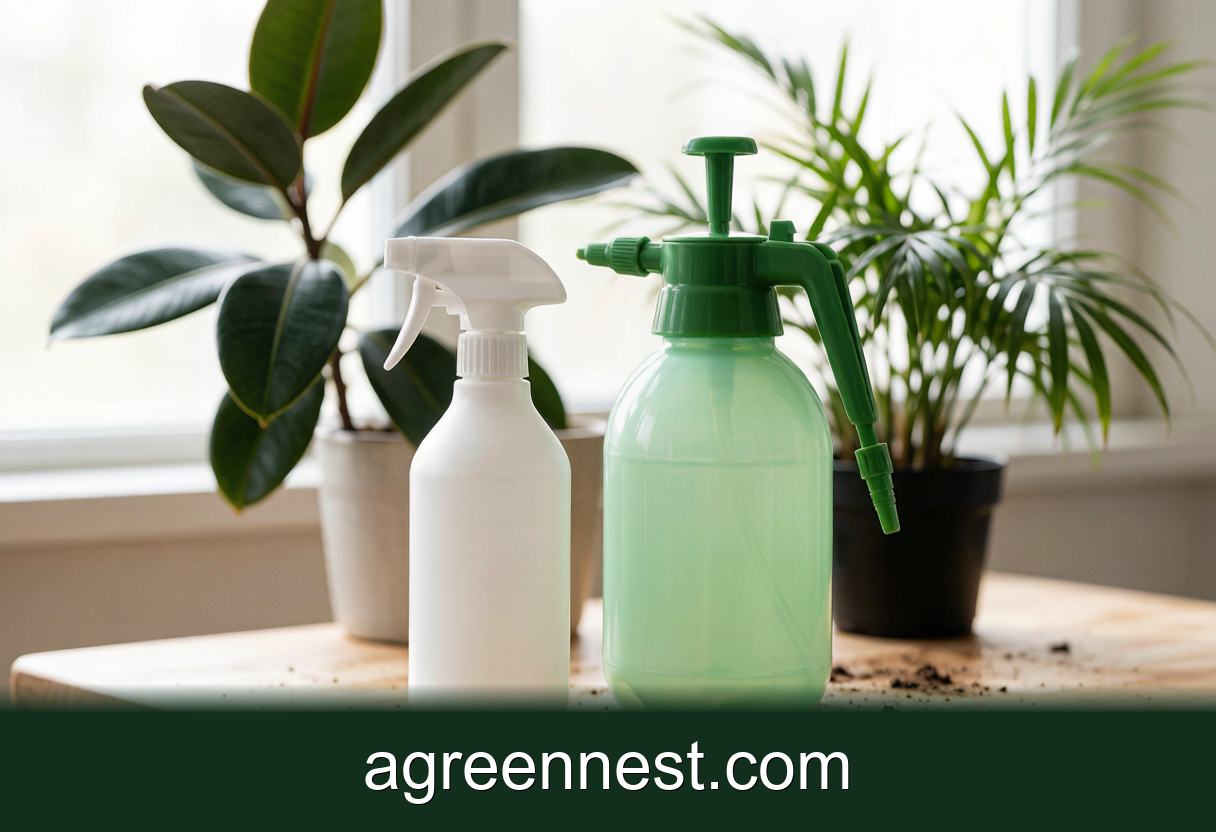
For fewer than ten plants, a 500 ml trigger spray bottle does the job for a few dollars. Past ten plants, or any spider mite fight, a 1.5 L pump sprayer wins: steadier output, a wand that reaches leaf undersides, and no hand cramp after the 300 squeezes a full treatment takes.
I counted once. Treating 22 plants for spider mites with a 500 ml trigger bottle took me 41 minutes and roughly 620 trigger pulls. My forearm quit before the mites did. The next round, with a 1.5 L pump sprayer that cost 19 dollars, took 14 minutes and about 30 pump strokes total.
That is the whole argument in two sentences. But the trigger bottle genuinely is the right tool below a certain collection size; here is where the line sits.
What Each Tool Actually Is
A trigger spray bottle is a piston pump you operate one squeeze at a time. Each pull moves 0.7 to 1.2 ml of liquid. Output stops the instant your finger does, and pressure varies with every squeeze, which matters more than people think for treatment coverage.
A pump sprayer stores energy instead. You pump 10 to 20 strokes to pressurise the tank to roughly 2 to 3 bar, then a lock-on trigger releases a continuous fan of spray until pressure drops. Household sizes run 1 to 2 L; 5 L versions are greenhouse gear.
Price gap is real but small: 3 to 6 dollars for a decent trigger bottle, 15 to 25 dollars for a 1.5 L pump unit with a wand.
Which One Coats the Underside of Leaves?
This question decides pest treatments. Spider mites colonise leaf undersides almost exclusively, and contact products like insecticidal soap only kill what they touch. Extension guidance is blunt on this point: NC State and Minnesota both stress full-coverage spraying of lower leaf surfaces for soaps and oils to work at all.
With a trigger bottle, coating undersides means holding the bottle upside down or at 45 degrees, and most trigger bottles lose prime past 30 degrees of tilt. They spit, dribble, then airlock. You end up lifting and flipping every leaf by hand on a 60 cm Ficus elastica with 40 leaves. I have done it. Once.
A pump sprayer with even a 20 cm wand changes the geometry. You angle the nozzle upward, sweep beneath the canopy, and the continuous mist drifts onto undersides without touching a leaf. On a dense Chamaedorea elegans with hundreds of leaflets, that is the difference between a real treatment and a cosmetic one. If you are mid-outbreak, the full protocol in how to deal with spider mites assumes this kind of coverage.
For a light misting job, humidity theatre, or wetting a moss pole, the trigger bottle is fine, though as plant mister vs humidifier explains, neither tool moves room humidity in any lasting way.
Where the Trigger Bottle Still Wins
Below about ten small plants, the pump sprayer is a solution looking for a problem. Reasons to keep the cheap bottle:
- Small batches. Soap and neem mixes should be used the day you mix them. A 500 ml bottle matches the 300 to 400 ml a ten-plant round actually needs; a 1.5 L tank tempts you to store leftover mix, which separates and loses potency. Mix rates stay the same either way: typically 5 ml neem oil plus 1 to 2 ml mild liquid soap per litre of lukewarm water, shaken hard.
- Spot treatment. One aphid cluster on one Hoya carnosa needs six squeezes, not a pressurised tank and a cleanup.
- Storage and cleaning. A trigger bottle rinses in 30 seconds and lives in a drawer. A pump sprayer wants a proper flush through the wand, a pressure release, and 40 cm of cupboard height.
- Nothing to fail. Pump sprayer seals and O-rings dry out; a 4-dollar bottle either sprays or gets replaced.
One rule regardless of tool: label it. Neem residue in a bottle later used for plain misting has burned more than one collection, and mislabeled sprayers rank high among the errors in pest treatment mistakes.
Is a Pump Sprayer Overkill for a Small Collection?
At five plants, yes. At ten, borderline. Past ten, the math flips fast, and it is mostly ergonomics.
A thorough soap treatment needs 15 to 25 ml of mix per medium houseplant, both leaf surfaces to the point of runoff. With a 1 ml-per-pull trigger, 20 plants means 400 to 600 pulls per session, repeated every 5 to 7 days for three or four rounds, since soaps and oils do not touch eggs laid before you sprayed. That schedule is where trigger-bottle owners quietly give up, and half-finished treatment schedules are exactly how infestations rebound.
The pump sprayer also wins on consistency. Constant pressure lays down an even film instead of the splat-mist-splat pattern of hand squeezes, so you use less product for better coverage. Michigan State's integrated pest management materials keep repeating the same theme: thorough, repeated, well-timed applications beat stronger chemistry. The tool that makes thoroughness cheap is the one that gets used on round three.
Buying notes, short version: get a 1 to 1.5 L translucent tank with printed volume marks, an adjustable brass or POM nozzle from stream to fine mist, a wand of at least 20 cm, and a pressure-release valve. Skip anything without replacement seals available. Pair it with a proper product from the best neem oil sprays or mix your own concentrate.
Care So It Lasts More Than One Season
After every oil or soap session: spray the tank empty of mix, run 200 ml of warm soapy water through until clear, then a plain rinse. Oils gum the check valve in trigger bottles and swell the seals in pump sprayers. Store the pump sprayer depressurised with the lid loose; a stored-pressurised tank is the top cause of the sad phhht next spring.
Keep separate hardware for anything stronger than soap or neem; a sprayer that has held fungicide should never return to casual misting duty. If gnats rather than mites are your actual problem, put the sprayer down entirely; the fixes in eliminating fungus gnats are cultural and sticky, not sprayable.
Frequently Asked Questions
Q: My trigger bottle stops spraying when I tilt it under the leaves. Is it broken?
A: No, the dip tube is sucking air instead of liquid. Most trigger bottles fail past a 30 to 45 degree tilt, and worse when below half full. Workarounds: keep it topped up, fit a weighted flexible dip tube if the model allows, or accept that under-leaf work is the pump sprayer's job.
Q: Can I put neem oil mix in a pump sprayer or will it clog?
A: Yes, if you emulsify properly and clean after. Mix 5 ml neem with 1 to 2 ml liquid soap in a cup of warm water first, then dilute to a litre, and shake the tank every few minutes while spraying. Flush the wand with soapy water afterward; dried neem is the number one killer of sprayer nozzles.
Q: Is a 5 L garden sprayer a good buy for a big indoor jungle?
A: Usually not. A full 5 L tank weighs over 5 kg, the long lance is clumsy between shelves, and indoor sessions rarely need more than a litre of mix. The 1.5 L size hits the balance of capacity, weight, and manoeuvrability for collections up to 50 or so plants.
Q: How do I know the pests are actually gone and I can stop the spray rounds?
A: Do not trust a single clean look. Check leaf undersides with a hand lens 5 to 7 days after the final round, and tap branches over white paper to look for movers. Two consecutive clean checks a week apart means done. For the ongoing habit, see identifying plant pests early.
Buy the 4-dollar trigger bottle when your collection fits on one windowsill, and stop feeling like you need more gear. Buy the 19-dollar pump sprayer the week your plant count passes ten or the day you find webbing, because the tool that saves your wrist is the tool that finishes round three. Not sure what you are even spraying at? Run the symptoms through our free pest identifier before you mix anything.
Sources & further reading
GreenNest authors research and write every guide independently. The external links below are reputable references we recommend for deeper reading — they are not the sources we copied from.
- Michigan State University — College of Agriculture & Natural Resources — Michigan State University
- NC State Extension Plant Toolbox — NC State Extension
- University of Minnesota Extension — U Minnesota Extension
Recommended Tools for Plant Care Accessories Care
Free, no-signup helpers matched to this guide.
Free Ebooks to Explore
Downloadable handbooks — no email required.
Free Ebook
The AGreenNest Succulent Care Handbook
The complete, beginner-to-confident guide to growing fat, happy succulents — 10 chapters and a 20-plant directory.
Free Ebook
Haworthia & Haworthiopsis Care Handbook
A focused guide to the striped, forgiving Haworthia clan.
Share Your Plant Story
Grown something tricky, or found a trick that finally worked? Tell us in the comments, or see what other readers are sharing on our Community page. The best reader tips get folded back into our guides.
Join the Conversation
Have a tip or a question about Spray Bottle vs Pump Sprayer for Houseplants? Share it below — comments are saved on our server.