 AGreenNest
Plant Pests & Diseases
Does Cinnamon Help Houseplants? What It Can Do
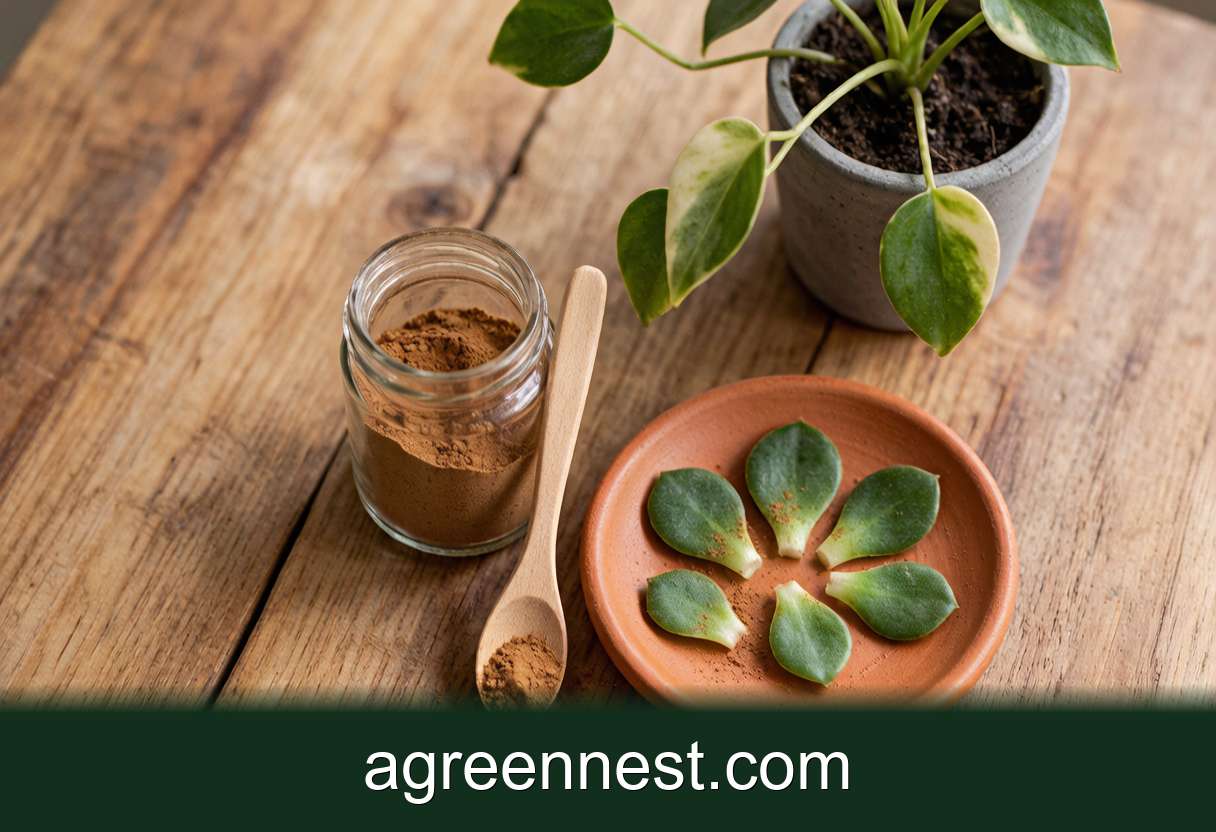
Cinnamon has mild, real antifungal activity, so dusting it on fresh cuttings or pruning wounds can reduce surface rot. It is not a rooting hormone, it will not cure root rot or powdery mildew, and it only slows fungus gnats slightly. Treat it as a wound sealant, nothing more.
Open any plant group on a Sunday evening and you will find the same photo: a jar of ground cinnamon next to a tray of succulent leaves, captioned "nature's rooting hormone." The spice gets credited with curing root rot, wiping out fungus gnats, stopping mold, and speeding up propagation. That is a lot of jobs for something that costs two euros at the supermarket.
Some of it is true. Most of it is not. I spent a month running cinnamon against its four biggest claims, on my own cuttings and pots, and the results split cleanly down the middle.
Where Does the Cinnamon Claim Come From?
There is a real kernel here, which is why the myth refuses to die. Cinnamon bark contains cinnamaldehyde, a compound with documented antifungal and antibacterial activity in lab studies. Extracts of it show up in legitimate research on food preservation and on suppressing certain plant pathogens. The US EPA even lists cinnamon and cinnamon oil among minimum-risk pesticide ingredients, the category of substances considered safe enough to skip full registration.
So cinnamon is not snake oil. The problem is dose and delivery. Lab results use concentrated extracts applied directly to a fungus in a dish. A pinch of supermarket powder scattered on damp potting soil is a different situation entirely, and that gap is where the exaggerated claims live.
Can Cinnamon Really Root Cuttings Faster?
This is the claim I most wanted to test, so I ran a side-by-side. Twelve Echeveria leaf cuttings and eight pothos (Epipremnum aureum) stem cuttings, half dusted with cinnamon on the cut end, half left plain, all callused for 3 days and set on the same tray under the same light.
After 4 weeks the score was a tie. Nine of twelve cinnamon Echeveria leaves had roots, and nine of twelve plain ones did too. The pothos rooted in water at nearly the same pace, 11 to 13 days for both groups. Cinnamon did not speed anything up, and there is no mechanism why it would: it contains no auxin, the hormone that actually triggers root formation.
What it did do was keep cut surfaces cleaner. One plain Echeveria leaf turned mushy at the cut end and died; none of the dusted ones did. That matches the honest version of the claim. Cinnamon is a mild antiseptic wound dressing, not a rooting stimulant. If you want faster roots, that is a hormone product's job, and if you want fewer rotted cuttings, cinnamon genuinely helps. Our succulent leaf propagation guide explains why the callus stage does most of that protective work anyway.
Will Cinnamon Cure Root Rot or Powdery Mildew?
No, and this is the version of the myth that costs people plants.
Root rot lives inside the root tissue, below the soil line, in wet anaerobic conditions. Powder sprinkled on the surface never reaches it, and even a cinnamon soil drench cannot penetrate infected roots the way the actual fix does: unpotting, cutting away brown mushy roots with sterile scissors, and repotting into fresh dry mix. That full triage is laid out in our root rot first aid guide, and cinnamon appears in exactly one step, as an optional dusting on the cut root stumps after surgery.
Powdery mildew is a similar story. It is a living fungal colony spread across the leaf surface, and a dusting of brown powder will not clear an established infection. In my test on a mildewed Kalanchoe, a cinnamon-water spray (1 tablespoon steeped in 500 ml warm water overnight, strained) slowed the spread on treated leaves but never removed the existing patches. A proper treatment plan, like the one in our powdery mildew guide, still depends on pruning affected leaves, improving airflow, and a real fungicide or neem oil rotation.
Does Cinnamon Kill Fungus Gnats?
Partly, and indirectly. Fungus gnat larvae feed on fungi and organic matter in the top 2 to 3 cm of moist soil. Cinnamon's antifungal action can thin out that food supply, so a heavy surface dusting makes the topsoil slightly less hospitable. In my worst-infested pot, a Calathea that had been overwatered for weeks, a thick cinnamon layer cut the number of adults on a yellow sticky card from about 20 a week to 12. Fewer, not zero.
Compare that to the two fixes that actually break the breeding cycle: letting the top 3 cm of soil dry fully between waterings, and applying BTI (a larvae-killing bacterium) as a soil drench. Either outperforms cinnamon on its own by a wide margin. The full battle plan is in our fungus gnat elimination guide. Cinnamon earns a spot as a supporting player at best.
What Cinnamon Is Actually Good For
After a month of testing, here is my honest scorecard:
- Dusting fresh cuttings and pruning wounds: yes. A light dusting on the cut end of a succulent leaf, a divided rhizome, or a pruned stem reduces surface rot while the wound seals. This is its best real use.
- Surface mold on soil: partial. It suppresses the white fuzzy saprophytic mold that appears on constantly damp mix, though fixing the watering habit matters more, as covered in our soil mold guide.
- Damping-off prevention in seed trays: worth a try. A thin dusting on the seed-starting mix surface can lower the odds of seedlings collapsing, alongside the ventilation and watering fixes in our damping-off guide.
- Rooting hormone: no. Zero effect on speed or root count in my test.
- Root rot cure: no. Surgery first; cinnamon is an optional bandage after.
- Gnat killer: mostly no. Mild suppression only.
One caution: keep the powder off foliage. A heavy coating on damp leaves blocked light and left faint marks on my test pothos, and cinnamon oil in concentrated form can burn leaf tissue outright.
Frequently Asked Questions
Q: Does it matter if I use cheap cassia cinnamon or true Ceylon cinnamon?
A: Not for plants. Cassia, the standard supermarket type, actually contains more cinnamaldehyde than Ceylon, so the cheap jar is fine. Save the expensive one for baking.
Q: Can I water my plants with cinnamon tea as a preventive?
A: You can, but I found no benefit from routine drenching, and constantly wet soil undoes any antifungal effect. A strained cinnamon steep is only worth trying as a short-term surface spray on visible soil mold.
Q: I dusted cinnamon on my rotting succulent stem and it still died. Why?
A: The rot was already inside the stem. Cinnamon only protects the surface of a fresh, clean cut, so you needed to cut higher, into fully firm tissue, and dust that new surface instead.
Q: Will cinnamon in the soil hurt beneficial microbes or worms?
A: At dusting quantities, no measurable harm. Very heavy repeated applications could suppress some beneficial fungi in the mix, so treat it as a targeted tool rather than a routine additive.
Q: Is cinnamon safe around cats and dogs that dig in pots?
A: The powder in small amounts is low risk, though it can irritate noses and mouths. Cinnamon essential oil is a different matter and is toxic to pets in concentrated form, so never add the oil to soil.
Cinnamon is a decent wound dressing wearing a superhero costume the internet made for it. Dust it on cuttings and pruning cuts, sprinkle it on moldy soil while you fix your watering, and expect nothing more. When a plant is genuinely sick, identify the real problem first with our pest identifier tool and reach for the treatment that matches, not the spice rack.
Sources & further reading
GreenNest authors research and write every guide independently. The external links below are reputable references we recommend for deeper reading — they are not the sources we copied from.
- US EPA — Safer Pest Control — US EPA
- NC State Extension — Plant Toolbox — NC State Extension
Recommended Tools for Plant Pests & Diseases Care
Free, no-signup helpers matched to this guide.
🔍 Free Tool
Pest & Problem Identifier
Pick the symptoms you see and get the likely culprit plus a fix.
Free Ebooks to Explore
Downloadable handbooks — no email required.
Free Ebook
The AGreenNest Succulent Care Handbook
The complete, beginner-to-confident guide to growing fat, happy succulents — 10 chapters and a 20-plant directory.
Free Ebook
Haworthia & Haworthiopsis Care Handbook
A focused guide to the striped, forgiving Haworthia clan.
Share Your Plant Story
Grown something tricky, or found a trick that finally worked? Tell us in the comments, or see what other readers are sharing on our Community page. The best reader tips get folded back into our guides.
Join the Conversation
Have a tip or a question about Does Cinnamon Help Houseplants? What It Can Do? Share it below — comments are saved on our server.